
A compelling dialogue between a medic and a philosopher about the opportunities and risks associated with combining man and machine – and about its limits.
HOMO EX MACHINA
by Bernd Kleine-Gunk & Stefan Lorenz Sorgner
Goldmann/PRH Germany, June 2023
 Pacemakers, running blades, stem cell research, life-prolonging medicine: these achievements might sound normal, but they are all part of what is called transhumanism. Transhumanism stipulates that humanity’s next evolutionary step will come about through the use of modern science and technology, but many people see it as a dangerous endeavour. They fear that it will dehumanise us, that we’ll become « cyborgised » and open ourselves up to ethically questionable genetic experiments and state-sponsored eugenics.
Medic Kleine-Gunk and philosopher Sorgner dive into the complex world of transhumanism, and dispel some of the myths surrounding it. They introduce the relevant theories and academic disciplines involved in the transhumanist movement, examine its history and critique its opportunities and risks. Among other things, they explain why it’s unrealistic to expect that we’ll be able to digitise our personalities within the next 20 years, and that modern technology doesn’t exceed « natural » humanity: rather, it can serve to improve our lives – but only if we want it to.
Bernd Kleine-Gunk is a professor of medicine and a leading anti-ageing expert. He is the president of the German Society for Preventative and Anti-Aging Medicine, and has published numerous academic and non-academic articles and books on the subject. He is a globally sought-after speaker, and advises several companies and institutions.
Stefan Lorenz Sorgner is a professor of philosophy at the John Cabot University in Rome, director and co-founder of the Beyond Humanism Network, research fellow at the Ewha Womens’ University Institute for the Humanities in Seoul and fellow at the Institute for Ethics and Emerging Technologies think-tank. He is one of the world’s leading post- and trans-humanist philosophers, and has published several monographs and co-authored books.
 The catastrophe happens over coffee and cake: on a visit to his mother’s childhood friend in March 1943, Karlrobert Kreiten, a consummate 26-year-old pianist with a promising future ahead of him, claims that Germany has lost the war, and the Führer his mind. Six months after making these unguarded comments, he dies on the gallows.
 When we think of wilderness, we think of places like forests filled with an abundance of wild plants – landscapes that show no trace of human civilisation. After all, man and primordial nature are mutually exclusive. In fact, though, wilderness always implies a certain tug of war between different forces: wherever we disturb the balance, nature cannot take its course, and what remains isn’t wilderness, but an impoverished landscape – even if we leave nature to its own devices. Even now, the forests we once exploited contain just a fraction of the animals, plants and fungi that once existed there. Why is that? Biologist and filmmaker Haft examines flawed ideas, proposes a new way of conceiving of wilderness, and explains how – if we wanted to – we could easily and cheaply create new animal-friendly, sustainable and diverse landscapes.
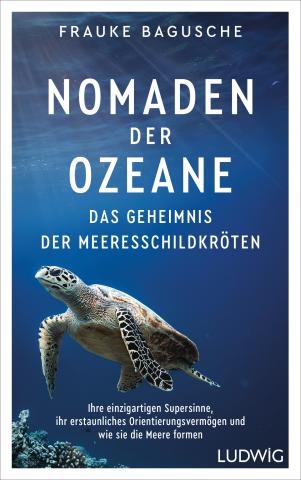 Turtles can do amazing things: some can dive to more than 1,000 metres, others transport organisms across the seas (and thus contribute to their distribution), others act as « architects of the oceans » by helping to spread coral reefs along the sea bed. All have impressive « super-senses », which mean they’re able to return to the beaches where they were born – often decades later, and from thousands of kilometres away. They orient themselves by the earth’s magnetic field, as well as their sense of smell, which allows them to recognise the scent of their first beach.
 Paris, 1887. Gustave Eiffel wants to build the tallest tower in the world, yet no one seems to have faith that his absurd steel colossus will be finished in time for the World’s Fair – except, that is, for his bold daughter Claire. At a time when it is still thought unseemly for a woman to go for a walk on her own, she is her father’s most valued advisor. But Eiffel has to contend with more than deadlines. Paris’s cultural elite, led by Guy de Maupassant and Alexandre Dumas, think their city is being mutilated, and are taking a stand. Claire has her own worries too: her husband, young engineer Adolphe, is in charge of the high-risk construction of the tower’s top, and her fears for his safety are threatening to destroy their marriage. Then a worker is killed in a fall, and Claire meets handsome reporter Gordon Bennett, who promises her a carefree new life in America. Will she choose the Eiffel Tower, or a future in the New World?