
Patriarchal structures, feminine ideals and violent births: Historian Helena Barop takes us on a journey through the history of birth.
MYTHEN, MACHT & MUTTERMUND
(Myths, Might and Motherhood)
by Helena Barop
Siedler/PRH Germany, April 2026
 Propagation is crucial for social cohesion and the survival of the human species, but in public discourse, actual experiences of being born and giving birth often remain in the dark. They are frequently considered a niche topic, with little social relevance. Barop’s brilliantly written feminist history traces this attitude back to a culture which to this day patronises and infantilises women during childbirth, and argues that violent births are the product of a long tradition of inequality and patriarchal structures. She takes us on a journey into the past, explodes myths and misconceptions, and interrogates our ideals and assumptions about what makes for a ‘normal birth’ – and reveals that births have changed constantly over the centuries, and that the woman and her baby have only recently been empowered and placed at the centre of the process.
MYTHEN, MACHT & MUTTERMUND is a masterful account that takes us through history’s delivery rooms, and tells a story of oppression and emancipation that affects us all: because childbirth, more than perhaps any other event, shapes and is shaped by our notion of womanhood.
Helena Barop, born in 1986, studied history and philosophy in Freiburg and Rome, and her PhD thesis « The Poppy Wars: US International Drug Control Policy, 1950–1979 » was widely discussed in the media. She has won the Freiburg University Gerhard Ritter Prize and the Association of German Historians’ World History Award, and was runner-up in the Körber Foundation’s German Research Prize for Arts and Cultural Studies. Her first non-fiction book, « Der große Rausch » (‘The great high’) appeared in 2023, and was named runner-up in the ‘humanities’ category at the Science Book of the Year awards.
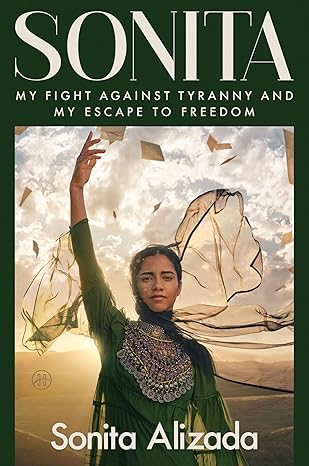 The first time Sonita was put up for sale, she was 10 years old and she thought that she was participating in a dress-up game. She quickly realized that, in her culture, a wedding is a kind of funeral for the bride. Sonita says, “It represents the loss of a future. The loss of a voice.” After the marriage fell through, she was placed on sale again. She was expected to form a family, sleep with a man she never met, and then repeat the terrible cycle with her own children. But Sonita wanted more.
 In the thick of winter 2020, when so many books were buried beneath the catastrophe of the COVID-19 news cycle, one unlikely debut seemed to cut through the noise. Jamie Hood’s How to Be a Good Girl was an inventive and hybrid work of self-making, mingling diary entries, poetry, literary criticism, and love letters to interrogate the archetype of the “good girl,” and the ideas of femininity, passivity, desire, and trauma that come with it. Journeying from the ice age to our modern-day climate crisis, it devoured texts as expansive as Levinas and Plath to the Ronettes and after-school specials, all the while asking: what pound of flesh must a woman pay to be seen as “good.”
 The trauma of surviving an abusive marriage didn’t make Kelly Sundberg stronger. In fact, it nearly broke her. But leaving the abuse behind was not the end of the story, it was the beginning of a new one. In that journey, Sundberg learned in ways both good and bad, that one doesn’t necessarily get to leave abuse behind. Sometimes, everywhere you go, the memories of the abuse go with you.
  Honorée Fanonne Jeffers is at a crossroads.