
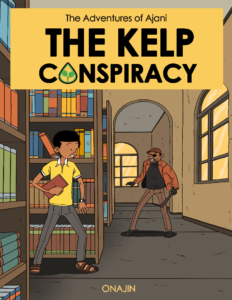
 L’artiste et auteur nigérian Àlàbá Ònájìn prépare une nouvelle série de BD, « The Adventures of Ajani », qui s’adresse autant aux adultes qu’aux enfants. Dans un style influencé par la « ligne claire » d’Hergé, Àlàbá Ònájìn présente le point de vue nigérian sur la fin de la domination britannique dans les années 1960 à travers son héros Ajani, journaliste yoruba malin et curieux et fervent partisan de l’indépendance.
Dans le premier tome de la série intitulé THE KELP CONSPIRACY, alors que le Nigéria tente de gagner son indépendance, les puissances étrangères pèsent encore fortement sur la gouvernance du pays et la corruption s’installe. La société britannique Kelp Oil and Gas cherche à faire échouer le projet d’indépendance et garder ainsi la mainmise sur l’exploitation pétrolière de la région. A travers des personnages emblématiques, l’histoire véhicule les valeurs de l’amitié, la loyauté et la victoire du bien sur le mal.
 Biographie de l’auteur : Àlàbá Ònájìn is a Freelance Cartoonist and Illustrator. He was born in Lagos state, Nigeria and has a Diploma in Freelance Cartooning and Illustration from The Morris College of Journalism, Surrey, Kent, UK. He is currently living in Lagos, Nigeria. He has always had a passion for telling stories through his drawings ever since he was introduced to Hergé’s Tintin books at a very young age; these books sparked an energy to bring his stories to young readers around the world. Ònájìn’s work includes Anike Eleko, a children’s comic book on girls’ education by Farafina Books, On Ajayi Crowther Street, a graphic novel published by Cassava Republic in collaboration with the German cultural organization Goethe Institut, and other art collaborations with UNESCO on the Role of Women in African History Project, illustrating the lives of three great African women: Funmilayo Ransome Kuti, Empress Taytu Betul of Ethiopia, and Miriam Makeba.
“I found in the words and pictures of this Nigerian artist, the page-turning sense of adventure I so admired in Tintin, without the impetuous colonialist language and bigoted depictions that had made me shelf Hergé’s iconic work. . . Rather than present simple and dichotomized plots, we learn of Nigeria’s past and are drawn to understand the historical implications of colonization, as well as politics, environmental issues, and ultimately, evergreen and universal human relations. Giving us a lens into a vibrant Western Africa, while making the subjects presented deeply personal and relatable.” – Juana Medina, author/illustrator of the award-winning Juana and Lucas series
 Sydney, 2019. Twenty-five-year-old Asha, who has grown up in Australia, knows very little of her mother’s past in India. As far as her Amma is concerned, the past doesn’t matter, it’s their future that counts. But when Asha’s paternal grandfather is taken ill, her beloved father requests that they return to Madurai to see him, and he wants the whole family to go. Asha is fascinated by what her mother is hiding, and determined to discover the truth about her background: knowing all the while that she is also hiding something from her family.
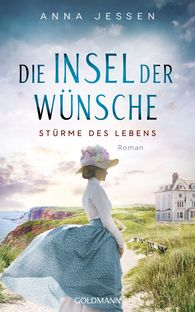 Hamburg, 1887. The young flower girl Tine Tiedkens is destitute. To escape her misery, she decides to try her luck on the island of Heligoland. But the crossing to the fashionable island turns into a nightmare, and when she arrives everything seems set against her. But then she unexpectedly runs into the young hotelier Henry Heesters, who once bought flowers from her in Hamburg, and lands a position in his elegant hotel. With diligence and enthusiasm, Tine works her way up from waitress to housekeeper – and falls in love with Henry. He, too, loves her – but just as happiness seems to be within reach, fate intervenes once again…
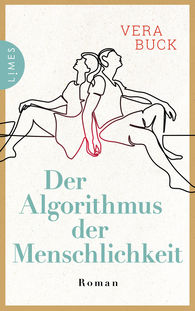 If you meet Mari, you will notice that she is beautiful and almost hauntingly perfect. But also that she fails to get jokes and vies everything rationally. And if you get to know her better, you will notice that Mari needs neither sleep nor food. Because Mari is only almost human. Her artificial intelligence is constantly learning to do one job: to make people happy. When Mari ends up in a Berlin apartment after an unfortunate chain of circumstances with a motley crew of people, including the rebellious blogger Frieda and the lonely student Linus, she realizes that her mission is all but easy. The world follows its own logic, people’s desires are irrational and Mari has to understand that there exists a world beyond provable facts. How is she supposed to make beings happy that have no clue what they want? She comes up with a solution no human would have ever expected… DER ALGORITHMUS DER MENSCHLICHKEIT deals with questions that are becoming incredibly important in the current developments in the technology sector: What makes us human? Why do we need each other? And why do we actually need more of each other, and less of the new technologies that are constantly being developed?
 Through the lens of its patriarch, THE FAMILY IZQUIERDO deftly weaves together the lives of different members of the Izquierdo clan to paint the picture of a Mexican-American family bound together by love, and a curse. From young love to a failing marriage, from a mother afraid to leave her house to a young woman moving far from her family to try to find her way, Papa Tavo watches as his children and grandchildren try to navigate their way through a confusing and painful world. But it’s hard when a neighbor’s black magic hechizos affect their ability to live their lives.