
Professor Tim Flannery, and his daughter, Emma Flannery, bring the Megalodon to life in this fascinating and engaging natural history.
BIG MEG:
The Story of the Rise and Fall of the Largest and Most Mysterious Predator that Ever Lived
by Tim & Emma Flannery
Text Publishing, August 2023
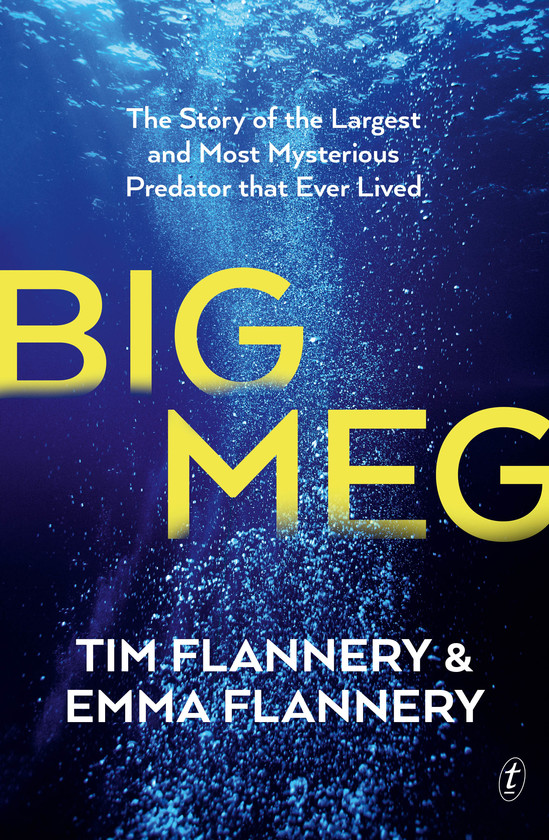 Its name means giant tooth but everything about it is gigantic, including its pull on the human imagination. Tim and Emma Flannery’s BIG MEG will not only tell the story of the Megalodon, the Great Shark itself—what we know about where and how it lived, bred, hunted and died, a shark whose size and ferocity are the stuff of nightmares and whose teeth are probably the most sought after fossils in the world—but also how it continues to fascinate us.
The great shark, aka Otodus megalodon, the big meg, was the largest predator that ever stalked the planet weighing somewhere between fifty and 100 tonnes. We know that this leviathan was warm blooded, that it had the most powerful bite of any animal ever to have lived and that it could open that mighty jaw to a gape of three metres, wide enough to take a killer whale whole.
BIG MEG will be not only the biography of a phenomenal animal, but a compelling exploration of the role it plays in the popular imagination. The Megalodon might have been extinct for more than three million years but it flourishes in the stories we tell about it, in our hunt for its relics, and our quest to uncover more of the mystery surrounding it.
Tim Flannery is a scientist, an explorer, a conservationist and a leading writer on climate change. He has held various academic positions including visiting Professor in Evolutionary and Organismic Biology at Harvard University, Director of the South Australian Museum, Principal Research Scientist at the Australian Museum, Professorial Fellow at the Melbourne Sustainable Society Institute, University of Melbourne, and Panasonic Professor of Environmental Sustainability, Macquarie University. His books include the award-winning international bestseller The Weather Makers, Here on Earth, Atmosphere of Hope and Europe: The First 100 Million Years.
Emma Flannery is a scientist and writer. She has explored caves, forests and oceans across most of the globe’s continents in search of the elusive fossils, animals and plants. With postgraduate experience in geology, chemistry and palaeontology, Emma’s research and writing has been published in scientific journals, children’s books and a number of museum-based adult education tours. She has worked for and with universities, government agencies and museums.
 In 1946, Günther Quandt—patriarch of Germany’s most iconic industrial empire, a dynasty that today controls BMW—was arrested for suspected Nazi collaboration. Quandt claimed that he had been forced to join the party by his archrival, propaganda minister Joseph Goebbels, and the courts acquitted him. But Quandt lied. And his heirs, and those of other Nazi billionaires, have only grown wealthier in the generations since, while their reckoning with this dark past remains incomplete at best. Many of them continue to control swaths of the world economy, owning iconic brands whose products blanket the globe. The brutal legacy of the dynasties that dominated Daimler-Benz, cofounded Allianz, and still control Porsche, Volkswagen, and BMW has remained hidden in plain sight—until now.
 Cancel culture. Chances are you’ve heard about this a lot lately, but what really is it? Blacklisting celebrities? Censorship? Up until this point, this has been the general consensus in the media. But it’s time to raise the bar on our definition—to think of cancel culture less as scandal or suppression and more as an essential means of democratic expression and accountability. THE CASE FOR CANCEL CULTURE offers a fresh progressive lens in favor of cancel culture as a tool for activism and change. It will help readers reflect on and learn the long history of canceling (the Boston Tea Party was cancel culture); how the left and right uniquely equip it as part of their political toolkits; how intersections of society wield it for justice; and ultimately how it levels the playing field for the everyday person’s voice to matter. Why should we care? Because in a world where protest and free speech are being challenged by the most powerful institutions, those without power deserve to understand the nuance and importance of this democratic tool available to them. Rather than seeing cancel culture as a nasty byproduct of the digital age, it should be seen as a powerful instrument for change. Ernest Owens shows readers exactly how with examples from politics, pop culture, and his own personal experience. Readers will walk away from this first-of-its-kind exploration not despising cancel culture but embracing it as a form of democratic expression that’s always been leading the charge in liberating us all.
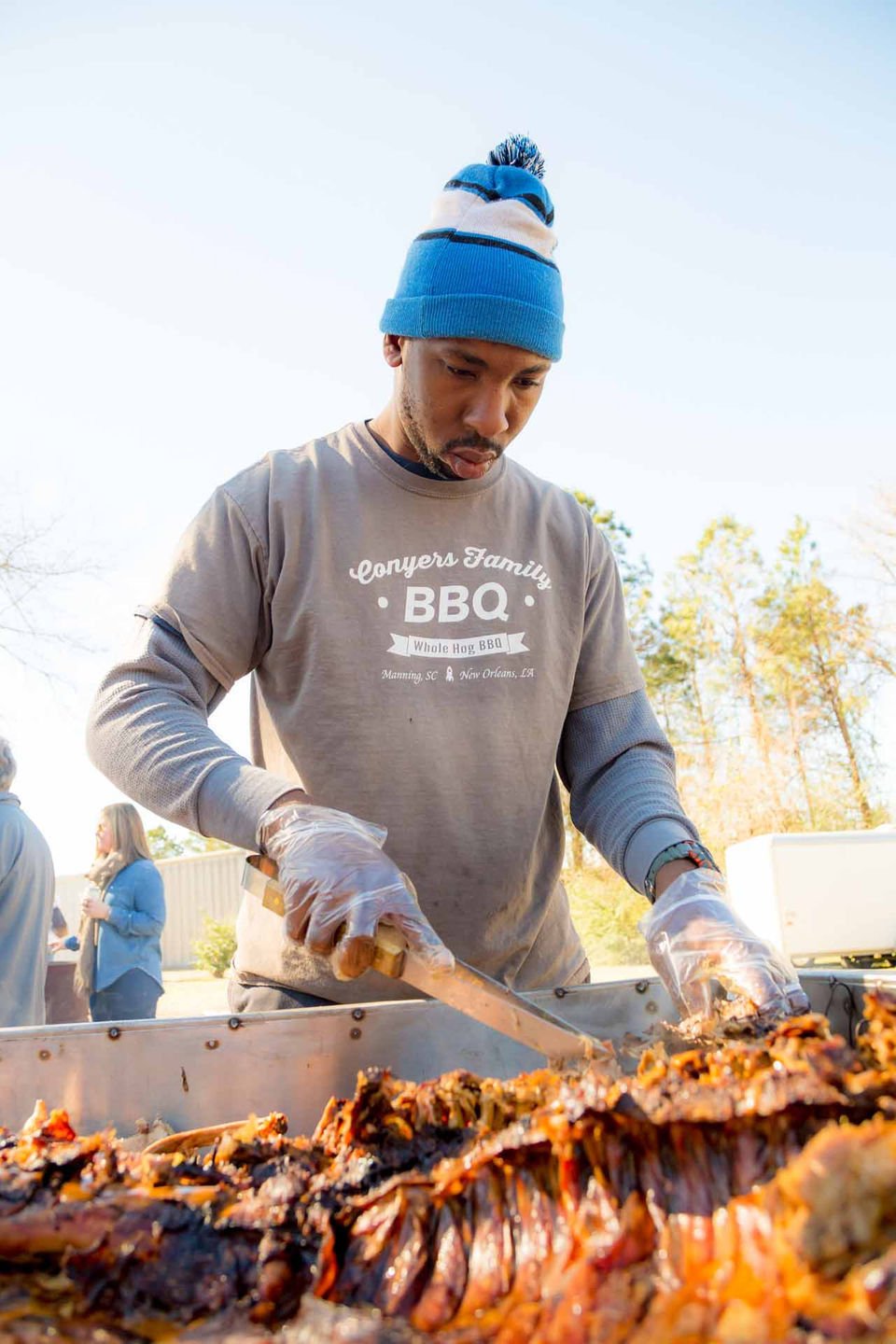 The descendant of farmers and barbecuing masters, Dr. Howard Conyers is a structural dynamicist at NASA by day and a preserver of barbecue history after hours. In THE UNTOLD STORY OF UNITED STATES’ BARBECUE, Dr. Conyers details the real and complete history of barbecue in America, tracing its roots back to the enslaved people who are believed to have brought the practice to the American South to today’s Black experts all across the country. Dr. Conyers shares oral histories and photographs from Black whole-animal barbecue cooks from across the South and describes the traditional methods of roasting hogs and other animals over pits in the ground—a practice that dates back well over 400 years. The history of Black barbecue has never before been fully documented by someone born into the craft, who has uncovered and pieced together the fascinating first-person narratives that finally tell the complete cultural story.
 From human rights activist Michael Shaikh, this will be a sweeping survey on how food and food culture are invisible casualties of war and political violence. From Syria to Sri Lanka, Afghanistan to Bolivia, Shaikh examines how a community’s sense of history and identity is lost when food traditions are lost, and the people who are trying to restore and reclaim their heritage.