Archives de catégorie : Nonfiction

DAS BLAUE WUNDER de Frauke Bagusche

A marine biologist dives down with us into the mysterious world of the oceans

DAS BLAUE WUNDER
(The Blue Miracle)
by Frauke Bagusche
Ludwig, May 2019
256 pages, With a 16-page 4c image section

There are amazing things going on under water: at night the sea mysteriously sparkles, the tiniest of organisms (plankton) have the greatest power, and the fish are by no means taciturn but instead communicate loudly with one another. Marine biologist Frauke Bagusche has some fascinating tales to tell – stories of the smallest and the largest living creatures in the world. She explains where the smell comes from that tickles our nostrils while we are walking along the beach; what causes the sparkle we see in the water at night; and why the sea steers not only our emotions but also our destiny and that of the entire planet. Her account, in which she explores her own intimate relationship with the sea, is based both on the results of the latest scientific research and her personal experience. Because no matter where we are, we are bound to the blue miracle with every breath we take.

Frauke Bagusche, born in 1978, is a marine biologist. After gaining her doctorate at the University of Southampton in England she was responsible for marine biological stations on the Maldives and sailed 9,500 kilometres across the Atlantic from the Caribbean to the Mediterranean in order to draw attention to the litter pollution of the oceans. She gives lectures and holds seminars on subjects connected with marine biology.
THE LOVE PRISON MADE (AND UNMADE) d’Ebony Roberts

With echoes of Just Mercy and An American Marriage, THE LOVE PRISON MADE (AND UNMADE) is a remarkable memoir of a woman who falls in love with an incarcerated man, and the toll prison takes not only on those behind bars, but on their families and relationships

THE LOVE PRISON MADE (AND UNMADE)
My Story
by Ebony Roberts
Amistad, July 2019

Ebony’s parents were high school sweethearts and married young. By the time Ebony was born, the marriage was disintegrating. The little girl witnessed her parents’ brutal verbal and physical fights, fueled by her father’s alcoholism. Then her father tried to kill his mother. At five, Ebony was sexually assaulted. When she tried to tell, her voice was not heard.

Growing up, those experiences drastically affected the way Ebony viewed herself and set the pattern for her future romantic relationships. Despite being an intelligent, educated, and strong-minded woman, she was drawn to bad-boys: men who cheated; men who verbally abused her; men who disappointed her. Fed up, she cut off her hair and swore to wait for the partner God chose for her.
Then she met Shaka Senghor. Though she felt an intense spiritual connection, Ebony struggled with the idea that this man behind bars for murder could be the good love God wanted for her. Through letters and visits, she and Shaka fell deeply in love. After he was released they had a son, and Shaka was embraced by Oprah Winfrey and wrote a New York Times bestselling memoir. Their lives had been transformed—the worst should have been behind them.
But Shaka’s release was the beginning of the end of their love story. Traumatized by having doors shut in his face, Shaka became depressed and emotionally detached. His struggles to adjust to freedom would irrevocably damage their relationship.
The Love Prison Made (and Unmade) is heartfelt and insightful. It reveals powerful lessons about love, sacrifice, courage, and forgiveness; of living your highest principles and learning not to judge someone by their worst acts. Ultimately, it is a stark reminder of the emotional cost of American justice on human lives—the partners, wives, children, and friends—beyond the prison walls.

A former school administrator, Ebony Roberts is a writer, educator, activist, and researcher. She has taught at Michigan State University and the University of Michigan. She recently served as program director for #BeyondPrisons, an organization designed to uplift the voices of those impacted by the criminal justice system. She received her BA in Social Relations and Psychology, and a Ph.D in Educational Psychology from Michigan State University.

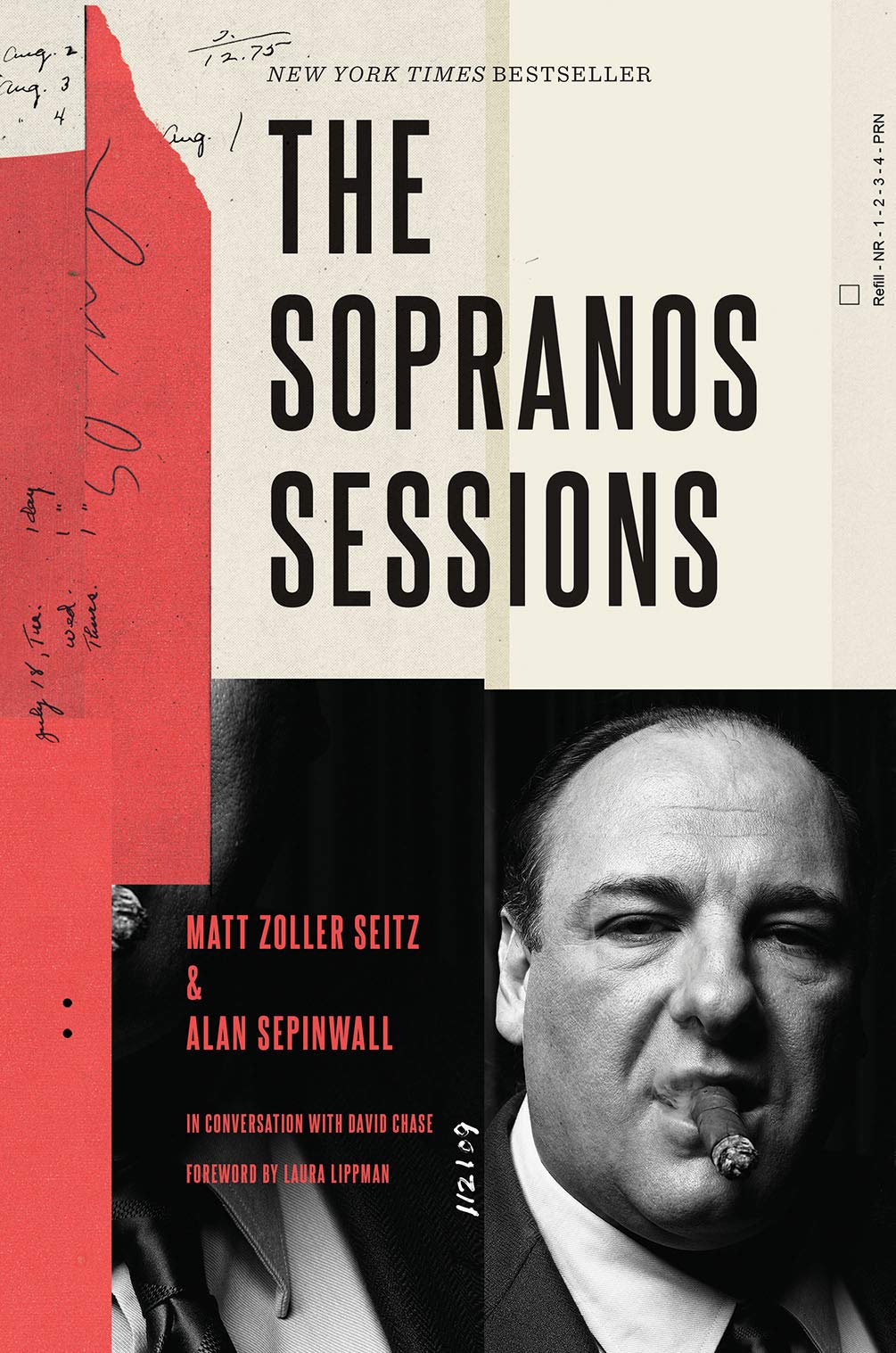
THE SOPRANOS SESSIONS de Matt Zoller Seitz, Alan Sepinwall et Laura Lippman

The best TV series ever

THE SOPRANOS SESSIONS
by Matt Zoller Seitz, Alan Sepinwall and Laura Lippman
Abrams Books, January 2019

On January 10, 1999, a mobster walked into a psychiatrist’s office and changed TV history. By shattering preconceptions about the kinds of stories the medium should tell, The Sopranos launched our current age of prestige television, paving the way for such giants as Mad Men, The Wire, Breaking Bad, and Game of Thrones. As TV critics for Tony Soprano’s hometown paper, New Jersey’s The Star-Ledger, Alan Sepinwall and Matt Zoller Seitz were among the first to write about the series before it became a cultural phenomenon.

To celebrate the 20th anniversary of the show’s debut, Sepinwall and Seitz have reunited to produce “The Sopranos Sessions”, a collection of recaps, conversations, and critical essays covering every episode. Featuring a series of new long-form interviews with series creator David Chase, as well as selections from the authors’ archival writing on the series, The Sopranos Sessions explores the show’s artistry, themes, and legacy, examining its portrayal of Italian Americans, its graphic depictions of violence, and its deep connections to other cinematic and television classics.

Matt Zoller Seitz is the television critic for New York magazine and the editor in chief of RogerEbert.com. He is the author of “Mad Men Carousel” and “The Wes Anderson Collection”. Alan Sepinwall is the chief television critic for Rolling Stone and the author of “Breaking Bad 101”. His thoughts on television have appeared in the New York Times, Time, and Variety. Laura Lippman, a New York Times bestselling novelist, has won every major mystery writing prize in the United States.

THE BOOK OF ATLANTIS BLACK de Grace Bonner

Spare and elegant, relentless and gripping, THE BOOK OF ATLANTIS BLACK by Grace Bonner is an absorbing, psychological mystery and proof of sisterly dedication, obsession, and love

THE BOOK OF ATLANTIS BLACK
by Grace Bonner
Tin House, Fall 2020  

The detective quality of The Book of Atlantis Black is both fascinating and maddening. The pain is right there, but also restrained so that the reader gets to feel/is made to feel something of what it was like for you and your sister and your mother. It is a stunning achievement…and, of course, riveting.” — Amy Hempel, author of Sing to It and Reasons to Live

Grace Bonner had a sister with certain powers: to charm, confound, inspire, infuriate. Grace, the younger sister by two years, would never be the wild sister, the fucked-up sister, the one who named herself after a fictional island for Grace to return to over and over. You see, Nancy Bonner became Atlantis Black because she knew she was born a myth.
In THE BOOK OF ATLANTIS BLACK, Grace Bonner unravels the mystery of her sister and tenderly re-ravels what happened in the final months before her disappearance and alleged overdose and death. Armed with access to all of Atlantis’ email and social media accounts, Grace attempts to decipher and construct a narrative around the circumstances surrounding her plausible death: frantic and unintelligible notes on Facebook, alarming images of Atlantis with a handgun tucked in the waistband of her pants, Craigslist « companionship » ads, video surveillance, art film/faux-snuff footage, police reports (one casually reporting Atlantis’ IDs not matching the deceased body), and various phone calls and moments-in-the-flesh conjured from memory. Through the construction and deconstruction of these materials and the history only she and Atlantis shared, Grace attempts to understand if her sister’s desperation to leave the country and an increasingly dire situation behind proved fruitful or if she died alone in a Mexican motel room wearing a brown “Good Karma” T-shirt. What Grace finds is a confounding contradiction—just as her sister proved in life—questions that lead nowhere or to only more questions, red flags that point in no particular direction, leaving Grace to decide how far she will go to understand a sister she refers to as “my canary, ahead of me in the dark.”

Grace Bonner is a former Director of the 92Y Unterberg Poetry Center, where she now teaches poetry. Round Lake, her first collection of poetry, was published by Four Way Books in October 2016. She holds an MFA in creative writing from Columbia University and a BA from Sarah Lawrence College. She is a MacDowell fellow, and has taught literature and creative writing at the Pierrepont School in Westport, CT and in Paros, Greece. Her poems have appeared in The New Republic, The Paris Review, Parnassus, Poetry Daily, The Southampton Review and in other publications.

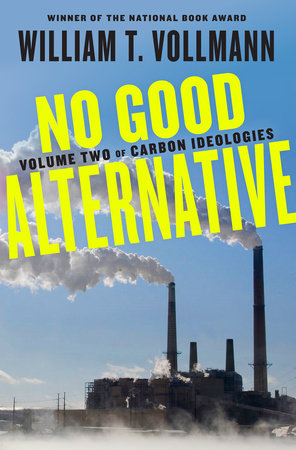
CARBON IDEOLOGIES de William T. Vollmann

A timely, eye-opening book about climate change and energy generation that focuses on the consequences of nuclear power production, from award-winning author William T. Vollmann

CARBON IDEOLOGIES
Viking

NO IMMEDIATE DANGER #1
April 2018

In his nonfiction, William T. Vollmann has won acclaim as a singular voice tackling some of the most important issues of our age, from poverty to violence to the dark soul of American imperialism as it has played out on the U.S./Mexico border. Now, Vollmann turns to a topic that will define the generations to come–the factors and human actions that have led to global warming. Vollmann begins NO IMMEDIATE DANGER, the first volume of “Carbon Ideologies”, by examining and quantifying the many causes of climate change, from industrial manufacturing and agricultural practices to fossil fuel extraction, economic demand for electric power, and the justifiable yearning of people all over the world to live in comfort. Featuring Vollmann’s signature wide learning, sardonic wit, and encyclopedic research, NO IMMEDIATE DANGER, whose title co-opts the reassuring mantra of official Japanese energy experts, builds up a powerful, sobering picture of the ongoing nightmare of Fukushima.


NO GOOD ALTERNATIVE #2
June 2018

The second volume of William T. Vollmann’s epic book about the factors and human actions that have led to global warming begins in the coal fields of West Virginia and Eastern Kentucky, where “America’s best friend” is not merely a fuel, but a “heritage.” Over the course of four years Vollmann finds hollowed out towns with coal-polluted streams and acidified drinking water; makes covert visits to mountaintop removal mines; and offers documented accounts of unpaid fines for federal health and safety violations and of miners who died because their bosses cut corners to make more money. As with its predecessor, this volume seeks to understand and listen, not to lay blame–except in a few corporate and political cases where outrage is clearly due. Vollmann is a carbon burner just like the rest of us; he describes and quantifies his own power use, then looks around him, trying to explain to the future why it was that we went against scientific consensus, continually increasing the demand for electric power and insisting that we had no good alternative.

In his nonfiction, William T. Vollmann has won acclaim as a singular voice tackling some of the most important issues of our age, from poverty to violence to the dark soul of American imperialism as it has played out on the U.S./Mexico border.