
From the author of The Stronger Sex comes this fascinating exploration of the overlooked story of women in human history.
THE REAL LIVES OF OUR FEMALE ANCESTORS
by Starre Vartan
Hachette/Basic Books/Seal Press, 2027
(via The Martell Agency)
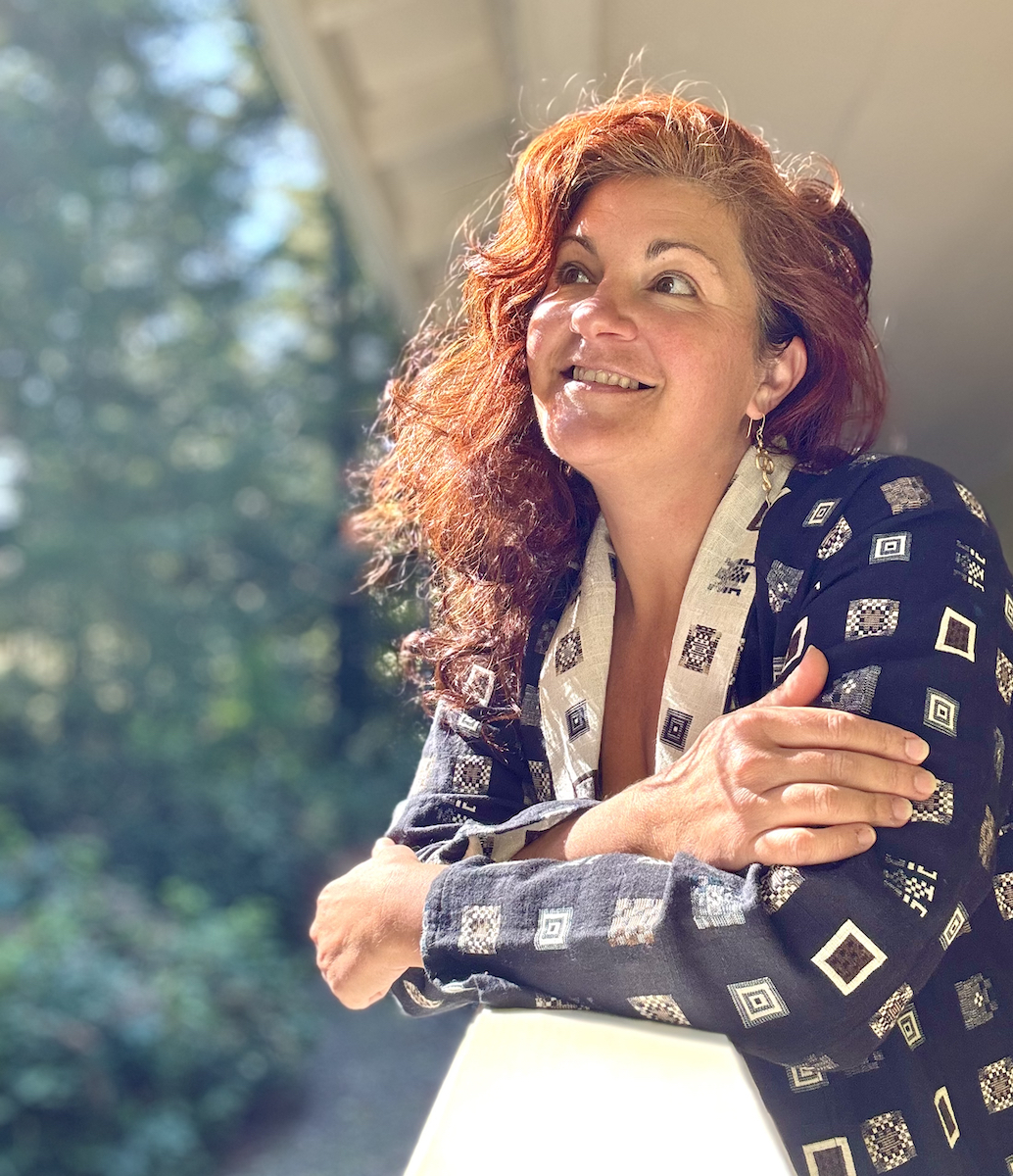 For 97% of our shared past, humans lived in egalitarian communities. Yet most of the story we tell about “early man” is written from a male-centered perspective—hunters, fighters, inventors—while women are relegated to the sidelines. But new science tells a different story. DNA evidence, burial goods, isotopic analysis, and archaeological finds all point to the centrality of women: they were hunters, innovators, traders, artists, healers, builders, and leaders. Vartan combines cutting-edge research with vivid storytelling and her own immersive fieldwork—grinding pigments, cooking with replica cookware, wearing ancient-inspired clothing—to reconstruct how women actually lived from the Neolithic through the Middle Ages.
Like Yuval Noah Harari’s Sapiens, Cat Bohannon’s Eve, and Rebecca Wragg Sykes’s Kindred, this book reframes the human story—with women restored to the center. It offers sweeping history written with intimacy, voice, and urgency.
Starre Vartan brings authority and reach to the subject. A seasoned science journalist with credits in National Geographic, Scientific American, The Washington Post, Slate, Aeon, and many more, she has a BS in Geology, a Biology minor, and an MFA in Nonfiction Writing from Columbia. Her recent book, The Stronger Sex, has established her as a bold new voice reshaping the cultural conversation about women’s bodies and strengths.
THE REAL LIVES OF OUR FEMALE ANCESTRORS is more than a work of history—it’s a reclamation. It challenges entrenched assumptions and offers readers a chance to see themselves in the lives of women who carried, created, discovered, led, and endured. At once rigorous and accessible, it promises to inspire, educate, and captivate a wide, cross-disciplinary audience.
Starre Vartan is a science writer who was raised in a family of creatives and medical professionals. She grew up in New York and now splits her time between the Pacific Northwest and Sydney, Australia. She contributes regularly to Scientific American and National Geographic and has written for CNN, the Washington Post, Slate, and New York magazine, among many others. Her investigative journalism for NatGeo in early 2022 on how the DNA technique used to catch the Golden State Killer is being used to track elephant ivory smugglers and convict wildlife criminals.
 Yael Tsoyberer is a menopausal, asexual, Jewish New Yorker who lives with her Holocaust survivor grandparents in a tiny rent-controlled apartment, from which they operate a unique family business. This multigenerational trio are The Underworld Private Investigators, an agency that specializes in supernatural cases related to Jewish lore. Unlike most New Yorkers, Yael, along with her Bubbe and Zeyde, is tuned in to the many demons living in NYC—from the hardworking shretelekh masquerading as doormen, to the powerful demoness Lilith living down the hall, and occasional crises like a golem running amok.
  What if you could tell just by looking at someone that they were attracted to you? That they genuinely wanted to get to know you better? Or, if they’re someone you should absolutely stay away from? With THE HUMAN LIE DETECTOR’S TIPS FOR LOVE & DATING, you can do just that and more.
 The lymphatic system is one of the body’s most overlooked yet essential systems. If it stopped working, we would be dead within a day and yet few people understand this vital system or how to keep it functioning optimally. Working in conjunction with the cardiovascular, musculoskeletal, immune, and nervous systems, our lymphatic system plays a critical role in both physical and mental health. It helps rid the body of a whole host of antigens, many of them harmful: toxins, bacteria, viruses, parasites, fungi, proteins, cancer cells, and metabolic cellular waste. It also helps reduce swelling and inflammation, which contribute to many chronic diseases, and removes cellular waste resulting from injury. Stress, trauma, poor nutrition, environmental toxins, a sedentary lifestyle, and medications can also impair the lymphatic system. Which is why, when our lymphatic system becomes overwhelmed, overloaded, obstructed, or stagnant, we feel it at every level of our physical and emotional health.