
Archives par étiquette : The Martell Agency

THE REAL LIVES OF OUR FEMALE ANCESTORS de Starre Vartan

From the author of The Stronger Sex comes this fascinating exploration of the overlooked story of women in human history.

THE REAL LIVES OF OUR FEMALE ANCESTORS
by Starre Vartan

Hachette/Basic Books/Seal Press, 2027
(via The Martell Agency)
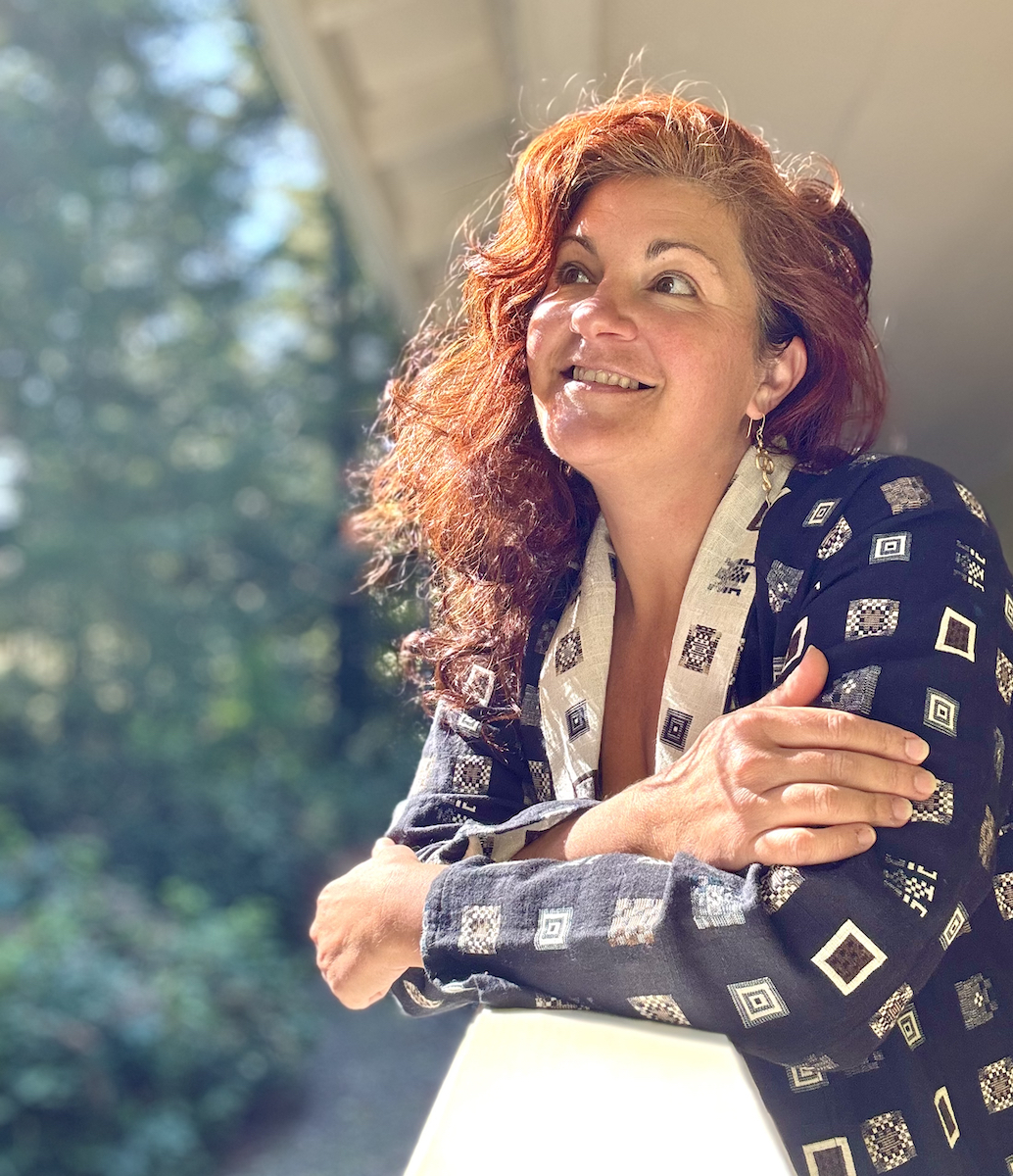
For 97% of our shared past, humans lived in egalitarian communities. Yet most of the story we tell about “early man” is written from a male-centered perspective—hunters, fighters, inventors—while women are relegated to the sidelines. But new science tells a different story. DNA evidence, burial goods, isotopic analysis, and archaeological finds all point to the centrality of women: they were hunters, innovators, traders, artists, healers, builders, and leaders. Vartan combines cutting-edge research with vivid storytelling and her own immersive fieldwork—grinding pigments, cooking with replica cookware, wearing ancient-inspired clothing—to reconstruct how women actually lived from the Neolithic through the Middle Ages.

Like Yuval Noah Harari’s Sapiens, Cat Bohannon’s Eve, and Rebecca Wragg Sykes’s Kindred, this book reframes the human story—with women restored to the center. It offers sweeping history written with intimacy, voice, and urgency.

Starre Vartan brings authority and reach to the subject. A seasoned science journalist with credits in National Geographic, Scientific American, The Washington Post, Slate, Aeon, and many more, she has a BS in Geology, a Biology minor, and an MFA in Nonfiction Writing from Columbia. Her recent book, The Stronger Sex, has established her as a bold new voice reshaping the cultural conversation about women’s bodies and strengths.

THE REAL LIVES OF OUR FEMALE ANCESTRORS is more than a work of history—it’s a reclamation. It challenges entrenched assumptions and offers readers a chance to see themselves in the lives of women who carried, created, discovered, led, and endured. At once rigorous and accessible, it promises to inspire, educate, and captivate a wide, cross-disciplinary audience.

Starre Vartan is a science writer who was raised in a family of creatives and medical professionals. She grew up in New York and now splits her time between the Pacific Northwest and Sydney, Australia. She contributes regularly to Scientific American and National Geographic and has written for CNN, the Washington Post, Slate, and New York magazine, among many others. Her investigative journalism for NatGeo in early 2022 on how the DNA technique used to catch the Golden State Killer is being used to track elephant ivory smugglers and convict wildlife criminals.

ADRIFT de Peter Morse

A propulsive work of narrative nonfiction by the survivor of one of the most chilling diving tragedies in recent history. Mixing the immersive urgency of The Perfect Storm, the psychological depth of Into the Wild, and the investigative precision of Into the Raging Sea, ADRIFT brings readers into the heart of a catastrophe that unfolded 300 miles off the Colombian coast — and the haunting aftermath that reshaped every life touched by it.

ADRIFT
by Peter Morse

Pegasus, TBD 2027
(via The Martell Agency)

On what should have been a routine final dive in sight of Malpelo, a forbidding sheer barren rock of an island with a fascinating but eerie history, five divers surfaced far from their boat, swept into a fast-moving current with no emergency beacon and no hope of being seen. As darkness fell and sharks circled, Morse made a harrowing decision: to leave the group and attempt a solo swim back to the boat — a choice that would save lives, cost others, and haunt every survivor for years. Told through multiple points of view — including Hernán and Jorge, the two men who drifted for 50 hours, and the families of the deceased — this is not simply a survival story. It is a reckoning with hubris, systemic failure, institutional negligence, and the profound psychological toll of surviving when others did not.

What distinguishes ADRIFT is its dual power as both memoir and investigative reconstruction. Morse pairs his firsthand testimony with years of interviewing survivors, boat crew, families, park rangers, investigators, and local officials. The result is a layered, riveting narrative — visceral in its immediacy, cinematic in its scope, and deeply human in its emotional resonance.

What ultimately makes this project so compelling — and so commercial — is its rare combination of high-stakes survival, psychological depth, and investigative revelation. It speaks to readers of Krakauer, Junger, Grann, Larson, and Susan Casey; to viewers of true-adventure documentary series; and to anyone drawn to stories about resilience, moral ambiguity, and the hard truths about what went wrong.

Peter Morse is a marine zoologist with a PhD in animal cognition; his scenes beneath the Pacific pulse with scientific insight and poetic clarity, grounding the book in the lived reality of currents, predators, and oceanic physics. Morse has meaningful promotional partners in the marine conservation world — influencers and organizations with platforms ranging from 14K to over 550K followers.

INSECT SAFARI de Margie Patlak

Join a veteran science writer on a fascinating adventure as she explores the ever-more-astounding world of insects – all in her own backyard.

INSECT SAFARI:
Exploring the Wondrous World of Everyday Bugs
by Margie Patlak

Workman Publishing, June 2026
(via The Martell Agency)

When science writer Margie Patlak was inspirited to take a quick close-up snapshot of a bee in her backyard, it was the start of a years-long obsession with cataloging and understanding the tiny creatures that were all around her.

The essays in her book showcase the superpowers, alien anatomies, and striking untold behaviors and thinking abilities of bugs hidden in plain sight in backyards, parks, gardens, and even in the flowerpots that dot city courtyards and balconies. Each essay focuses on a specific bug and explores the big ideas these little bugs raise, such as whether the maternal instinct is truly instinctual, the value of a short life, whether to blend in or alter your environment, and whether you can have altruism without tribal atrocities.

But what perhaps makes INSECT SAFARI the most intriguing is its reporting on the plethora of recent scientific findings revealing there’s more to the inner lives and behaviors of insects than people ever thought possible.  Who knew wasps use tools and recognize faces, bees play with balls and do math, ants invented farming way before we did, and even fruit flies mull over their mating choices?

These findings reinforce the notion that we aren’t the only intelligent beings on Earth and tap into people’s curiosity about the alien life right here on their own planet. 

Margie Patlak is a science writer, memoirist, and photographer. Her book More Than Meets the Eye: Exploring Nature and Loss on the Coast of Maine was given an “Outstanding Book” award by the American Society of Journalists and Authors in 2022.  Her photo book Wild and Wondrous: Nature’s Artistry on the Coast of Maine was published in 2023, and her photographs have been featured in several solo and group exhibits.  She has also written articles for a number of newspapers and magazines, including Discover, The Washington Post, The Los Angeles Times, and The Philadelphia Inquirer, and her essays have been published in a number of literary journals. Patlak divides her time between Down East Maine and Philadelphia.

OCTOPUS X de Kenna Hughes-Castleberry

A fascinating narrative about “citizen science” and the discovery of the mysterious creature that has been called “the Bigfoot of Octopuses” – perfect for readers of Sy Montgomery and Ed Yong

OCTOPUS X
by Kenna Hughes-Castleberry
Island Books, 2026
(via The Martell Agency)

OCTOPUS X will be an exploration of passionate “citizen science” in the person of diver and artist Arcadio Rodaniche, who, along with his mentor and famed cephalopod behavioralist Martin Moynihan, found a mysterious colony of social octopuses off the coast of Panama. These octopuses were unlike any previously described, as they lived in mated pairs, constantly laid eggs, mated beak-to-beak, and exhibited unique hunting strategies, all of which went against the norm for octopus behavior.

Fascinated by these creatures, Rodaniche studied them at his Smithsonian Tropical Research Institute (STRI) laboratory. He tried to present his findings at a Marine Biological Laboratory (MBL) symposium but was laughed out of the event as few believed his claims about this bizarre octopus (it didn’t help that he didn’t have an academic background in cephalopod research but instead had an electrical engineering degree). Rejected, his paper and findings sat untouched for decades, with only his drawing of the animal accompanying them, adding to the allure of this creature.

Then, some years later, a team of researchers at U.C. Berkeley obtained samples of Rodaniche’s mysterious octopus, and their observations validated everything Rodaniche found. They asked Rodaniche to co-author their paper, and in 2016, they released their findings to the world. Even with this validation, Rodaniche’s story has never been fully told. Unfortunately, Rodaniche died only five months after seeing his work validated.

Currently, this octopus (known commonly as the Larger Pacific Striped Octopus or LPSO) is being genetically analyzed by a separate team from U.C. Berkeley working to classify it as its own species scientifically. If this happens, the lead researcher, Dr. Gul Dolen, plans to name the animal Octopus rodaniche, giving a further victorious ending to Rodaniche’s story. Kenna also plans to highlight ongoing research to study the LPSO in its wild habitat, which has never been done before.

Kenna Hughes-Castleberry is the Science Communicator at JILA (a world-leading physics research institute established by CU Boulder and NIST) and a freelance science journalist. She focuses on animal intelligence, specifically in corvids and cephalopods. Her work has appeared in such publications as National Geographic, Scientific American, New Scientist, and Discover Magazine. She holds several degrees, including undergraduate degrees in English and Biology from Colorado State University and a Master’s degree in Science Communication from Imperial College London.

HOW FLOWERS MADE OUR WORLD de David George Haskell

Flowers are beautiful revolutionaries. When they evolved, they remade the natural world. Almost all of nature now depends on them. We live on a floral planet, yet flowers don’t get the credit they deserve. We admire them for their beauty, not their world-changing power. In this revealing new book, internationally renowned nature writer David Haskell puts flowers back where they belong, at the center of the story about how our planet came to be and how it thrives today.

HOW FLOWERS MADE OUR WORLD:
Revolutions of Cooperation, Beauty, and Illusion
by David George Haskell
Viking, 2026
(via The Martell Agency)

Flowers are innovators. They used beauty to transform former enemies into cooperative partners. They reinvented plant growth, sex, and motherhood. Through genetic nimbleness, they turned past environmental upheavals into opportunities for renewal. This inventiveness allowed them to build and sustain rain forests, savannahs, prairies, and even ocean shores.

Flowers create opportunities for others. Butterflies and bees would not exist without them. Modern birds diversified in lockstep with flowers. Flowers shaped our species’ history, too. Grasses caused our ape ancestors to come down from the trees. Agriculture, with flowering plants at its heart, is the foundation of all modern civilizations.

Although flowers lack nerves, they created a language of beauty to converse with animals. We draw this conversation into human social networks, using cut blooms, floral aromas, and flower symbolism to mediate our signals to one another. Illusion is beauty’s companion. Flowers dupe many pollinators, and we use flowers to conceal, mask, or deflect. By breeding and growing flowers, we create both beauty and illusions: paradoxically, flowers produced by horticulture can be dangerous to pollinators.

The study of flowers revolutionized science and was a foundation of the horrors of colonialism. Today, we look to the resilience and genetic flexibility of flowering plants to help us face the crises of climate change and extinction. Flowers thrived in the face of past calamity and can do so again.

Flowers are the among most consequential creatures ever to have evolved, but no book to date centers and elevates this story, much of which has been discovered only in the last decade. Today, interest among the reading public in the wonders of plants is high, as is our need to learn from them. Now is a perfect time to celebrate the story of how flowers made our world.

David Haskell’s work integrates scientific, literary, and contemplative studies of the natural world. He is a professor of biology and environmental studies at the University of the South and a Guggenheim Fellow. His 2017 book The Songs of Trees won the John Burroughs Medal for Outstanding Nature Writing. His 2012 book The Forest Unseen and 2022 book Sounds Wild and Broken were both finalists for the Pulitzer Prize and were shortlisted for the PEN/E.O. Wilson Literary Science Writing Award.