
With a new introduction, the groundbreaking classic RACE MATTERS affirms its position as the bestselling, most influential, and most original articulation of the urgent issues in America’s ongoing racial debate.
RACE MATTERS
by Cornel West
Beacon Press, 2001
 Cornel West is at the forefront of thinking about race. First published in 1993, on the one-year anniversary of the Los Angeles riots, RACE MATTERS became a national best seller that has gone on to sell more than half a million copies. West addresses a range of issues, from the crisis in black leadership and the myths surrounding black sexuality to affirmative action, the new black conservatism, and the strained relations between Jews and African Americans. He never hesitates to confront the prejudices of all his readers or wavers in his insistence that they share a common destiny. Bold in its thought and written with a redemptive passion grounded in the tradition of the African-American church, RACE MATTERS is a book that is at once challenging and deeply healing.
« [A] compelling blend of philosphy, sociology and political commentary…It directly takes on some of the most volatile issues facing American society today…One can only applaud the ferocious moral vision and astute intellect on display in these pages. » ̶̶ The New York Times
Cornel West is a prominent and provocative democratic intellectual. He graduated magna cum laude from Harvard University in three years and obtained his MA and PhD in philosophy at Princeton University. He has taught at Union Theological Seminary, Yale, Harvard, Princeton, and the University of Paris. He has written twenty books and edited thirteen, including including Keeping Faith, Prophetic Fragments, and, with bell hooks, Breaking Bread. He has been Professor of Religion and Director of Afro-American Studies at Princeton University since 1988, and was recently appointed Professor of Afro-American Studies and the Philosophy of Religion at Harvard University.
 The high street is dying, and with it, Rupert’s shop ‘the Chest of Small Wonders’, which he has run for decades. Most people won’t miss it. But for teenager Kwasi, the Chest is a refuge he can’t live without, where he finds respite from school bullies and his inescapable aunties (who may or may not have overstayed their visas) at home. Rupert is a man whose home feels too empty: he has lost his way since the death of his wife, trying to remain in the happiness they shared by retreating into a world of drugs. An unlikely friendship develops between Rupert and Kwasi, a relationship which changes over time as well as changes them. But as politics engulfs the shop, both face difficult choices that will force them to confront their prejudices.
 Jana Beil has learned that life rarely provides moments of joy. Indeed, all of Amsterdam in 1616 is less concerned with happiness than with maintaining appearances. But when she begins working as a servant for the wealthy and kind Reynst family, she finds some peace and begins to secretly fall in love with Sontja, the beautiful daughter of the house. However, when Master Reynst loses his fortune through a bad investment with the VOC (the Dutch version of the East India Company), everything changes. Unable to afford her wage, the Reynsts’ let Jana go and she is back on the street again, desperately searching for work. Sontja, too, looks for ways to make enough money to get by, but when her father drinks himself to death, their house is sold to debtors, leaving both girls without a future. With no other choice, Sontja becomes a Company Daughter and sails to the colonial outpost of Batavia to marry a Dutch settler. Unable to envision a life without her, Jana also signs up for the voyage. The two embark on a lengthy, dangerous journey to Batavia, which will end with weddings to miserable old men — not the young, strapping soldiers they were promised. Despite all the hardships, Jana’s life slowly fills with wonder, beauty, and love as she sheds the resignation of her old life to finally reach out for what she truly wants.
 Aaron lives with his single mother and his bookish older brother Connor in a small town with a ramshackle chook shed and an old bath full of rainfish in the backyard. Feeling left out as the younger brother, he commits a theft to impress an older rebellious kid. RAINFISH is a middle-grade novel that lets its readers explore how to cope with big feelings and emotions, with joy, happiness, regret and remorse. It subtly teaches about truth telling and the importance of knowing when to own up to things. The writing is sophisticated while remaining accessible.
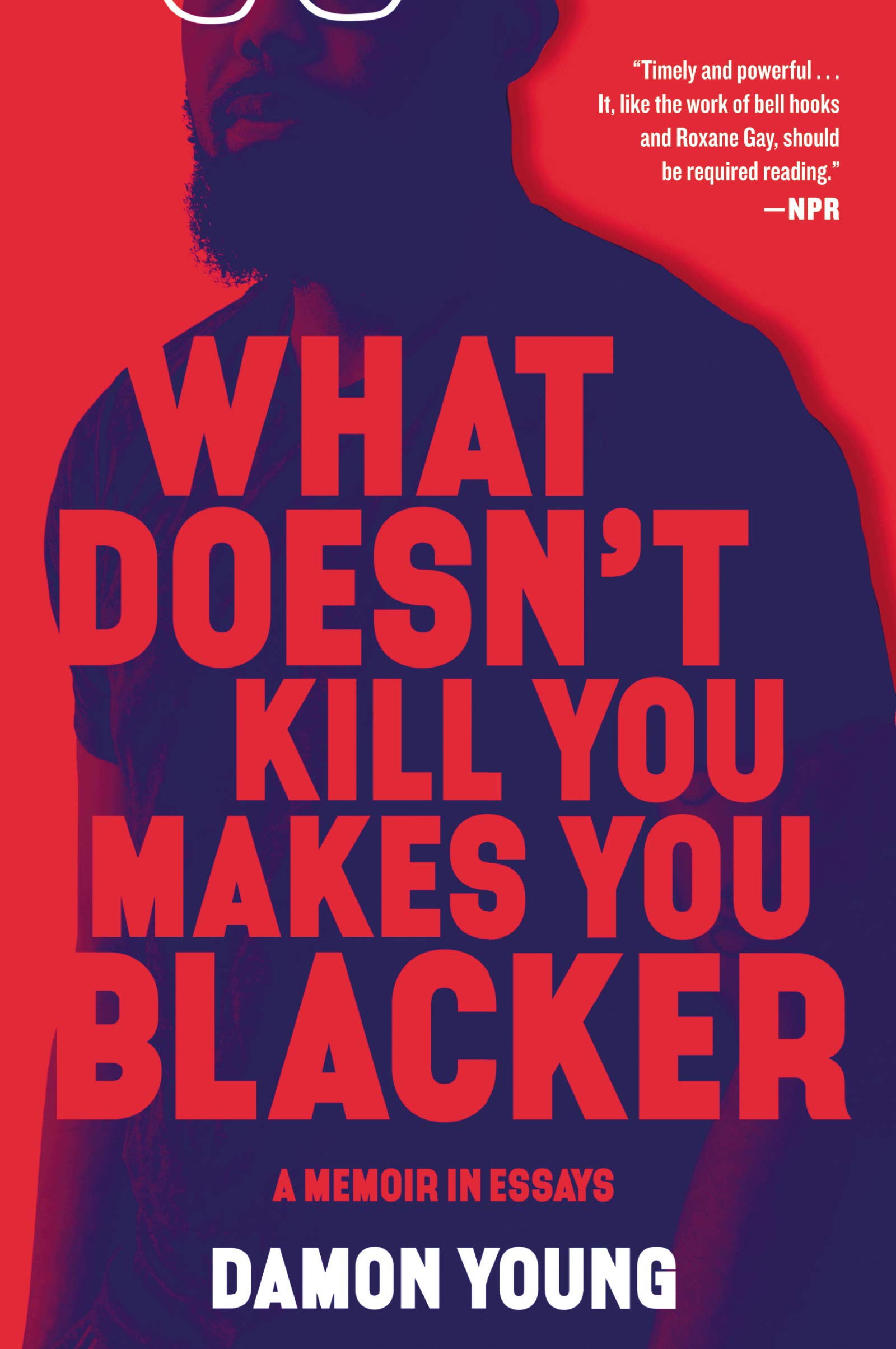 For Damon Young, existing while Black is an extreme sport. The act of possessing black skin while searching for space to breathe in America is enough to induce a ceaseless state of angst where questions such as “How should I react here, as a professional black person?” and “Will this white person’s potato salad kill me?” are forever relevant. WHAT DOESN’T KILL YOU MAKES YOU BLACKER chronicles Young’s efforts to survive while battling and making sense of the various neuroses his country has given him. It’s a condition that’s sometimes stretched to absurd limits, provoking the angst that made him question if he was any good at the “being straight” thing, as if his sexual orientation was something he could practice and get better at, like a crossover dribble move or knitting; creating the farce where, as a teen, he wished for a white person to call him a racial slur just so he could fight him and have a great story about it; and generating the surreality of watching gentrification transform his Pittsburgh neighborhood from predominantly Black to “Portlandia . . . but with Pierogies.” And, at its most devastating, it provides him reason to believe that his mother would be alive today if she were white. From one of our most respected cultural observers, WHAT DOESN’T KILL YOU MAKES YOU BLACKER is a hilarious and honest debut that is both a celebration of the idiosyncrasies and distinctions of Blackness and a critique of white supremacy and how we define masculinity.