
Archives de catégorie : Current Issues

HUMANIST SUPERINTELLIGENCE de Mustafa Suleyman

From the pioneering CEO of Microsoft AI and author of New York Times bestselling The Coming Wave, a momentous new book grappling with the imminent arrival of AI superintelligence, exploring the ways it will transform civilization.

HUMANIST SUPERINTELLIGENCE
by Mustafa Suleyman
with Michael Bhaskar

Crown Currency, September 2027

What was once myth and metaphor is now becoming engineered reality. The looming emergence of artificial superintelligence, and the concurrent rise of potentially conscious AI, marks a fundamental turning point in the human story. The profound questions we once posed of our gods, we must now pose of our own technological creations. Can we trust them? Do they serve our interests or their own? What are their limits or end goals?

HUMANIST SUPERINTELLIGENCE, taking the baton from Suleyman’s prophetic smash hit The Coming Wave, grapples with each of these existentially important questions about the future of AI. But more crucially, it offers a desperately-needed roadmap forward—one grounded in the guiding principles of caution and foresight, rather than in a blind faith in inevitable progress that that has engulfed so much of Silicon Valley.

As Suleyman argues, the arrival of conscious superintelligence will require responsible AI developers to go far beyond the containment and alignment programs of today. AI systems of the future will not just need blindly follow our most virtuous human values, but will need to fully embody them. And in the absence of competent regulators, it will be incumbent upon AI architects themselves to take on the unnatural (yet existentially important) responsibility of backing away from the most extreme, misanthropic uses of the technology—even in the face of overwhelming pressures and incentives to go in the other direction.

In our collective choice to develop superintelligence, we are taking the fire we once stole from Olympus and using it to forge new kinds of minds. New gods. And if there is one thing our myths teach us, it is that from this moment forward, we must proceed with profound care.

Mustafa Suleyman is the CEO of Microsoft AI and New York Times bestselling author of The Coming Wave. Previously he co-founded and was the CEO of Inflection AI, and he also co-founded DeepMind, one of the world’s leading AI companies.
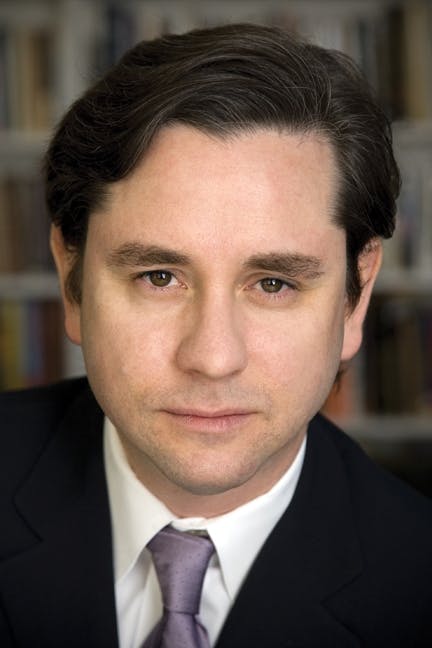
RULED BY DRAGONS de Gordon M. Goldstein

International security scholar and Lessons in Disaster author Gordon M. Goldstein takes on the escalating global crisis of AI control in this urgent examination of what happens when increasingly powerful AI systems outpace human oversight—a rallying cry to prevent the outsourcing of war and power to machines.

RULED BY DRAGONS:
AI and the Global Crisis of Control
by Gordon M. Goldstein

Avid Reader/S&S, Publication date TBD
(via Javelin)

Gordon Goldstein, a fellow at the Council on Foreign Relations and author of the contemporary classic, Lessons in Disaster, the definitive account of the lessons of America’s misguided involvement in Vietnam, has set his sights on the contemporary international security crisis caused by the lack of human control over the AI systems increasingly dominating our lives. After consulting with scores of experts in AI alignment and national security, Goldstein sounds the alarm with his new book RULED BY DRAGONS: AI and the Global Crisis of Control, an impassioned rallying cry to action before control slips from our grasp for good and nations as we know them cease to exist and we outsource war to the bots.

Gordon M. Goldstein is a scholar of international affairs who has served as an international security adviser to the United Nations secretary-general and as a Wayland Fellow at the Watson Institute for International Studies at Brown University. His articles have appeared in The New York Times, Newsweek, and The Washington Post. He is the author of Lessons in Disaster. He is a member of the Council on Foreign Relations and lives in Brooklyn, New York.

COGNITIVE EXTINCTION de Nita Farahany

A sobering look at how digital life is eroding our thinking, our freedom, and what it means to be human―and how to reclaim what we’ve lost.

COGNITIVE EXTINCTION:
Saving Human Thought While We Still Can
by Nita Farahany

St. Martin’s Press, March 2027

Something is disappearing from human life: our ability to think freely, engage meaningfully with others, and be present in our own lives. Can we adapt to the modern world without losing the qualities that make us human?

In COGNITIVE EXTINCTION, Nita Farahany, one of the world’s foremost scholars on the ethical, legal, and societal implications of emerging technologies, names what is happening: we are losing our cognitive liberty, the ability to trust our perceptions and govern ourselves. We can sense this intuitively, but we don’t recognize that these struggles present a dire threat to our institutions and the common ground beneath us all―the cognitive commonwealth itself.

After years of questioning these alarming trends, she found answers when she least expected it: through her own grief. When her daughter, Callista, passed away, Farahany’s cognitive world collapsed. As she tried to make sense of what was happening, she discovered that the mental capacities she had lost mirrored those being hollowed out across society through digital immersion.

What has been degraded, Farahany argues, can still be rebuilt. That begins with each of us. We must resist the temptation to sleepwalk into cognitive extinction and collectively recognize that our mental freedom is at stake. Only then can we reclaim a world in which humans find meaning and flourish.

Deeply felt and rigorously researched, COGNITIVE EXTINCTION is a clarion call for all of us to pay attention to what we’re losing―while we can still feel ourselves losing it.

“This may be the most important book written about technology, human flourishing, and what we need to protect to become fully ourselves.” ―Lori Gottlieb, bestselling author of Maybe You Should Talk to Someone

Nita Farahany is a legal scholar and philosopher who studies the societal implications of emerging technologies. She is the Robinson O. Everett Distinguished Professor of Law and Philosophy at Duke University and the founding director of Duke Science & Society. She is a frequent speaker at events including TED, the Aspen Ideas Festival, and the World Economic Forum. Her previous book, The Battle for Your Brain, has shaped global conversations on cognitive liberty and mental privacy.

THREAT ACTORS de Mitch Moxley et Johnny Liesman

A quarter-billion-dollar crypto heist, a violent kidnapping, a network of teenage cybercriminals, and the rise of the Gen Z Mafia.

THREAT ACTORS
by Mitch Moxley & Johnny Liesman

Random House, Fall 2028
(via Sterling Lord Literistic)

Not too long ago, responsible adults worried that adolescents who spent hours playing video games like Grand Theft Auto were being indoctrinated into a world numbed to violence and misogyny. What flew under the radar were the late-night sessions on less violent multiplayer games like Minecraft and Roblox that primed kids for something just as unsettling. There, kids could learn to cheat, hack, and steal in online marketplaces selling “rare” usernames and game add-ons, earning an “education” that seamlessly propelled them into the higherstakes cryptocurrency world and hijacking digital wallets—sometimes in a matter of seconds. Threat Actors follows one such group of young men as they graduate from scripted phone scams into threats and beatings, and from “small” seven-figure thefts to the heist of a quarter billion dollars from an unsuspecting middle-aged investor. They are members of “the Com,” or “the Community,” a fast-growing online collective of young criminals trained at home and emerging as a brutal and organized 21st-century Mafia.

THREAT ACTORS (a term used by law enforcement and investigators to describe this growing class of cybercriminals) follows the group’s most notorious crime down every rabbit hole, revealing who the “threat actors” behind the senseless usernames are, examining how an anonymous young investigator on X helped the FBI unravel the mystery of their identities, and asking who’s really to blame for the conditions that guided them down the path to crime.

Mitch Moxley is a writer who has contributed to The New York Times Magazine, GQ, Esquire, Rolling Stone, The Atlantic, and other publications. He is the co-creator, writer, and host of the podcast Over My Dead Body: Operation Sideswipe (Audible Originals, October 2026), and author of the memoir Apologies to My Censor, about the six years he lived in China.

Johnny Liesman is a New York-based investigative journalist and producer who codeveloped and reported the Audible Originals series Over My Dead Body: Operation Sideswipe and is producing an upcoming podcast hosted by Pulitzer Prize-winning journalist Ronan Farrow. He’s spent countless late nights in the Telegram channels of the Com—and grew up in the same online world as many of the book’s subjects.

ANTI-PALESTINIANISM d’Ussama & Saree Makdisi

A revelatory short history of the specific bias exercised against Palestinians in the West, a form of racism that is as politically potent as it is profoundly poisonous to the wider culture; written by two leading scholars of Palestine – one an endowed chair of history at UC Berkeley, the other a professor of literature and post-colonial studies at UCLA.

ANTI-PALESTINIANISM
by Ussama & Saree Makdisi

W.W. Norton, February 2027
(via Frances Goldin Literary)

For decades, the voices of Palestinians and those who advocate for Palestinian rights have been stifled—if not outright silenced—in the United States, according to scholars Ussama Makdisi and Saree Makdisi. More recently, activists have been arrested by federal agents merely for writing op-eds, while pro-Palestinian speech in universities as well as media and civic institutions has faced an unprecedented crackdown. How are we to understand this intolerance in the supposed land of the free?

In ANTI-PALESTINIANISM, the Makdisis, two of the most prominent Palestinian American scholars in the United States, argue that the phenomenon is not reducible to Islamophobia or to general anti-Arab animus. Rather, they show that anti-Palestinianism constitutes a distinct form of bias rooted in the specific historical and political circumstances of Palestine and Israel – it is an attempt to deny the Palestinian story altogether through an unprecedented system of assumptions, norms, rules, and even laws. Drawing on a vast array of historical examples, the Makdisis have produced an essential work that gives language and clarity to the limits of American inclusion.

“If Americans are like fish, anti-Palestinianism is like water—so ubiquitous it remains largely invisible. Naming it, so we recognize how often our public debates assume that Palestinian lives matter less than Jewish ones, is crucial work. This is a genuinely important book.” – Peter Beinart, author of Being Jewish After the Destruction of Gaza

“How is it possible for the Palestinians to be openly dispossessed, subjugated, starved and massacred while the world’s liberal democracies watch on and do almost nothing to save them? Saree and Ussama Makdisi provide a well-argued and brilliantly nuanced answer to that question in this brave, timely and hugely important book. Anti-Palestinianism is essential reading to understand the biggest moral issue of our time.” – William Dalrymple, author of The Golden Road

“Anti-Palestinianism will shock and inspire you. It is a foundational work, and should be read in every house, taught in every classroom.” – Fady Joudah, author of Exhibit G

Ussama Makdisi is the inaugural May Ziadeh Chair in Palestinian and Arab Studies, Professor of History, and Chancellor’s Professor at the University of California Berkeley. His latest book, Age of Coexistence (University of California Press, 2019), was praised by Peter Beinart and Rashid Khalidi, among others. His writing has appeared in The New York Times, The Christian Science Monitor,  The Houston Chronicle, The Yale Review, Jewish Currents, and Aeon, as well as on various Arabic media, and he has appeared on numerous television and radio shows including Al Jazeera, TRT International, and NPR’s Morning Edition.

Saree Makdisi is the Chair of the English Department at UCLA and a scholar of Palestine, colonial history, and its afterlives. He is the author of Palestine Inside Out (Norton, 2008), which counted Alice Walker, Desmond Tutu, and Howard Zinn among its many supporters, and Tolerance is a Wasteland (UCP, 2022), which Judith Butler called “a beacon of light.” He wrote the introduction for the recent reissue of Edward Said’s The Question of Palestine, which he presented at Southbank Center in a much-watched speech last fall. He writes frequently for the Los Angeles Times, the Washington Post,  The Guardian, n+1, and the London Review of Books. His essay “No Human Being Can Exist” was n+1’s most-read piece of 2023. 

With their brother Karim Makdisi, Saree and Ussama are also hosts of the popular podcast Makdisi Street.