
An original look at the philosophy of Jean-Paul Sartre—told in cartoons.
LABYRINTH:
An existential Odyssey With Jean-Paul Sartre
by Ben Argon
Abrams ComicArts, April 2020
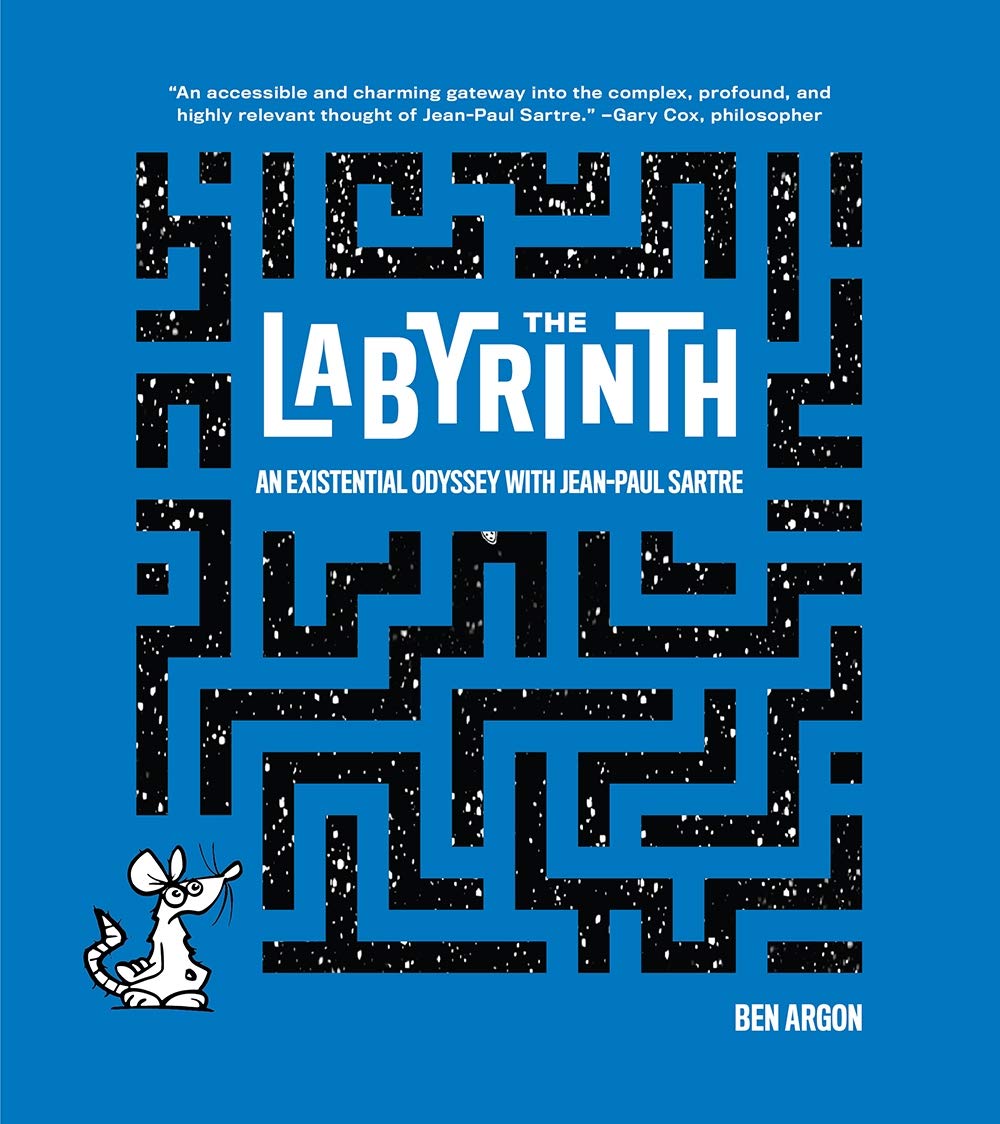 As graduates embark on the next phase of their lives, what better way to get them accustomed to the rat race they are about to enter than by introducing them to the philosophy of Jean-Paul Sartre? Cleverly told through the story of a pair of rats trapped in the labyrinth of existence, this allegory humorously conveys the key ideas of Sartre’s existential philosophy in graphic novel form—accessible for students and readers of all ages. In addition, two reputable Sartre scholars have contributed the introduction and afterword: Gary Cox, a British philosopher with a doctorate from the University of Birmingham, and Christine Daigle, professor of philosophy at Brock University in Canada.
Ben Argon grew up in France surrounded by artists, authors, and philosophers of all kinds. It was then that he started making comics. At the age of reason, his attraction to science led him to embark on a corporate career, where he now leads teams of scientists and knowledge workers. He lives in Amsterdam.
 Paras is a spirited young racehorse living at a stable in the French countryside. One afternoon she pushes open the gate of her stall—she’s a curious filly—and, after traveling through the night, arrives by chance in Paris. She’s dazzled, and often mystified, by the sights, sounds and smells around her, but she isn’t afraid. Soon she meets an elegant dog, a German shorthair pointer named Frida, who knows how to get by in the city without attracting the attention of suspicious Parisians. Paras and Frida coexist for a time in the city’s lush green spaces, nourished by Frida’s strategic trips to the butchery and the bakery. They keep company with two irrepressible ducks, and by an opinionated crow. But then Paras meets a human boy, Etienne, and discovers a new, otherworldly part of Paris: the secluded, ivy-walled house where the boy and his nearly-one-hundred-year-old great grandmother live, quietly and unto themselves. As the cold weather and Christmas near, the unlikeliest of friendships bloom among humans and animals alike. But how long can a runaway horse live undiscovered in Paris? And how long can a boy keep her hidden, and all his own? Jane Smiley’s beguiling new novel is itself an adventure that celebrates curiosity and ingenuity, and expresses the desire of all creatures for true friendship, love, and freedom.
 Big Son is what you call a spirit of the times—the times being 1837. Behind his broad shoulders, shining hair, and chuch-organ laugh, Big Son practically made Ohio City all by himself. The feats of this frontier superhero have earned him wonder and whiskey toasts but very little in the way of government dollars. And without money, Big cannot become an honest husband to his beloved Cloe (who might not want to be his honest wife). In pursuit of a steady wage, our hero hits the (dirt) streets of Ohio City and Cleveland. These two cities are locked in a fierce fight to become the first great metropolis of the West. Their rivalry has come to a boil over the building of a bridge across the Cuyahoga River – and Big stumbles right into the kettle. The ensuing misadventure involves elderly terrorists, infrastructure collapse, steamboat races, dental hygiene, wild pigs and several ruined weddings.
  Originally published before the war in 1938 and the full revelations of the Third Reich’s persecution of Jews and other civilians, the book offers a fascinating look at life during this period and the moral challenges people faced under Nazism. It is also a taut, gripping, page-turner of the first order. Written in the form of a suspense novel,