
He only appears where people die. He’s closer to death than to anything or anyone else.
DUNKELKAMMER
(Dark Room)
by Bernhard Aichner
btb/PRH Germany, March 2021
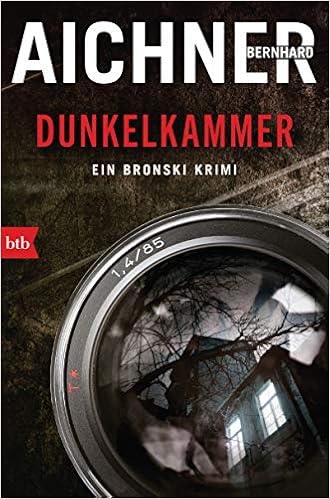 Winter in Innsbruck. A homeless man seeks refuge in a long abandoned house in the woods. In the bedroom, he finds a dead body. It has been lying there for twenty years. It’s just what the press photographer David Bronski has been waiting for. He and his colleague, the journalist Svenja Spielmann, are tasked with reporting from the scene – but what he won’t tell anyone is what connects him to this spectacular case.
Ever since he can remember, Bronski has taken photographs of misfortune. His eye is trained on the darkness in our world. He goes where people die. He immortalises everything that’s bad, and is fascinated by the silence of death. It’s like an addiction. Bronski is closer to death than to anything or anyone else, and lives only for his secret passion: analogue photography. The dark room is his safe haven – here, he creates his works of art, portraits of dead people. Scarred by a terrible event in his past, this is his attempt to rediscover meaning in life.
Bernhard Aichner, born in 1972, works as an author and photographer and writes novels, audio plays and stage plays. He trained as a journalist at the second largest Austrian daily newspaper, where he grew particularly fascinated by police photographs of accidents, murders and natural disasters. Aichner has been awarded several literary prizes and scholarships for his work, including among others the 2015 Crime Cologne Award and the 2017 Friedrich Glauser Prize. His books are bestsellers and translated into numerous languages.
 Ellen has always felt like a visitor in her own life. Except once, when she was young and briefly lived on the Halligen islands with her mother. She never wanted to leave, but had no say in the matter. Now she returns to these oddly familiar marshes – and to Liske, who once was like a sister to her. As they grow closer, old conflicts are stirred up again; but Ellen refuses to give up. Because she knows that this is her true home. For readers of Delia Owens’
 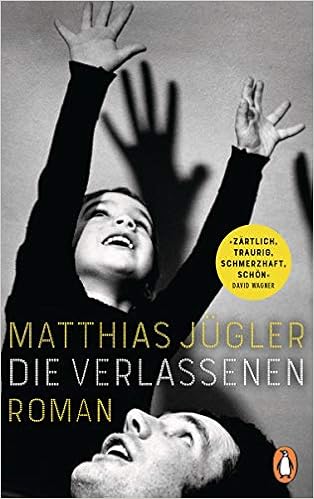 Johannes looks back on his childhood in East Germany, and the cracks that ran through it: his mother’s early death, his father’s mysterious disappearance. All his questions remained unanswered, and he now treads carefully on his path through life. When Johannes finds a letter in an old chest – addressed to his father and sent only a few days before he left his son without a word – the discovery transforms not only his future, but also his past as a child in the GDR before the Wall came down. With penetrating vigour and forceful clarity, Matthias Jügler tells a story of loss and betrayal, of the value of memory and the urgent questions that are troubling a whole generation. A warm-hearted, radiant novel written with extraordinary linguistic intensity.
 L’artiste et auteur nigérian Àlàbá Ònájìn prépare une nouvelle série de BD, « The Adventures of Ajani », qui s’adresse autant aux adultes qu’aux enfants. Dans un style influencé par la « ligne claire » d’Hergé, Àlàbá Ònájìn présente le point de vue nigérian sur la fin de la domination britannique dans les années 1960 à travers son héros Ajani, journaliste yoruba malin et curieux et fervent partisan de l’indépendance.
 Biographie de l’auteur : Àlàbá Ònájìn is a Freelance Cartoonist and Illustrator. He was born in Lagos state, Nigeria and has a Diploma in Freelance Cartooning and Illustration from The Morris College of Journalism, Surrey, Kent, UK. He is currently living in Lagos, Nigeria. He has always had a passion for telling stories through his drawings ever since he was introduced to Hergé’s Tintin books at a very young age; these books sparked an energy to bring his stories to young readers around the world. Ònájìn’s work includes Anike Eleko, a children’s comic book on girls’ education by Farafina Books, On Ajayi Crowther Street, a graphic novel published by Cassava Republic in collaboration with the German cultural organization Goethe Institut, and other art collaborations with UNESCO on the Role of Women in African History Project, illustrating the lives of three great African women: Funmilayo Ransome Kuti, Empress Taytu Betul of Ethiopia, and Miriam Makeba.
 Sydney, 2019. Twenty-five-year-old Asha, who has grown up in Australia, knows very little of her mother’s past in India. As far as her Amma is concerned, the past doesn’t matter, it’s their future that counts. But when Asha’s paternal grandfather is taken ill, her beloved father requests that they return to Madurai to see him, and he wants the whole family to go. Asha is fascinated by what her mother is hiding, and determined to discover the truth about her background: knowing all the while that she is also hiding something from her family.