
Author of The Longing For Less and a contributor to The New Yorker and NYT Magazine, Kyle Chayka’s FILTERWORLD focuses on the history and investigation of living in a world ruled by algorithms, which profoundly determine and shape culture in both digital and physical spaces, leading to flat and frictionless experiences that are remaking human identity.
FILTERWORLD:
How Algorithms Flattened Culture
by Kyle Chayka
Doubleday, Fall 2023
(via Frances Goldin Literary)
 You’ve seen the smooth, uncanny artifacts: a blank, white café that looks like it could be located anywhere in the world; TikTok dance videos repeating in a dull echo; restaurant design and food plating which begs to be posted on Instagram; endlessly bingeable streaming television; influencers’ faces made up and surgically altered towards a certain photogenic ideal. While appearing in different mediums, these pieces of culture are characterized by a slick sameness. Rather than provoking us, they’re pleasing, ambient, frictionless.
In this new book, Kyle Chayka argues that these seemingly disparate cultural phenomena all have been shaped by a similar force: the algorithms governing and filtering the content that appears on digital platforms. We increasingly live in a world where the culture we encounter is not simply curated by these algorithms, but in which algorithms profoundly determine and shape culture itself in both digital and physical spaces. Chayka names this new reality, of a world both inescapably mediated and changed by algorithmic filtration, “Filterworld”.
In FILTERWORLD, Chayka traces a brief history of how we arrived in this place—from the rise of the algorithm through the corresponding erosion of human curation and taste—before launching a penetrating exploration of the flat hallmarks of Filterworld byproducts and the way that algorithmically determined taste is fundamentally reshaping human identity. Ultimately a pointed critique of the frictionless culture of Filterworld, the book turns towards what we might do to escape and dismantle this numbing cycle.
Building on the popular criticism Kyle Chayka has published for both The New Yorker online and elsewhere, FILTERWORLD is the product of a career spent as one of our keenest observers of the intersection of technology and modern culture. While much has been written about the way that algorithms impact everything from news to policy, there has been no major book published on the impact of algorithms on culture.
FILTERWORLD will appeal strongly to readers of Jia Tolentino’s Trick Mirror and Jenny Odell’s How To Do Nothing: a book that not only seeks to give language to the slippery ways that technology is reshaping our lived experience, but also gives readers tools to imagine a world in which things could be otherwise.
Kyle Chayka is a freelance writer and critic whose work has appeared in the New York Times Magazine, New York Magazine, the New Republic, Rolling Stone, n+1, Vox, the Paris Review, and other publications. He has contributed chapters to Reading Pop Culture: A Portable Anthology and A Companion to Digital Art. Chayka is cofounder of Study Hall, a newsletter and digital community for journalists. He began his career as a visual art critic for Hyperallergic in Brooklyn, and now lives in Washington, D.C.
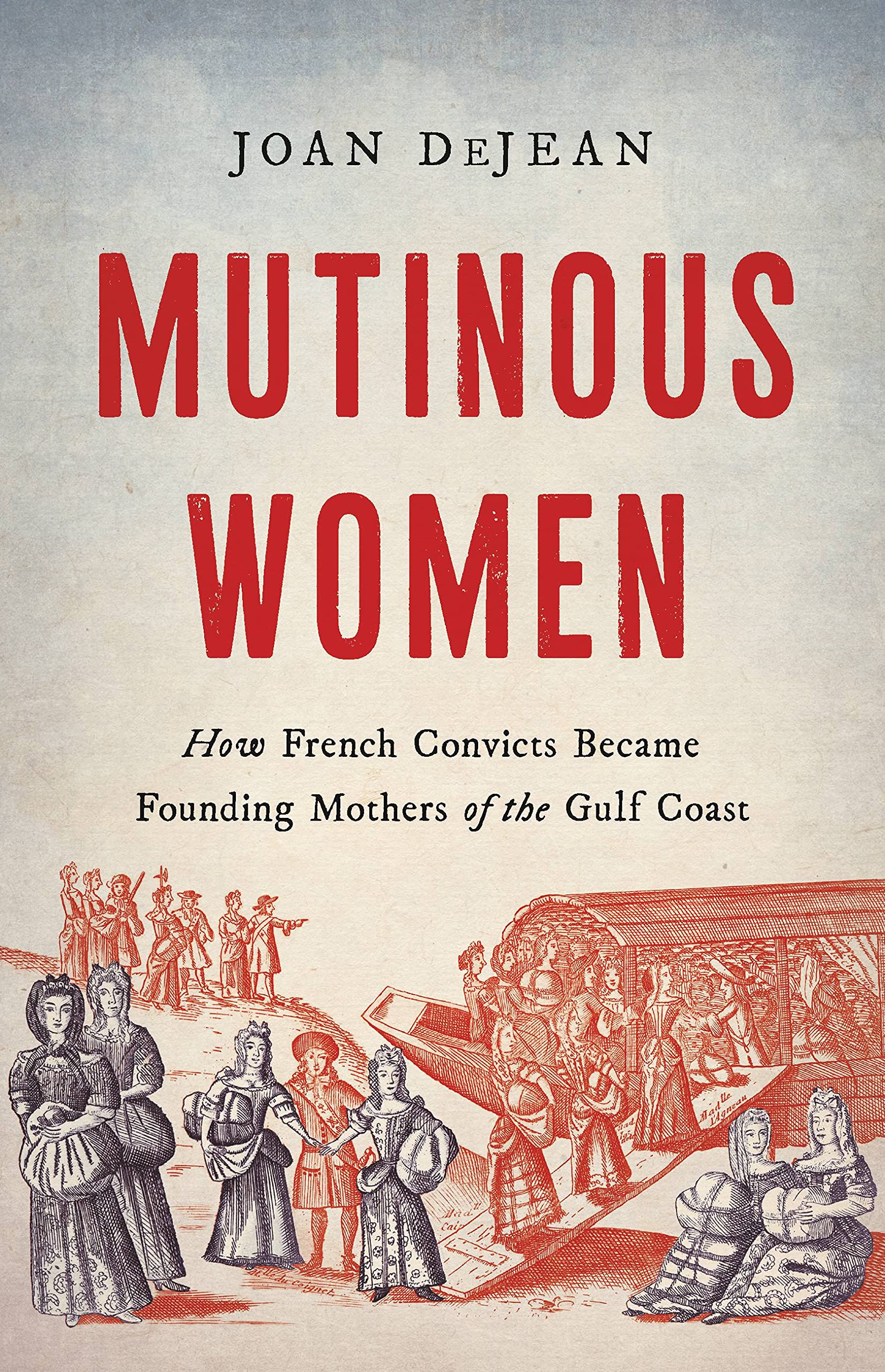 In 1719, a ship named La Mutine (the mutinous woman), sailed from the French port of Le Havre, bound for the Mississippi. It was loaded with urgently needed goods for the fledgling French colony, but its principal commodity was a new kind of export: women. Falsely accused of sex crimes, these women were prisoners, shackled in the ship’s hold. Of the 132 women who were sent this way, only 62 survived. But these women carved out a place for themselves in the colonies that would have been impossible in France, making advantageous marriages and accumulating property. Many were instrumental in the building of New Orleans and in settling Louisiana, Alabama, Arkansas, Illinois, and Mississippi.
 Joan DeJean
 Following a devastating famine in her village, ten-year-old Lin‘s mother reluctantly sells her to a human trafficker, who promises to bring Lin to a better life in America. Her mother gives Lin the profits of the sale as well as a photo of her absent father, Guifeng, who had travelled to Gold Mountain years ago before cutting off communication with his family back home. STRAW DOGS OF THE UNIVERSE follows Lin’s brave journey through the unforgiving landscape of the American West—a place particularly hostile to Chinese immigrants—in hopes of finding her father and reuniting her family. The novel simultaneously traces the story of Guifeng who, little known to Lin, has found his attempts to build a new place for himself destabilized by both a long-lost passion from home and the seemingly inescapable violence of this new land.
 The haunting stories in HAO follow Chinese women in both China and America attempting to find language to navigate not only the immigrant experience but the strange continent of motherhood. Confronted with vast silences of gender and identity and trauma, these characters search for words to form fragile intimacies across alien or inhospitable landscapes. In the title story, “Hao,” a persecuted teacher attempts to survive the Cultural Revolution through a word game she plays with her daughter. In “Crazy English,” a woman who comes to America on a fiancée visa struggles with her anxiety around the English language and the looming menace of a stalker. In “A Drawer,” an illiterate teen mother in mid-20th Century wartime China tries to invent a language for herself through drawing.
 Sam Easton―a true survivor―is home from Afghanistan, trying to rebuild a life in his hometown of LA. Separated from his wife, bartending and therapy sessions are what occupy his days and nights. When friend and colleague Melody Traeger is beaten by her boyfriend, she turns to Sam for help. When the boyfriend turns up dead the next day, a hard case like Sam is the perfect suspect. But LAPD Detective Margaret Nolan, whose brother recently died serving overseas, is sympathetic to Sam’s troubles, and can’t quite see him as a killer. She’s more interested in the secrets Melody might be keeping and the developments in another murder case on the other side of town. Set in an LA where real people live and work—not the superficial LA of Beverly Hills or the gritty underbelly of the city—DEEP INTO THE DARK features two really engaging, dynamic main characters and explores the nature of obsession, revenge, and grief.