
Prize-winning author Clint Smith visits World War II sites around the world alongside survivors, descendants, and residents who have a particular relationship to each place, largely focusing on the experiences of groups of people whose stories often sit at the peripheries of the conflict’s dominant narrative, giving an intimate account of their lived experiences during the war.
JUST BENEATH THE SOIL
by Clint Smith
Random House, publication date TBD
(via The Gernert Company)
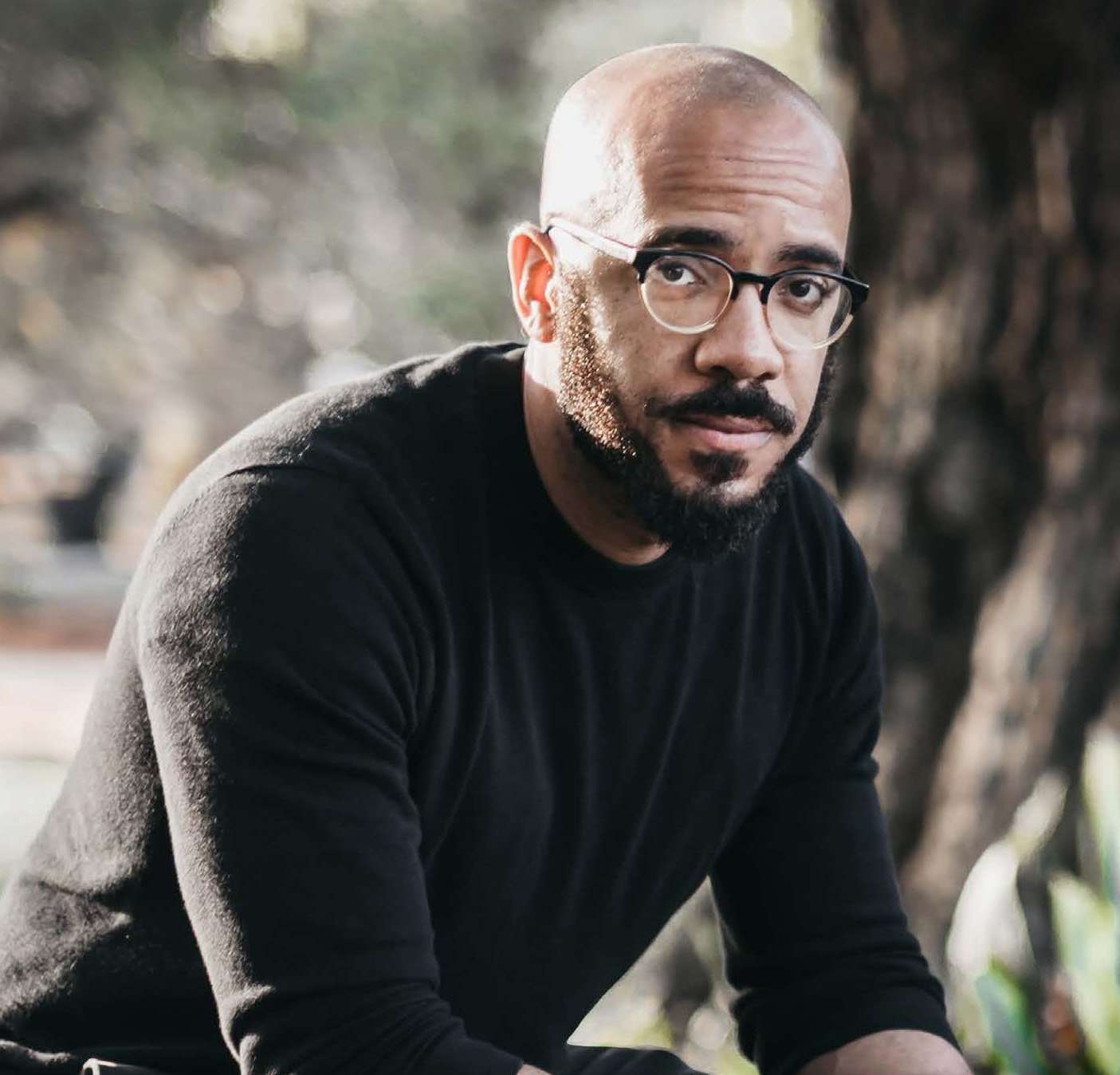
Photo by Carletta Girma
Clint Smith is a singular, once-in-a-generation talent. From the universal critical acclaim of his bestselling debut How The Word Is Passed to his widely read and influential articles at The Atlantic, each new piece of Clint’s writing transforms stories from our past into resonant living history. JUST BENEATH THE SOIL is the next step in Clint’s journey towards a fuller exploration of public memory.
In JUST BENEATH THE SOIL, Clint Smith trains his expert eye on a new time period: World War II. With his poetic, effortless prose, he brings us along as he interrogates what it means to have an “American perspective” on the most consequential and brutal global event of the past century. He spends time with one of the last Navajo Code Talkers, also a survivor of the infamous boarding schools for Native children. He sits with the still-living Korean “comfort women” who were subjected to sexual slavery at the hands of the Japanese military. He remembers his great uncle, a Black American veteran who signed up to fight for a country that subjected him to racial terror. He asks, why do we lift Germany up as an exemplar of remembrance for their willingness to build memorials, monuments, and museums dedicated to the Holocaust? And should we? Weaving together his powerful personal ethos, historical analysis, and cultural criticism, JUST BENEATH THE SOIL reveals that our history is not, in fact, buried deep, and instead lies just below our feet.
With his nuanced and thoughtful determination to look at the painful past that is his hallmark, Clint Smith unveils a new way to consider the history of World War II–in a Du Boisian spirit and tradition. Clint will take a global history and make it personal. He will also be the first Black author of a history of World War II not specifically about the experiences of Black people and soldiers during the war.
And as with everything he writes, accessibility to a broad audience and intellectual rigor are his goal. Clint puts it best: “I wrote it for the 15-year-old version of myself. This book represents a new way of thinking about the greatest conflict of the past century, and provides new eyes through which we might collectively understand it.”
Clint Smith is a staff writer at The Atlantic. He is the author of How the Word Is Passed: A Reckoning With the History of Slavery Across America, which was a #1 New York Times bestseller, winner of the National Book Critics Circle Award for Nonfiction, the Hillman Prize for Book Journalism, the Stowe Prize, the Dayton Literary Peace Prize, and selected by the New York Times as one of the 10 Best Books of 2021. He is also the author of Counting Descent, which won the 2017 Literary Award for Best Poetry Book from the Black Caucus of the American Library Association and was a finalist for an NAACP Image Award.
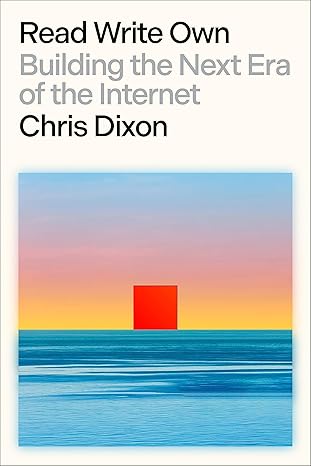 Though few outside a passionate subset of the tech world seem to realize it, the internet has arrived at an inflection point, in two respects. The first regards the history of the internet itself; the second, the technology that will power its future.
 Reveling in the triumph of a high school football win, a group of newly-friended boys find themselves at a party and—as sometimes happens—might or might not have beaten the crap out the kid that has annoyed them all their lives. These all-stars are suspended for the season, but instead of dwelling tight on the boys, Sameer wraps the narrative around their troubled parents and how they react and interact and judge and confront this family crisis. THE BOYS is about class, and race, and education and the privilege of passing and the lack of privilege if you don’t, and the conflict we find when all of those slam together. It’s about the kids inside each parent, and the games the world makes each of us play.
 Terence Bailey is about to be released from prison for breaking and entering, though investigators have long suspected him in the murders of six women. As his release date approaches, Bailey gets a surprise visit from Maddison Logan, a hot, young influencer with a huge social media following. Hours later, Maddison disappears, and police suspect she’s been kidnapped―or worse. Is Maddison’s disappearance connected to her visit to Bailey? And why was she visiting him in the first place?
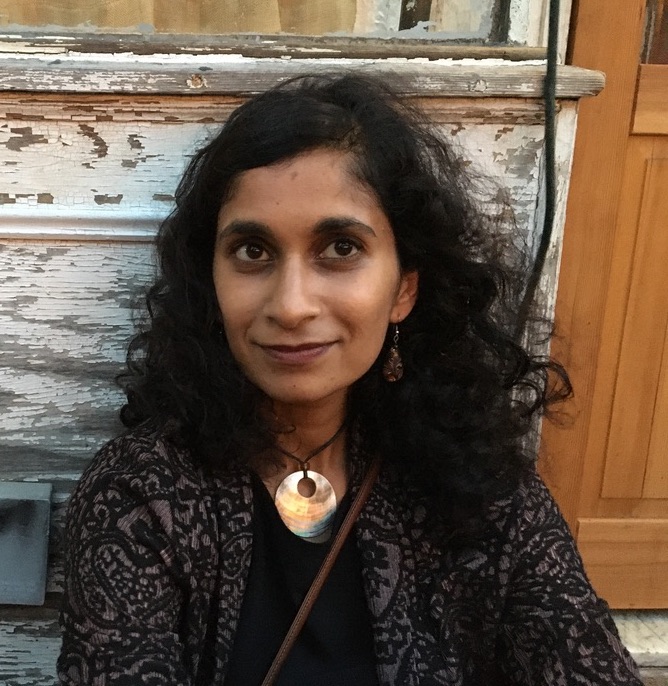 It’s 2006 in Cambridge, Mass., and Pavitra wants a room with a view, a place where she will feel free and able to write the novel she began during her last year at a small college in the leafy suburbs of Philadelphia. She has taken a job as a physics teacher at a wealthy private school and lives with the elderly mother of a local landlord whose rented apartments are just beyond her reach. The conversations with the people she encounters over the course of the next year, while she is in Optional Practical Training status (a visa category for international students who want to stay an additional twelve months after graduation), stir her awareness of assumptions—about who belongs and who does not—and categories both racial and cultural that barely registered in her earlier life, though now she finds them everywhere, including in herself.