
A snarky seventeen-year-old must team up with an enigmatic criminal to cure herself of dangerous forbidden magic in the first book of a new fantasy duology from the New York Times bestselling author of the Falling Kingdoms series.
LEGENDS AND LIARS
by Morgan Rhodes
Razorbill, January 2022
 Josslyn Drake, former First Daughter of Ironport, doesn’t know much about magic. She only knows that it’s dangerous, rare, and completely illegal. So when she’s infected by a mysterious piece of magic confiscated from Lord Banyon, one of the most infamous criminals alive, Joss’s life turns upside down. She begins to have visions, not of the future, but of the past—Banyon’s past. All Joss wants is for things to go back to normal, but the cost for doing magic is death, and there’s nobody she can trust to help her. So when wanted criminal and blackheart Jericho Nox offers her a deal, a way to extract the magic and give it to him instead, she’s forced to accept.
Joss isn’t thrilled to be working with a blackheart, especially one as infuriating—and infuriatingly handsome—as Jericho. But as she sees more of the world outside of her pampered life in the city, and as she steps into more and more of Banyon’s memories, she begins to question her longest held beliefs—beliefs about right and wrong, about her world, and about herself. In an empire built on lies, seeing the truth may be her greatest weapon.
Morgan Rhodes has crafted a unique contemporary fantasy world that balances mysterious magical powers with contemporary technology, creating an immersive atmosphere that readers will love to get lost in. This action-packed read is impossible to put down once you’ve started. Filled with magic, intrigue, and danger, Legends and Liars has something for every reader—including a swoon-worthy enemies-to-lovers romance.
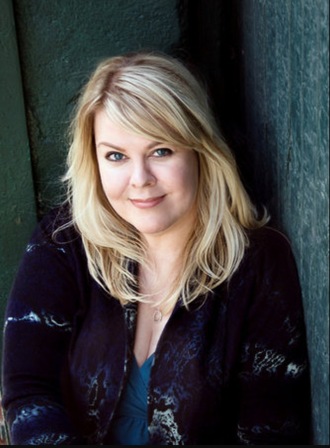
Morgan Rhodes is the New York Times bestselling author of the Falling Kingdoms series (which has sold over 485,000 units across editions in the US and has sold rights in eighteen countries) and Spirits and Thieves series. Under another pen name, she’s an award-winning author of more than two dozen novels. Morgan is Canadian and lives in Southern Ontario.
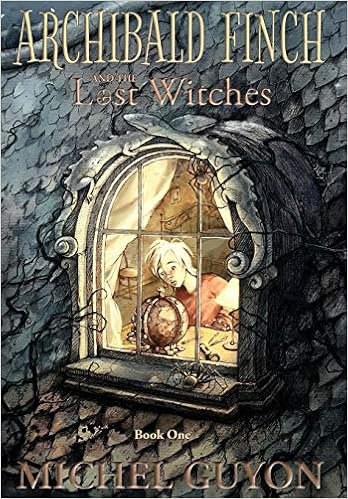 From myths and legends 500 years old, comes a fantastic adventure, even though Archibald was not looking for one… Exploring his grandma’s creepy manor, he just stumbled upon an ancient terrestrial globe, which turns out to be much more than an old relic. When he unlocks the storm trapped inside, Archibald gets whisked into the unknown, a mysterious land where a battle born in the Middle Ages is still unfolding. In the world of Lemurea, mostly forest, home to small wonders and great scares, it’s light versus darkness, magic versus fire… witches versus dragons. But not any kind of witches, an army of young girls, lost in time. And not your usual dragons, but the most intriguing creatures, half human, half beast. Through this unforgettable journey, Archibald will learn the true meaning of courage, friendship and tolerance. Meanwhile, left behind, his sister Hailee sets out on a quest across London to find out what happened to him, uncovering a dark secret and going through her own coming of age odyssey. Two stories, two plot threads, running parallel but tightly intertwined. Two worlds, on a perilous collision course…
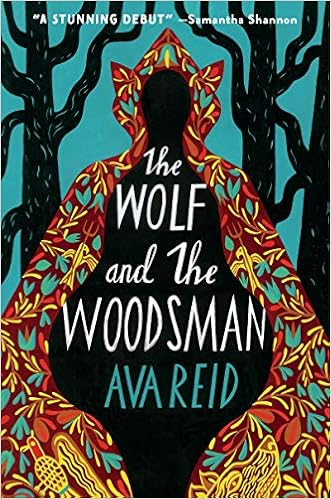 In her forest-veiled pagan village, Évike is the only woman without power, making her an outcast clearly abandoned by the gods. The villagers blame her corrupted bloodline—her father was a Yehuli man, one of the much-loathed servants of the fanatical king. When soldiers arrive from the Holy Order of Woodsmen to claim a pagan girl for the king’s blood sacrifice, Évike is betrayed by her fellow villagers and surrendered. But when monsters attack the Woodsmen and their captive en route, slaughtering everyone but Évike and the cold, one-eyed captain, they have no choice but to rely on each other. Except he’s no ordinary Woodsman—he’s the disgraced prince, Gáspár Bárány, whose father needs pagan magic to consolidate his power. Gáspár fears that his cruelly zealous brother plans to seize the throne and instigate a violent reign that would damn the pagans and the Yehuli alike. As the son of a reviled foreign queen, Gáspár understands what it’s like to be an outcast, and he and Évike make a tenuous pact to stop his brother. As their mission takes them from the bitter northern tundra to the smog-choked capital, their mutual loathing slowly turns to affection, bound by a shared history of alienation and oppression. However, trust can easily turn to betrayal, and as Évike reconnects with her estranged father and discovers her own hidden magic, she and Gáspár need to decide whose side they’re on, and what they’re willing to give up for a nation that never cared for them at all.
 Adelle and Connie have been best friends for years, united by their love of a little known novel called
  Eight strangers looking for enlightenment from an ancient spiritual teacher are trapped in a cave high in the mountains on their way to his temple. One of his acolytes directs them to each tell a story that the group can learn from as they wait out the horrible snowstorm that rages outside the cave’s entrance. One by one the travelers each share a story that, unbeknownst to them, is actually a morality tale representing one of the aspects of final enlightenment as taught in Buddhism. As the wind howls through the night, they tell symbolic stories of horror, dystopia, high adventure, cyberpunk, and urban fantasy. Each story is a spoke on the symbolic Dharma wheel, and each interlocking tale gets the travelers closer to their true destiny—unveiling the future of the entire human race.