
A feminist novel upending the archetypal « western » in the vein of The Sisters Brothers meets Inland, set in 1889 in Washington Territory on the heels of a great fire about an inadvertently dangerous psychic and the two conmen she meets on her path to redemption.
FIRE SEASON
by Leyna Krow
Viking, Summer 2022
(via Levine Greenberg Rostan)

For the citizens of Spokane Falls, a fire that destroyed their frontier boomtown was no disaster; it was an opportunity. Set in 1889 in Washington Territory on the heels of this event, FIRE SEASON tells the story of three characters who seize big opportunities the fire brings, though in different ways and to different ends. Barton Heydale, manager of the city bank, uses the ensuing chaos to embark on schemes of fraud, forgery, and kidnapping. Quake Auchenbaucher, a conman, suddenly finds his career in manipulation jeopardized. And there’s Roslyn Beck, an alcoholic prostitute with the ability to see the future and with whom both men fall madly and dangerously in love. Unbeknownst to them, she has a deviant influence that, for better or worse, can change the world. As their paths collide, diverge, and collide again, these three come to terms with their own needs for power, greed, and control — leading one to total ruin, one to heartbreak, and one, ultimately, to redemption.
In the incandescent, genre-bending spirit of Eleanor Catton’s The Luminaries, Karen Joy Fowler’s Sarah Canary, or Patrick deWitt’s The Sisters Brothers, with notes of Ottessa Moshfegh’s quick wit and wicked imagination, FIRE SEASON is playful, creepily magical, and historical, yes, but not in the traditional sense. The setting is a darkly whimsical approximation of what the Pacific Northwest was like at the end of the 19th century, and the characters may seem better suited to the modern literary fabulism of someone like Aimee Bender or Kelly Link than the wild west.
Leyna Krow’s first collection I’m Fine, But You Appear to Be Sinking (Featherproof Books, 2017) was a finalist for The Believer Book Award. Krow lives in Spokane, Washington with her husband and two children. She is at work on her second novel.
Photo credit: Young Kwak
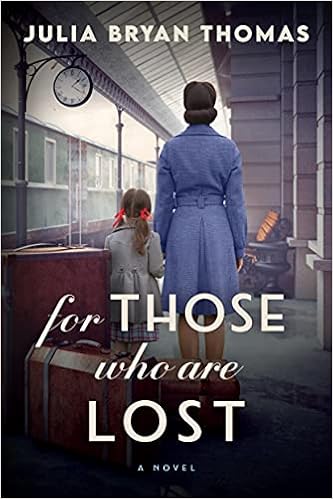 On the island of Guernsey, as WWII looms, many islanders make the heartbreaking choice to ship their children to safety in England, not knowing when (or if) they will be reunited. Acting on faith, Ava and Joseph Simon reluctantly send their nine-year-old son Henry and four-year-old daughter Catherine with their children’s teacher Helen, who will escort them to the mainland. But Helen’s sister Lily is fleeing an abusive marriage, and, just as the ferry is about to leave, takes Helen’s place to make a new start for herself. It is Lily who takes them to England, and it is Lily who lets Henry get on a train by himself, deciding in a split second to walk the other way and take Catherine with her. That split-second decision lingers long after the war ends, impacting the rest of their lives.
 In the ruggedness of the beautiful Kentucky mountains, Honey Lovett has always known that the old ways can make a hard life harder. As the daughter of the famed blue-skinned, Troublesome Creek packhorse librarian, Honey and her family have been hiding from the law all her life. But when her mother and father are imprisoned, Honey realizes she must fight to stay free, or risk being sent away for good.
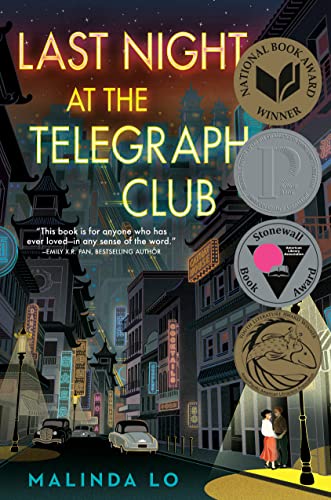 « That book. It was about two women, and they fell in love with each other. » And then Lily asked the question that had taken root in her, that was even now unfurling its leaves and demanding to be shown the sun: « Have you ever heard of such a thing? »
 1944. Marguerite Segal, an artist living under a false identity on the Cote d’Azur to escape her criminal past, is blackmailed by British Intelligence into befriending Father Etienne Valade, a local priest suspected of being an Nazi collaborator. Her mission is to persuade him to pass on information from the high ranking German officers who attend his church. Connected by a passion for art, they soon fall in love. As she tries to convince him to pass on information learned in the confessional box, her association with him increasingly puts her in danger of violent reprisals from the local people. At the same time, her covert work, creating false identity cards to camouflage those hiding from the Third Reich, brings her under the scrutiny of the occupying enemy.