A masterful, adventurous new novel set in nineteenth-century Sudan from Caine Prizewinning, New York Times Notable author Leila Aboulela.
RIVER SPIRIT
by Leila Aboulela
Atlantic Monthly Press, March 2023
 Hailed as “a versatile prose stylist” (New York Times) whose work “shows the rich possibilities of living in the West with different, non-Western, ways of knowing and thinking” (Sunday Herald), Leila Aboulela has been longlisted for the Orange Prize (now the Women’s Prize for Fiction) multiple times and shortlisted for the Commonwealth Prize and the PEN/Macmillan Silver Pen Award. She has been praised by J.M. Coetzee, Ali Smith, Aminatta Forna, and Anthony Marra, among others, for her rich and nuanced novels depicting Islamic spiritual and political life.
Her new novel, RIVER SPIRIT, is a compulsive and searching look at the complex relationship between Britain and Sudan, Christianity and Islam, colonizer and colonized. A spellbinding and addictive narrative of the years leading up to the brutal British conquest of Sudan in 1898, it colorfully narrates a story of the individuals who fought for and against Gordon of Khartoum—the British general who defended the city against the Sudanese during the 1884 siege of Khartoum—and the self-anointed Mahdi, Sufi religious leader of Sudan. Told mesmerizingly in a chorus of the vivid women and men who fought for and against these two leaders—including an orphaned young enslaved woman, her unlikely suitor and guardian, a military rebel, and two ferocious mothers—this page-turning novel delivers up a complex portrait of the “tragic Victorian hero” who ultimately proved a disappointment to the Sudanese who trusted him, and an obstacle to the thousands of men and women who—against the odds and for a brief time—gained independence from all foreign rule through their will-power, subterfuge, and sacrifice.
A fascinating immersion into Sudanese history written by one of its own, Aboulela’s latest novel examines the trials of war and the dynamism of human courage through the voices of society’s most unexpected heroes.
Leila Aboulela is the first ever winner of the Caine Prize for African Writing. Her novels include The Kindness of Enemies, The Translator (longlisted for the Orange Prize), Minaret, and Lyrics Alley, which was Fiction Winner of the Scottish Book Awards. Her work has been translated into fifteen languages. She grew up in Khartoum, Sudan, and now lives in Aberdeen, Scotland.


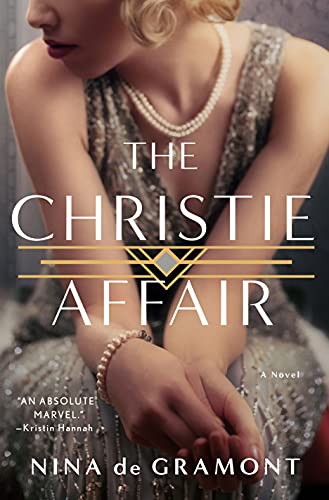 Every story has its secrets.
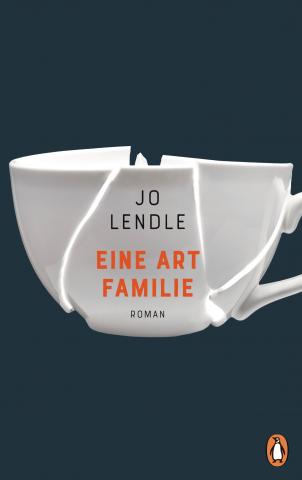 We don’t choose the times we live in nor the times that shape us. Neither did Lud and Alma. Lud, who was born in 1899, and his brother Wilhelm revere Bach and Hölderlin, and share the same unattainable ideals. Wilhelm, who joins the Nazi party early on, measures others according to its standards; Lud measures himself by them, which torments him for the rest of his life. Alma lost her parents when she was a child, and her godfather Lud – who is only a few years older than her – and his housekeeper become a kind of new family for her.
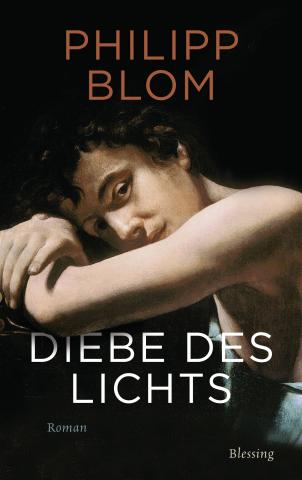 Sander has been on the run ever since 1572, when he saw his father murdered at the hands of the Spanish invaders in Flanders. He meets a master who teaches him how to paint flowers, while his brother Hugo, who hasn’t spoken a word since their parents’ death, mixes the paints for him. But Hugo is as unreliable and quick to anger as he is gentle, and when he commits a violent crime, he and Sander have to flee. They find refuge in an artist’s studio in Rome, witness the Pope’s dissipation, are caught up in the intrigues proliferating in the Neapolitan cardinal’s palace, and – both in their own special way – experience the joy of forbidden love. In the course of their adventures, Sander repeatedly finds a way out of seemingly hopeless situations …