
Written in Craig Higginson’s masterful prose, THE GHOST OF SAM WEBSTER is at once a war novel, a murder mystery, a multi-layered love story and a robust reassertion of what it is to remain human during the most challenging times.
THE GHOST OF SAM WEBSTER
by Craig Higginson
Pan Macmillan (South Africa), September 2023
(via The Lennon-Ritchie Agency)
 • Winner of the HSS Award for Best Fiction Novel (2024)
• Longlisted for the Sunday Times Fiction Prize (2024)
• Longlisted for the SALA Award for Best Novel (2024)
Writer Daniel Hawthorne is packing up his mother’s house in Johannesburg when he hears about the disappearance of Sam Webster, the beautiful daughter of his friend, the famous historian Bruce Webster. When the body of Sam appears briefly on the banks of the flooded Buffalo River, Daniel decides to visit the Websters’ luxury lodge in the heart of Zululand. Under the guise of researching a new novel about his disgraced ancestor, the lepidopterist Lieutenant Charles Hawthorne who fought in the Battle of iSandlwana, Daniel starts to investigate the reasons for Sam’s disappearance. The lines between loyalty and betrayal, love and hate, cowardice and courage, redemption and shame, soon become blurred as Daniel gets closer to the truth.
Craig Higginson is an acclaimed playwright and award-winning novelist whose plays have been performed and produced in theatres and festivals around the world. His novels include Last Summer (Picador Africa, 2010; Mercure de France, 2017), The Landscape Painter (Picador Africa, 2011), The Dream House (Picador Africa, 2015; Mercure de France, 2016) and The White Room (Picador Africa and St Martin’s Press, 2018). The Dream House was a matric setwork for South African schools from 2019 to 2021.
 “
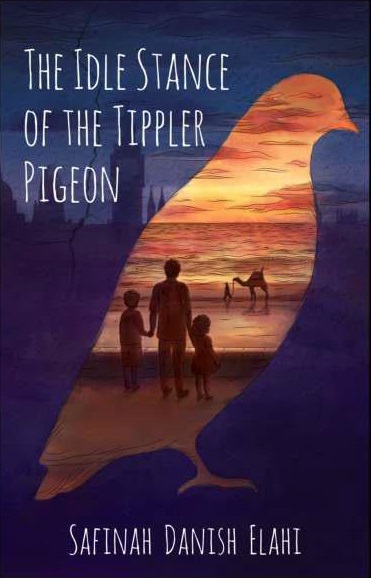
“
 Genderfluid Eamon Kastellakis wants to be beautiful. More than anything, he dreams of wearing couture dresses by the designers he worships, Alexander McQueen and Gucci, well away from the roar and threat of his alcoholic Greek da in their decaying house in Cork, Ireland.
 Jonathan Abernathy is screwed. Jobless, behind on his student loan payments, and a self-declared failure, the only thing Abernathy has in abundance is debt. When a government loan forgiveness program offers him a job he can do literally in his sleep, he thinks he’s found his big break. That is, until he finds himself auditing the dreams of white collar workers, flagging their anxieties and preoccupations for removal.