
A kaleidoscopic debut for fans of David Mitchell’s Cloud Atlas and Haruki Murakami’s The Wind-Up Bird Chronicle, and readers of literary magical realism, like the work of Isabel Allende, Salman Rushdie, and Tea Obreht.
BUILD YOUR HOUSE AROUND MY BODY
by Violet Kupersmith
Random House, Summer 2021
(chez The Friedrich Agency – voir catalogue)
 1986: The teenage daughter of a wealthy Vietnamese family gets lost in an abandoned rubber plantation while fleeing her angry father and is forever changed by the experience.
2009: Pressed into a dangerous scheme by a former lover, a woman captures a rare two-headed cobra.
2011: Winnie, a young, unhappy American living in Saigon with her sort-of boyfriend, disappears without a trace.
Over the course of the novel, the fates of these three women will lock together in an exhilarating series of nested narratives. Each new character and timeline brings us one step closer to understanding what binds the three women together, and what happened to Winnie. Written with wit, ambition, and playfulness, this book takes us from sweaty nightclubs to ramshackle zoos, colonial mansions to ex-pat flats, sizzling back-alley street carts to the noisy seats of motorbikes. Spanning over fifty years and barreling toward an unforgettable conclusion, this is a fever dream about possessed bodies and possessed lands, a time-traveling, heart-pounding, border-crossing marvel of a novel.
Violet Kupersmith is the author of the short story collection The Frangipani Hotel. She previously taught English with the Fulbright Program in the Mekong Delta, and was a creative writing fellow at the University of East Anglia. She has lived in Da Lat and Saigon, Vietnam, and currently resides in the U.S.
 Paris, ca. 1850. Bed-ridden and terminally ill, Heinrich Heine wants to prise one final work from the jaws of death: His memoirs are to be his magnum opus. It’s been a long time since he last attended an illustrious bohemian dinner – instead, he receives occasional visits from German exiles and French artist friends. One day, Elise Krinitz seeks him out. The young woman admires Heine, and hopes to find in him a mentor for her own literary ambitions. He tenderly and ironically calls her ‘Mouche’, and they soon embark on a platonic, but nonetheless passionate affair. Yet when Heine dies on the 17th February 1856, his memoirs are lost forever. Steeped in the fascinating panorama of 1850s Paris, Boëtius’s novel is a unique portrait of the final years of the great German poet Heinrich Heine.
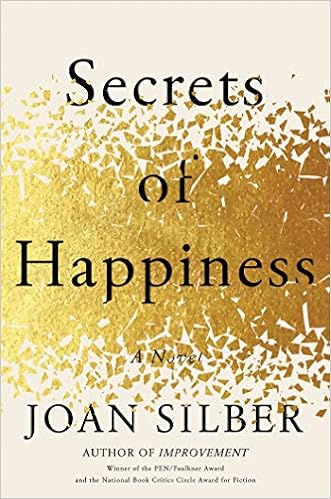 Ethan, a young lawyer in New York, learns that his father has long kept a second family—a Thai wife and two kids living in Queens. In the aftermath of this revelation, Ethan’s mother spends a year working abroad, returning much changed, and events introduce her to the other wife. Across town, Ethan’s half brothers are caught in their own complicated journeys: one brother’s penchant for minor delinquency has escalated, and the other must travel to Bangkok to bail him out, while the bargains their mother has struck about love and money continue to shape their lives. As Ethan finds himself caught in a love triangle of his own, the interwoven fates of these two households elegantly unfurl to encompass a woman rallying to help an ill brother with an unreliable lover and a filmmaker with a girlhood spent in Nepal. Evoking a generous and humane spirit, and a story that ranges over three continents, SECRETS OF HAPPINESS elucidates the ways people marshal the resources at hand to forge their own forms of joy.
 THE RED ARROW follows an unnamed narrator, a failed novelist deeply in debt to his publisher, on a high-speed train from Rome to Modena, where he is desperate to find the famous Italian physicist whose memoir he’s been ghostwriting, and an whose disappearance in the middle of the project has threatened the narrator and his newly formed family with financial ruin. Moving swiftly and seamlessly through his past—including a chemical spill in West Virginia, a failed New York art career, psychedelic therapy in California, and a luxury beach resort in Sicily—THE RED ARROW contains multitudes: it is at once one of the most authentic descriptions of the experience of depression I’ve ever read, and a joyously earnest celebration of freedom from the toxic power of the ego; a spiraling meditation on time, memory, and the nature of the self; and a novel with the ineffable mystery of a poem, one whose originality lies in admitting that it’s not original at all. For we are each just a cloud of quotations with no fixed center—or, as the Physicist might put it, we are nothing more than interactions, like subatomic particles—and when we’re finally able to let go of the fiction of our discrete selves, all that is left is love.