
Beautifully written literary nonfiction about animals with a profound core like H Is for Hawk and Fox and I. Structured in smart, snappy personal essays that probe at the problems of personhood in the internet age, it will appeal to fans of Melissa Broder or Jia Tolentino, and its introspective, generous thinking on self and society evokes Wintering.
POETS SQUARE:
Essays on Cats & Community
by Courtney Gustafson
Crown, 2024
(via Frances Goldin Literary Agency)
 When Courtney Gustafson moved into a new rental in the Poets Square neighborhood in Tuscon, Arizona, she would never have guessed that a colony of feral cats living in her driveway would change her life forever. Settling into a secure romantic relationship while it felt like the world around her was burning down, she couldn’t know how reluctantly, then profoundly, she would come to care about the health and safety of those thirty-some-odd neglected cats: Beebs, Lola, Sadboy, Goldie, Dr. Big Butt, Reverse Monkey, Rihanna, and so many more.
She had no idea about the grief and hardship of animal rescue, the staggering size of the problem. And she couldn’t have imagined how that struggle—towards an ethics of care, of individuals trying their best amidst spectacularly failing systems—would help pierce a personal darkness she’d wrestled with much of her life. She also didn’t expect that the TikTok and Instagram accounts she created about the cats would end up with a just shy of a combined million followers.
POETS SQUARE is a memoir-in-essays about becoming an accidental cat rescuer, going viral, creating community, and surviving capitalism. These essays tell the brutal and tender stories of cats Courtney has saved (or failed to save) as a lens to explore everything from poverty and mental health to morality and misogyny. We see how cat rescue—despite its often-enormous sadness—paradoxically helped in a struggle with depression, showing the way towards an interrelated community of cats and care. The book explores caretaking and kindness in the face of a broken system: what it means for an individual to refuse to throw their hands up, to insist on showing up regardless of insurmountable problems, to search for ways to be a good person in the face of crushing overwhelm.
Courtney Gustafson is the creator of @PoetsSquareCats on TikTok (918k) and Instagram (61k). Her cats and rescue work have been featured on The Dodo, Newsweek, Best Friends Animal Society Magazine, and elsewhere. Before she had thirty cats, she completed a masters degree and PhD coursework in rhetoric and composition at the University of Massachusetts Amherst, where her interests included community literacies and literacy within incarcerated populations. She taught first-year writing at UMass before leaving academia to work in nonprofit communications. Most recently she’s worked for a large regional food bank, managing social media strategy, storytelling, fundraising, and crisis communications. She has continued to teach creative writing and adult basic literacy as a volunteer in prisons and in refugee communities in Tucson, Arizona, and volunteers as a mentor to incarcerated writers with PEN America’s Prison and Justice Writing Program. Her poetry, fiction, and nonfiction have appeared in Lady Science, Word Riot, Up the Staircase Quarterly, Necessary Fiction, and elsewhere.
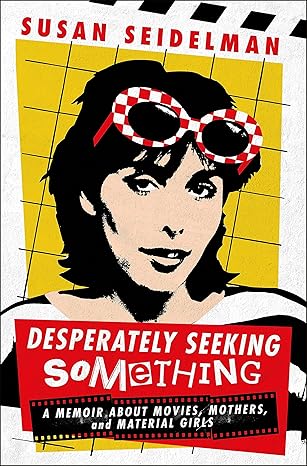 In the early 1970s, Susan Seidelman left the ordinary suburb in which she was raised and moved to New York City to become someone different. The city was bankrupt, crumbling, cheap… and the Lower East Side was evolving into a creative playground for artists and misfits looking to reinvent themselves. There, Seidelman would break boundaries: first as an award winning independent film director of Smithereens (the first independent film nominated at the Cannes Film Festival), then as a much sought after studio director when Hollywood was still run as an all-boys club. Her work would become an important part of the zeitgeist that influenced the music, fashion, and pop culture of America in the 1980s and 90s as she unapologetically challenged the male gaze that permeated most movies of that time.
 The Ocean Race is the toughest team race in the sailing calendar. It consists of seven legs that take around six months to complete, the longest of which covers an unbelievable 23,000 km, from Cape Town via Cape Horn to Itajaí in Brazil. German champion yachtsman Boris Herrmann and Team Malizia are competing against four other teams on Seaexplorer, and with five crew squeezed into such a small space you need to be able to rely on each other. In storms and lulls, everything you do has to be exactly right. Unforeseen problems like a crack on a mast 26 m up could spell the end of the race for the Seaexplorer, but the team tackles them with total professionalism. These four men and one woman are pushing their bodies and minds to the very limit, as they experience both failures and triumphs. In their new book, Herrmann and Wolfers give us a fascinating insight into the Ocean Race, and what it’s like for five people to live and work together in such exciting and unique circumstances.
 At night, as I stargazed from my tiny tent, I’d hear the primal whalesong roll up along the ocean floor and onto the beach where I lay. The ethereal melodies seeped through my shivering skin, like a relic of an ancient time. I felt as if I was eavesdropping across millennia, the sound stirring some faint genetic memory deep inside me.
 In her memoir, poet Maggie Smith explores the disintegration of her marriage and her renewed commitment to herself. The book begins with one woman’s personal heartbreak, but its circles widen into a reckoning with contemporary womanhood, traditional gender roles, and the power dynamics that persist even in many progressive homes. With the spirit of self-inquiry and empathy she’s known for, Smith interweaves snapshots of a life with meditations on secrets, anger, forgiveness, and narrative itself. The power of these pieces is cumulative: page after page, they build into a larger interrogation of family, work, and patriarchy.