
Twenty years in the making, Sarah Schulman’s monumental LET THE RECORD SHOW is the most comprehensive political history ever assembled of ACT UP and American AIDS activism.
LET THE RECORD SHOW:
A Political History of ACT UP, New York, 1987-1993
by Sarah Schulman
Farrar, Straus and Giroux, May 2021
(chez Dystel Goderich & Bourret)
 In just six years, ACT UP, New York, a broad and unlikely coalition of activists from all races, genders, sexualities, and backgrounds, changed the world. Armed with rancor, desperation, intelligence, and creativity, ACT UP, NY took on the AIDS crisis with an infatigable, ingenious, and multifaceted attack on the corporations, institutions, governments, and individuals who stood in the way of AIDS treatment for all. They stormed the FDA and NIH in Washington DC and started Needle Exchange in New York; they took over Grand Central terminal and fought to change the legal definition of AIDS to include women; they transformed the American insurance industry, weaponized art and advertising to push their agenda, and battled—and beat—the New York Times, the Catholic Church, and the pharmaceutical industry. AIDS Activism in its complex and intersectional power, transformed the lives of People With AIDS and the bigoted society that abandoned them.
Based on more than 200 interviews with ACT UP members and rich with lessons for today’s activists, LET THE RECORD SHOW is a revelatory exploration—and long overdue reassessment—of the coalition’s innerworkings, conflicts, achievements, and ultimate fracture. Schulman, one of the most revered queer writers and thinkers of her generation, explores the how and the why, examining, with her characteristic rigor and bite, how a group of desperate outcasts changed America forever, and in the process created a livable future for generations of people across the world.
Sarah Schulman is the author of novels, nonfiction books, plays and movies. Her recent works are Maggie Terry, The Cosmopolitans, which was picked as one of the “Best Books of 2016” by Publishers Weekly, and a nonfiction book, Conflict Is Not Abuse: Overstating Harm, Community Responsibility and the Duty of Repair. Previous novels are The Child, Shimmer, Empathy, Rat Bohemia, People in Trouble, After Delores, Girls Visions and Everything, The Mere Future, and The Sophie Horowitz Story. Her nonfiction titles are Ties That Bind: Familial Homophobia And Its Consequences, The Gentrification Of The Mind: Witness To A Lost Imagination, Stagestruck: Theater, Aids And The Marketing Of Gay America, Israel/Palestine and The Queer International, and My American History: Lesbian and Gay Life During The Reagan/Bush Years.
 We are lonelier than ever. The average American hasn’t made a new friend in the last five years. Research has shown that people with close friends are happier, healthier, and live longer than people who lack strong social bonds. But why— when we are seemingly more connected than ever before—can it feel so difficult to keep those bonds alive and well? Why do we spend only four percent of our time with friends? In this warm, inspiring guide, Adam « Smiley » Poswolsky proposes a new solution for the mounting pressures of modern life: focus on your friendships. Smiley offers practical habits and playful reminders on how to create meaningful connections, make new friends, and deepen relationships. He’ll help you develop a healthier relationship with technology, but he’ll also encourage you to prioritize real-world experiences, send snail mail, and engage in self-reflective exercises.
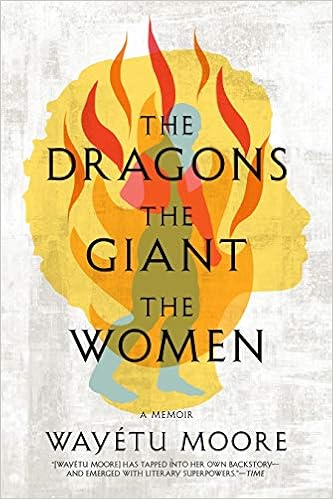 When Wayétu Moore turns five years old, her father and grandmother throw her a big birthday party at their home in Monrovia, Liberia, but all she can think about is how much she misses her mother, who is working and studying in faraway New York. Before she gets the reunion her father promised her, war breaks out in Liberia. The family is forced to flee their home on foot, walking and hiding for three weeks until they arrive in the village of Lai. Finally, a rebel soldier smuggles them across the border to Sierra Leone, reuniting the family and setting them off on yet another journey, this time to the United States. Spanning this harrowing journey in Moore’s early childhood, her years adjusting to life in Texas as a black woman and an immigrant, and her eventual return to Liberia, THE DRAGONS, THE GIANT, THE WOMEN is a deeply moving story of the search for home in the midst of upheaval. Moore has a novelist’s eye for suspense and emotional depth, and this unforgettable memoir is full of imaginative, lyrical flights and lush prose. In capturing both the hazy magic and the stark realities of what is becoming an increasingly pervasive experience, Moore shines a light on the great political and personal forces that continue to affect many migrants around the world, and calls us all to acknowledge the tenacious power of love and family.
 When Sutanya Dacres married her French boyfriend and moved to Paris in 2013, she felt like she was living out her very own fairy tale. Jamaican-born and New York-raised, she had never entertained fantasies of living abroad, until her grad school days when she discovered the blogs of expat women living in Paris and began to dream of a different life in a different land. Then she met a French man in a bar, fell in love, and voilà, almost as if she willed it, she was living her Parisian fantasy, embarking on her own “happily ever after” … until her marriage fell apart. Sutanya looked back to her beloved bloggers for guidance, but realized their rosé-tinted reality didn’t match up to her own. For one thing, they weren’t writing about divorce. For another, they weren’t Black. While her marriage had ended and the façade of picture-perfect Paris had cracked, Sutanya wasn’t giving up on the City of Light. Instead, she decided to figure out for herself what happens after the Paris fairy tale ends, and to find a way to mend her broken heart and create a home for herself, beginning in her kitchen. Determined to share her genuine, candid perspective and offer a counter-narrative to the typical idealized expat story, Sutanya launched her podcast, Dinner for One, in February 2018. In each episode, she invites listeners into her Paris kitchen as she shares her experiences as a 30-something hopeless romantic embracing her post-divorce life and celebrating the joy of learning to love cooking for herself. This book grew out of the podcast.
 Taking us from the slave era, when white women fought in court to keep “ownership” of their slaves, through the centuries of colonialism, when they offered a soft face for brutal tactics, to the modern workplace, White Tears/Brown Scars tells a charged story of white women’s active participation in campaigns of oppression. It offers a long overdue validation of the experiences of women of color. Discussing subjects as varied as The Hunger Games, Alexandria Ocasio-Cortez, the viral BBQ Becky video, and 19th century lynchings of Mexicans in the American Southwest, Ruby Hamad undertakes a new investigation of gender and race. She shows how the division between innocent white women and racialized, sexualized women of color was created, and why this division is crucial to confront. Along the way, there are revelatory responses to questions like: Why are white men not troubled by sexual assault on women? (See Christine Blasey Ford.) With rigor and precision, Hamad builds a powerful argument about the legacy of white superiority that we are socialized within, a reality that we must apprehend in order to fight.