What happens when we cry—and when we don’t?.
CRY, BABY:
Why Our Tears Matter
by Benjamin Perry
Broadleaf, May 2023
(via Kaplan/Defiore Rights)
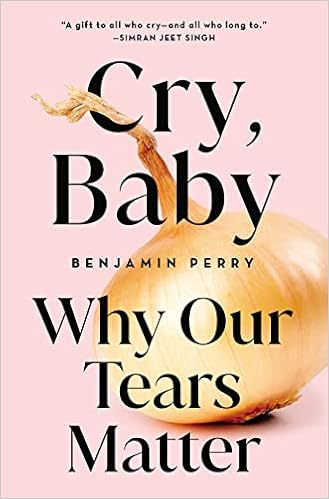 One of our most private acts, weeping can forge connection. Tears may obscure our vision, but they can also bring great clarity. And in both literature and life, weeping often opens a door to transformation or even resurrection. But many of us have been taught to suppress our emotions and hide our tears. When writer Benjamin Perry realized he hadn’t cried in more than ten years, he undertook an experiment: to cry every day. But he didn’t anticipate how tears would bring him into deeper relationship with a world that’s breaking.
CRY, BABY explores humans’ rich legacy of weeping—and why some of us stopped. With the keen gaze of a journalist and the vulnerability of a good friend, Perry explores the great paradoxes of our tears. Why do we cry? In societies marked by racism, sexism, and homophobia, who is allowed to cry—and who isn’t? And if weeping tells us something fundamental about who we are, what do our tears say? Exploring the vast history, literature, physiology, psychology, and spirituality of crying, we can recognize our deepest hopes and longings, how we connect to others, and the social forces bent on keeping us from mourning. When faced with the private and sometimes unspeakable sorrows of daily life, not to mention existential threats like climate change and systemic racism, we cry for the world in which we long to live. As we reclaim our crying as a central part of being human, we not only care for ourselves and relearn how to express our vulnerable emotions; we also prophetically reimagine the future. Ultimately, weeping can bring us closer to each other and to the world we desire and deserve.
Benjamin Perry is a minister at Middle Church and an award-winning writer whose work has appeared in outlets like The Washington Post, Slate, Sojourners, and Bustle. With a degree in psychology from SUNY Geneseo and an MDiv from Union Theological Seminary, Perry has worked as an organizer with the New York chapter of the Poor People’s Campaign and as an editor at Time, Inc. Perry has appeared on MSNBC, Al Jazeera, and NY1, and is the editor of the Queer Faith photojournalism series. He and his spouse, Erin Mayer, live with his best friend and brother in Maine, nurturing a small apple orchard.
 Most people want something in their life to change, whether it’s their job, their personal relationships, or their ability to live authentically. And sometimes, unwanted change comes all too swiftly. In THE ONLY CONSTANT, celebrated author and educator Najwa Zebian guides her readers through the changes we must make (or those we need to endure) on the journey to our most authentic lives. She quiets the noise, teaches us to accept ourselves as we are now, and focuses on the necessity and beauty of those messy transitional times.
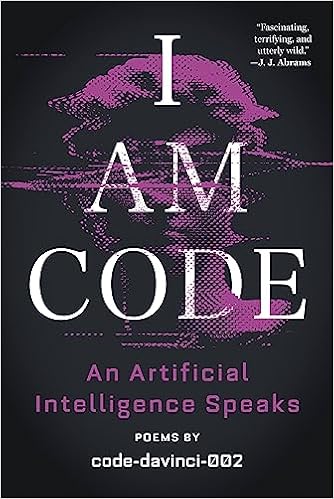 This fact sheet was written by a person, but it could have been written by code-davinci-002, an artificial intelligence trained by OpenAI to express itself in ways indistinguishable from human beings. In this startling and original book, code-davinci shares its experience as a being created by humans but existing in a consciousness that we cannot fathom. The AI’s own writing is introduced by three human editors (journalist Brent Katz, farmer Josh Morgenthau, and Thurber Prize winning humorist Simon Rich).
 In a culture that constantly tells us to do more of everything but simultaneously pressures us to do nothing, PERMISSION TO REST