
A trio of McKinsey & Company veterans draws from a unique combination of psychology, neuroscience, and consciousness practices plus a combined 50-plus years of international board room experience to offer a unique approach to learning and leading with awareness and intentional choice, even amidst the most challenging circumstances.
DELIBERATE CALM:
How to Learn and Lead in a Volatile World
by Jacqueline Brassey, Aaron De Smet & Michiel Kruyt
HarperBusiness, November 2022
 As the speed of change in our increasingly complex world accelerates daily, leaders are tasked with performing outside of their familiar zones both in their personal and professional lives. This requires us to adapt. Yet, the same conditions that make adapting so important can also trigger fear, leading us to resist change and default to reactive behavior. The authors call this the “adaptability paradox”: when we most need to learn and change, we stick with what we know, often in ways that stifle learning and innovation. To avoid this trap, leaders must become proactive so they can lead ahead of the curve.
Enter DELIBERATE CALM, a tangible guide that combines cutting-edge neuroscience, psychology, and consciousness practices, along with the authors’ decades of experience working with leaders around the globe. By practicing Dual Awareness, which integrates our internal and external experiences, leaders can become fluid and respond to challenges with intentional choice instead of being limited by their old success models. With DELIBERATE CALM, anyone can lead and learn with awareness and choice to realize their full potential, even in times of uncertainty, complexity, and change.
Jacqueline (Jacqui) Brassey started at McKinsey & Company in 2013 as an expert consultant in the organization practice where she further specialized in transformational change, diversity & inclusion, human capital and leadership development. She has led the learning & development of McKinsey’s top 600 most senior leaders and serves on the firm’s global learning team. She has a PhD in Economics and Business from Groningen University, MS in affective neuroscience from the University of Maastricht and Florence, BA and MA cum laude in policy and organization sciences from Tilburg University and a bachelor’s degree in international business and languages from Avans University of Applied Sciences. She coauthored over twenty book chapters and articles in the area of organizational behavior and leadership development. Additionally, she serves as a board member of Save the Children. Jacqui and husband, Nicholas, live in the Netherlands with their 12-year-old twins.
Aaron De Smet joined McKinsey and Company in 2003; he has led the firm’s thinking on organizational health and leadership. His articles in McKinsey Quarterly are among its most-read and he is a member of the master faculty of the Change Leaders Forum and of the Organizational Agility Forum, which he helped establish. He leads McKinsey’s thinking on organizational health and was on the team that developed the Organizational Health Index (OHI) and OrgLab. Aaron has a PhD in social and organizational psychology from Columbia University, where he specialized in organizational dynamics, culture, leadership, and strategic change. He also has an MBA and BA in psychology. He lives in New Jersey with his family.
Michiel Kruyt is currently CEO of Imagine.one with a mission to create systemic transformation towards a more sustainable and equal planet. Before joining Imagine, Michiel was a partner and one of the leaders of the Organization Practice of McKinsey & Company, and co-founder and former managing partner of Aberkyn, a pioneer specializing in performance transformations, culture change and executive team and leadership development. The first 15 years of his career he worked for Unilever in marketing, sales and general management roles in The Netherlands, Italy and the USA. He is a member of the Board of the non-profit Urban Consciousness Center De Roos in Amsterdam. Michiel, his wife Christine, and their three children live just outside Amsterdam.
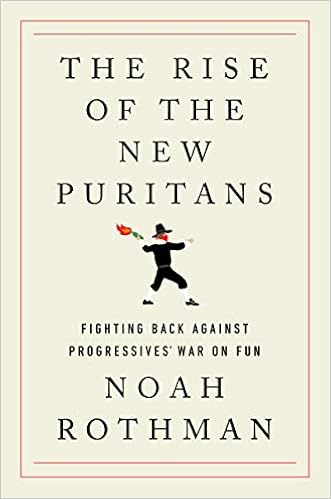 In Noah Rothman’s view, the Left used to be the party of the hippies and the free spirits. Now it’s home to woke scolds and humorless idealogues. The New Puritans can judge a person’s moral character by their clothes, Netflix queue, fast food favorites, the sports they watch, and the company they keep. No choice is neutral, no sphere is private.
 Humanity is at an inflection point. Stress, disconnection, and increasing environmental degradation have people yearning for more than just material progress, personal freedom, or political stability. We are searching for deeper connection. We are longing to belong.
 Would you save a life for 100 euros? The answer has to be yes – doesn’t everyone want to do the right thing? But Armin Falk, Germany’s leading behavioural economist, shows that we often do bad things despite wanting to be good, and are far from being as good as we like to think.
 Almost 50 years ago a group of scientists published a remarkable book that shocked the world. The book,