
By the acclaimed author of In the Realm of Hungry Ghosts, a groundbreaking investigation into the causes of illness, a bracing critique of how our society breeds disease, and a pathway to health and healing.
THE MYTH OF NORMAL:
Trauma, Illness, and Healing in a Toxic Culture
by Dr. Gabor Maté & Daniel Maté
Knopf Canada (Canada) / Avery (US), May 2022
(via Sterling Lord Literistic)
In this revolutionary book, renowned physician Gabor Maté eloquently dissects how in Western countries that pride themselves on their healthcare systems, chronic illness and general ill health are on the rise. Nearly 70 percent of Americans are on at least one prescription drug; more than half take two. In Canada, every fifth person has high blood pressure. In Europe, hypertension is diagnosed in more than 30 percent of the population. And everywhere, adolescent mental illness is on the rise. So what is really “normal” when it comes to health?
Over four decades of clinical experience, Maté has come to recognize the prevailing understanding of “normal” as false, neglecting the roles that trauma and stress, and the pressures of modern-day living, exert on our bodies and our minds at the expense of good health. For all our expertise and technological sophistication, Western medicine often fails to treat the whole person, ignoring how today’s culture stresses the body, burdens the immune system, and undermines emotional balance. Now Maté brings his perspective to the great untangling of common myths about what makes us sick, connects the dots between the maladies of individuals and the declining soundness of society—and offers a compassionate guide for health and healing. Cowritten with his son Daniel, THE MYTH OF NORMAL is Maté’s most ambitious and urgent book yet.
 A renowned speaker and bestselling author, Dr. Gabor Maté is highly sought after for his expertise on a range of topics including addiction, stress, and childhood development. Dr. Maté has written several bestselling books, including the award-winning In the Realm of Hungry Ghosts: Close Encounters with Addiction, When the Body Says No: Exploring the Stress-Disease Connection, and Scattered: How Attention Deficit Disorder Originates and What You Can Do About It, and has coauthored Hold On to Your Kids: Why Parents Need to Matter More Than Peers. His works have been published internationally in nearly thirty languages.
 Daniel Maté is a musical theater lyricist and composer whose work has been honored with the Edward Kleban Prize, a Jonathan Larson Foundation Grant, and the Cole Porter Award for Music and Lyrics. He is the producer and host of the YouTube program Lyrics to Go. With his father, Gabor, Daniel regularly co-leads the popular workshop Hello Again: A Fresh Start for Parents and Their Adult Children. He also runs a “mental chiropractic” service called Take a Walk with Daniel (walkwithdaniel.com).
 DIANAWORLD is a fascinating, multi-faceted portrait of Diana, Princess of Wales—the person, the cultural figure, and the enduring mythology of the “People’s Princess”—exploring her relationships with those who knew her intimately, those who worked with and for her, and the many ordinary people from Britain, America, and elsewhere who felt connected to her. In some chapters, White will pay particular attention to Diana’s relationship with one person; in others, there will be a wider cast of characters. But in each case these relationships will connect to a theme highly germane to her private life, and her public reputation, providing an opportunity to question unexamined assumptions, as well as branching out into areas unexplored by straightforward biographies of Diana. This is a book about what Diana means to “us.”
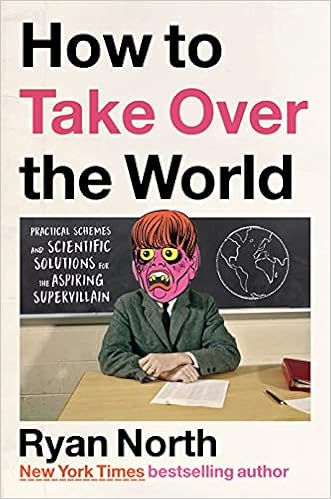 Taking over the world is a lot of work. Any supervillain is bound to have questions: What’s the perfect location for a floating secret base? What zany heist will fund my immoral plans? How do I control the weather, destroy the internet, and never, ever die? In How to Take Over the World, bestselling author and award-winning comics writer Ryan North details a number of outlandish villainous schemes, drawing on known science and real-world technologies. Picking up where How to Invent Everything left off, his explanations are as fun and informative as they are completely absurd. As he instructs readers on how to take over the world, North also reveals how we can save it. This sly guide to some of the greatest challenges and existential threats facing humanity accessibly explores ways to mitigate climate change, improve human life spans, prevent cyberterrorism, and finally make Jurassic Park a reality.
 After living through the massive global shock and trauma of Covid-19, one of the most disruptive events in human history, we need to find a way to face the future with optimism. But how can we plan for a better future when it feels impossible to predict what the world will be like next week, let alone next year or in the next decade? What we need are new tools to help us recover our confidence, creativity, and hope in the face of an uncertain future. In Imaginable, world-renowned future forecaster and game designer Jane McGonigal draws on the latest scientific research in psychology and neuroscience to show us how to train our brains to think the unthinkable and imagine the unimaginable. Using gaming strategies and fun, thought-provoking challenges that she designed specifically for this book, she helps us build our collective imagination to dive into the future before we live it and envision, in surprising detail, what our lives will look like ten years out.
 Even after a decades-long opioid overdose crisis, intense controversy still rages over the fundamental nature of addiction and the best way to treat it. With uncommon empathy and erudition, Carl Erik Fisher draws on his own experience as a clinician, researcher, and alcoholic in recovery as he traces the history of a phenomenon that, centuries on, we hardly appear closer to understanding—let alone addressing effectively.