
A darkly fabulist story collection about women’s choices, complicity, and power and the lack thereof (with screen rights to the title story « Sinkhole » sold to Jordan Peele and Universal).
SINKHOLE, AND OTHER INEXPLICABLE VOIDS
by Leyna Krow
Viking, Summer 2024
(via Levine Greenberg Rostan)

Credit: Young Kwak photo
From a genie, a devil, time travelers, a thief in peril, an oversized baby, an exploding woman, a woman with an impossible sinkhole in her yard, a woman who gives birth to a wild child, and more, this collection explores women in power – or in a deficit of power — to confront questions of complicity and intent, hysteria, paranoia, and what makes us whole in a world with relative values. With unsettling insight and echoes of Carmen Maria Machado, Kelly Link and Laura van den Berg, SINKHOLE, AND OTHER INEXPLICABLE VOIDS traces peripheral, upside down spaces in which sometimes there is a choice to be made, rules to be broken, risks to be tried, even crimes to be had, for the sake of a woman’s unconditional freedom.
Leyna Krow’s first collection I’M FINE, BUT YOU APPEAR TO BE SINKING (Featherproof Books, 2017) was a finalist for The Believer Book Award. Krow lives in Spokane, Washington with her husband and two children. She is at work on her second novel
 Shannon Sanders’s sparkling debut brings us into the company of the Collins family and their acquaintances as they meet, bicker, compete, celebrate, worry, keep and reveal secrets, build lives and careers, and endure. Moving from Atlantic City to New York to DC, from the 1960s to the 2000s, from law students to drag performers to violinists to matriarchs, COMPANY tells a multifaceted, multigenerational saga in thirteen stories.
 Gayl Jones, who was first edited by Toni Morrison, has been described as one of the great literary writers of the 20th century and was recently a finalist for the Pulitzer Prize in fiction. This new collection of short fiction is only the second in her rich career and one that displays her strengths in the genre in many facets. Opening with two novella-length works, “Butter” and “Sophia,” this collection features Jones’s legendary talents in a range of settings and styles, from the hyperrealist to the mystical, in intricate multipart stories, in more traditional forms, and even in short fragments.
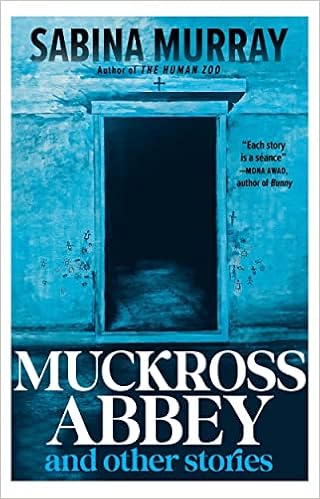 Since her acclaimed novel
 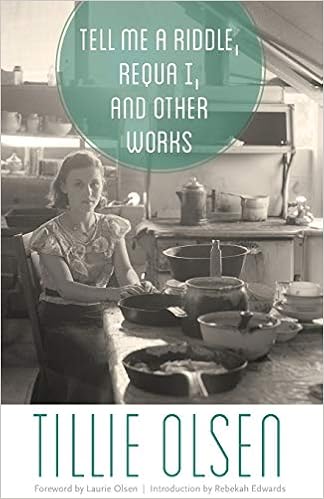 A century after her birth, Tillie Olsen’s writing is as relevant as when it first appeared; indeed, the clarity and passion of her vision and style have, if anything, become even more striking over time. Collected here for the first time are several of Olsen’s nonfiction pieces about the 1930s, early journalism pieces, and short fiction, including the four beautifully crafted, highly celebrated stories originally published as TELL ME A RIDDLE: “I Stand Here Ironing,” “Hey Sailor, What Ship?,” “O Yes,” and “Tell Me a Riddle.” Also included, for the first time since it appeared in the 1971 Best American Short Stories, is “Requa I.”