
From R.F. Kuang, the acclaimed #1 New York Times bestselling author of Katabasis and Yellowface, comes a wryly humorous and profoundly moving coming-of-age novel that grapples with grief, language, and culture shock—all set against the backdrop of an unforgettable summer in Taipei.
TAIPEI STORY
by R. F. Kuang
HarperCollins, September 2026
(via Liza Dawson Associates)
College freshman Lily Chen is off to spend the summer in Taipei at an intensive language program like so many Chinese American students before her, hoping to connect with the culture she inherited but never fully understood. But a promising start quickly unravels. Her classes are grueling, her roommate is driving her insane, and a reckless trip to the hot springs with a guy she barely knows soon has her classmates viciously gossiping. She feels adrift, a foreigner in a country she thought would feel like home.
Then shocking news arrives: Lily’s grandfather has passed away. The loss forces her to grapple with now-unanswerable questions about her family history. As Lily grieves, she’s drawn into a journey of self-discovery—piecing together memories, stories, and silences over a series of hilarious and devastating attempts at connection.
TAIPEI STORY asks: What if the diaspora fantasy of homecoming never comes true? What if learning a language can’t bring you any closer to the people you’re trying to reach? What if you search for your family’s history, but your family doesn’t want to share? What if you wait too long to ask the right questions? As Lily struggles for answers, her summer becomes a poignant search for understanding—of herself, her family, and the meaning of home.
Rebecca F. Kuang is the #1 New York Times and #1 Sunday Times bestselling author of the Poppy War trilogy, Babel: An Arcane History, Yellowface, and Katabasis. Her work has won the Nebula, Locus, Crawford, and British Book Awards. A Marshall Scholar, she has an MPhil in Chinese Studies from Cambridge and an MSc in Contemporary Chinese Studies from Oxford. She is now pursuing a PhD in East Asian Languages and Literatures at Yale, where she studies diaspora, contemporary Sinophone literature, and Asian American literature.
 In recent decades, neuroscience has revealed fascinating details about how the brain works in health and disease. But how do we know what we know?
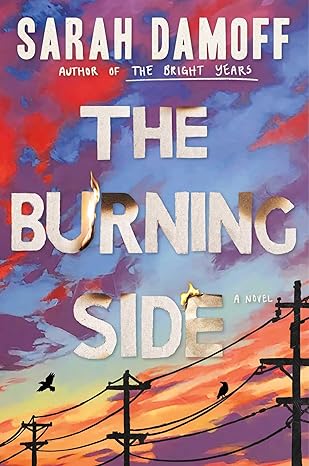 When April and Leo’s house burns in the middle of the night, they escape with their two young children and the quiet knowledge that the fire is not the only thing threatening their family. They retreat to April’s childhood home in Dallas, where her spirited parents and siblings provide both comfort and complication.
 After leaving evangelical Christianity in her early twenties, kicking an addiction, and building a life as a writer, Meghan O’Gieblyn was admired by her friends for having a strong will. Then, in her late-thirties, she began secretly attending Catholic mass and meeting with a priest to discuss conversion. After eleven years of sobriety, she began drinking again. Both returns — to organized religion and to alcohol — felt to her like a regression, a personal defeat. Knowledge and determination had proven useless when it came to her most vexing personal battles. She was forced to reckon with her inner doubleness, a self “who both wants and wants not to want,” as she puts it.