
From the author of Thin Girls, a page-turning feminist novel that tells the story of how a poor girl coming of age in rural New Zealand grows to be a sex icon, the face of a movement, and a mother, all at the same time.
THE HOP
by Diana Clarke
Harper, June 2022
(via Writers House)
 Kate Burns grows up wanting attention from her Ma, but her Ma wants only money and Kate learns how to get both. She and her childhood friend, Lacey, run kissing lessons for cash in the janitor’s closet of Fenbrook High, and, just like that, they find themselves in the sex work industry. When Ma dies, Kate discovers that the men her Ma was always inviting over to their home were, in fact, clients. Ma was no stranger to sex work either.
Following in Ma’s footsteps, Kate heads to Nevada where she picks up a job at America’s largest and most successful brothel: The Hop. In her new life as a Bunny, Kate searches for an identity she can perform—the other Bunnies include a goth, a housewife, a hippy, a rebel, all of them acting their archetype flawlessly. She befriends Betty, a trans woman who is a Bunny for kicks rather than cash; Mia, who is marketed as The Asian Persuasion; Dakota and Rain, who are ex-dominatrixes and newly in love. Kate becomes Lady Lane. Lady quickly becomes a bestselling Bunny and the owner Daddy’s favorite at this high-class establishment. But when ten street workers are killed in a nearby city, just bodies with no names, Lady joins her sister Bunnies in mourning and begins to see things in a new light.
Lady’s success breeds scandal and unwanted fame, deeply affecting her, transforming her life and The Hop forever. Diana Clarke’s provocative second novel is subversive in the very best way, an unforgettable work of fiction with a feminist message that couldn’t be more important.
Purdue MFA (with Roxane Gay as her thesis adviser) and University of Utah PhD candidate, Diana Clarke is a New Zealander who now lives in Salt Lake City. Her work has been published in Glimmer Train, The Rumpus, Black Warrior Review, The Master’s Review, and Hobart, among other places. THE HOP is her second novel.
 The party starts out innocently enough. On a Friday afternoon, with only six weeks ‘til graduation, a few local teenagers find a garage door opener on the deck of a nearly-fully-constructed luxury home. By evening, word has gotten out, and virtually the entire the senior class is partying at the house, music blasting, booze flowing. The skaters are using the empty swimming pool as a half-pipe, some kid is selling coke in the upstairs bathroom, and the stoners are building a fire pit in the backyard. It’s a bona fide rager. Of course nobody plans to trash the house, but somehow, by the end of the night, the kitchen is flooded, there are holes in the walls, the deck is singed, and the custom glass windows are shattered. What should have been the best party of the year has become the town’s worst ever case of vandalism.
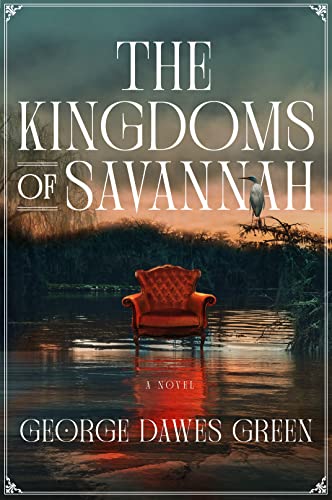 When matriarch Morgana Musgrove calls upon her prodigal son Ransom to help her with a case, the defunct M. Musgrove & Family Detective Agency is back in business, albeit reluctantly. Tensions rise between the Musgroves and whispers of a mysterious lost “Kingdom”—descendants of the African-American soldiers who fought for King George, and afterwards formed a secret community, refusing to return to slavery—float in the sultry Savannah night. The family of investigators creeps closer and closer to exposing the city’s seedy underbelly, and a depraved history that a powerful few are determined to keep hidden, no matter the
  Carla Karolac is doing just fine. Having escaped the clutches of her controlling mother and founded a successful writing retreat in which participants are confined to windowless cells until they hit their daily word count, she lives a comfortable, if solitary, existence. If only her therapist, Toonie, would stop going on about Carla’s nonexistent love life and start addressing her writer’s block, she might be able to make some progress. But then Carla finds Toonie murdered, and suddenly her unfinished memoir is the least of her concerns. Without quite knowing why, she dials an old phone number.