
For fans of Emily St. John Mandel, David Mitchell, and Kazuo Ishiguro, this “mind-bending take on time travel” (The New York Times) is about an isolated town neighbored by its own past and future, and a young girl who spots two elderly visitors from across the border: the grieving parents of the boy she loves.
THE OTHER VALLEY
by Scott Alexander Howard
Atria/Simon & Schuster, February 2024
(via Frances Goldin Literary Agency)
 Sixteen-year-old Odile Ozanne is an awkward, quiet girl, vying for a coveted seat on the Conseil. If she earns the position, she’ll decree who among the town’s residents may be escorted deep into the woods, who may cross the border’s barbed wire fence, who may make the arduous trek to descend into the next valley over. It’s the same valley, the same town. But to the east, the town is twenty years ahead in time. To the west, it’s twenty years behind. The only border crossings permitted by the Conseil are mourning tours: furtive viewings of the dead in towns where the dead are still alive.
When Odile recognizes two mourners she wasn’t supposed to see, she realizes that the parents of her classmate Edme have crossed the border from the future to see their son while he’s still alive in Odile’s present. Edme—who is brilliant and funny, and the only person to truly know Odile—is about to die. Sworn to secrecy by the Conseil so as not to disrupt the course of nature, Odile finds herself drawing closer to her doomed friend—imperilling her own future.
Masterful and original, THE OTHER VALLEY is an affecting modern fable about the inevitable march of time and whether or not fate can be defied. Above all, it is about love and letting go, and the bonds, in both life and death, that never break.
Jimmy Fallon’s Book Club Top Four Pick
A PBS Book Club Pick
Soon to be a TV series
« Beautifully written…a triumph »—Booklist (starred review) « This gripping speculative novel will make for wonderful book club discussions. » —Library Journal (starred review)
“A mind-bending take on time travel” and “a slow-boiling psychological thriller…Howard has a naturalist’s gift for the pastoral.” —The New York Times
« What a stunning debut! This coming-of-age story is filled to the brim with heart and hope and Howard’s prose is simply breathtaking. The Other Valley is a brilliant take on time travel and a thought-provoking exploration of the boundaries between fate and choice. Make room on your shelves, folks, this book is going to knock your socks off. » —Sylvain Neuvel, award-winning author of Sleeping Giants
Scott Alexander Howard lives in Vancouver, British Columbia. He has a PhD in philosophy from the University of Toronto and was a postdoctoral fellow at Harvard, where his work focused on the relationship between memory, emotion, and literature. THE OTHER VALLEY is his first novel.
 YONNONDIO follows the heartbreaking path of the Holbrook family in the late 1920s and the Great Depression as they move from the coal mines of Wyoming to a tenant farm in western Nebraska, ending up finally on the kill floors of the slaughterhouses and in the wretched neighborhoods of the poor in Omaha, Nebraska.
 DEMON COPPERHEAD is the story of a boy born to a teenaged single mother in a single-wide trailer, with no assets beyond his dead father’s good looks and copper-colored hair, a caustic wit, and a fierce talent for survival. In a plot that never pauses for breath, relayed in his own unsparing voice, he braves the perils of foster care, child labor, derelict schools, athletic success, addiction, disastrous loves, and crushing losses. A modern retelling of Dickens’s David Copperfield, which transposes that epic novel, chapter by chapter, to a modern place and time: the American south.
 You’ve seen the smooth, uncanny artifacts: a blank, white café that looks like it could be located anywhere in the world; TikTok dance videos repeating in a dull echo; restaurant design and food plating which begs to be posted on Instagram; endlessly bingeable streaming television; influencers’ faces made up and surgically altered towards a certain photogenic ideal. While appearing in different mediums, these pieces of culture are characterized by a slick sameness. Rather than provoking us, they’re pleasing, ambient, frictionless.
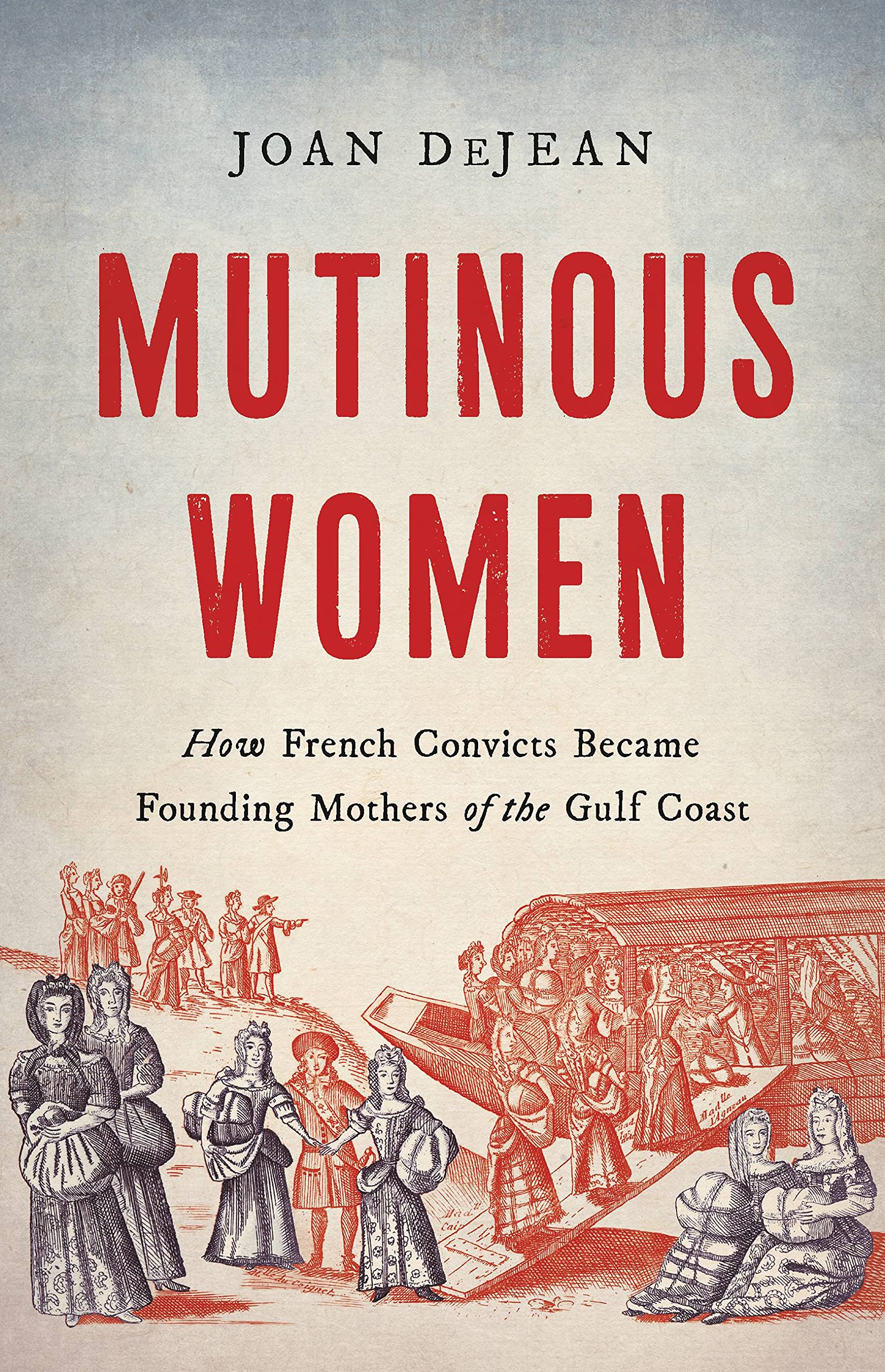 In 1719, a ship named La Mutine (the mutinous woman), sailed from the French port of Le Havre, bound for the Mississippi. It was loaded with urgently needed goods for the fledgling French colony, but its principal commodity was a new kind of export: women. Falsely accused of sex crimes, these women were prisoners, shackled in the ship’s hold. Of the 132 women who were sent this way, only 62 survived. But these women carved out a place for themselves in the colonies that would have been impossible in France, making advantageous marriages and accumulating property. Many were instrumental in the building of New Orleans and in settling Louisiana, Alabama, Arkansas, Illinois, and Mississippi.
 Joan DeJean