
The most complete and authoritative guide to Gen Z, describing how leaders must adapt their employment, sales and marketing, product, and growth strategies to attract and keep this important new generation of customers, employees and trendsetters.
ZCONOMY:
How Gen Z Will Change the Future of Business―and What to Do About It
by Jason R. Dorsey & Denise Villa
Harper Business, September 2020
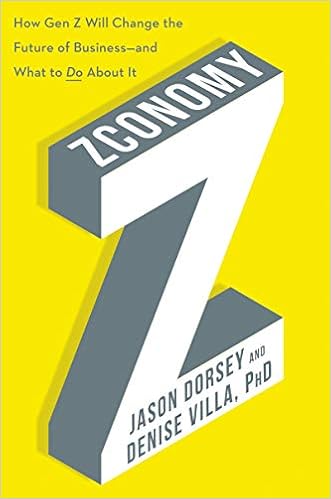 Gen Z changes everything. Today’s businesses are not built to sell and market the way Gen Z shops and buys, or to recruit and employ Gen Z the way they find and keep jobs. Leaders need answers now as Gen Z is the fastest growing generation of employees and the most important group of consumer trendsetters. The companies that quickly and comprehensively adapt to Gen Z thinking will be the winners for the next twenty years. Those that don’t will be the losers or become extinct. ZCONOMY is the comprehensive survival guide on how leaders must understand and embrace Generation Z. Researched and written by Dr. Denise Villa and Jason Dorsey from The Center for Generational Kinetics, the insights in ZCONOMY are based on their extensive research—they’ve led more than 60 generational studies—and their work with more than 500 companies around the world. In ZCONOMY, Dr. Villa and Dorsey answer: Who is Gen Z? What do employers, marketers, and sales leaders need to know? And, most importantly, what should leaders do now?
Jason Dorsey has been featured as a generational expert on 60 Minutes, The Early Show, and 200 more television interviews. His clients include many of the biggest brands in the world, from Four Seasons Hotels and Mercedes-Benz to Taco Bell and Discover. Dorsey has served on the board of both public and private companies, including Ultimate Software which was acquired for approximately $11 billion. As a keynote speaker, he has received more than 1,000 standing ovations around the world from audiences as large as 16,000.
Denise Villa, PhD, is the CEO and visionary behind The Center for Generational Kinetics (CGK), the leading Gen Z and generational research, speaking, and consulting firm. CGK works with over 100 clients around the world each year, ranging from financial services and global retailers to pioneering technology companies. The firm’s specialty is research that enables leaders at established brands to adapt to win new generations while teaching emerging companies how to quickly leverage generational change to grow faster.
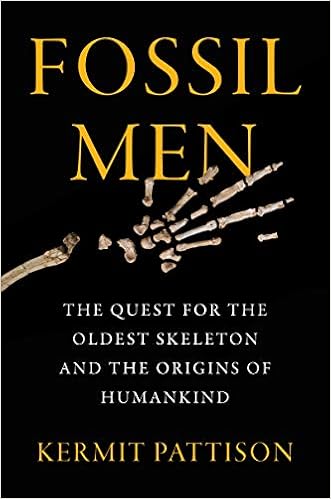 In 1994, a team led by fossil-hunting legend Tim White—”the Steve Jobs of paleoanthropology”—uncovered the bones of a human ancestor in Ethiopia’s Afar region. Radiometric dating of nearby rocks indicated the skeleton, classified as Ardipithecus ramidus, was 4.4 million years old, more than a million years older than “Lucy,” then the oldest known human ancestor. The findings challenged many assumptions about human evolution—how we started walking upright, how we evolved our nimble hands, and, most significantly, whether we were descended from an ancestor that resembled today’s chimpanzee—and repudiated a half-century of paleoanthropological orthodoxy. FOSSIL MEN is the first full-length exploration of Ardi, the fossil men who found her, and her impact on what we know about the origins of the human species. It is a scientific detective story played out in anatomy and the natural history of the human body. Kermit Pattison brings into focus a cast of eccentric, obsessive scientists, including one of the world’s greatest fossil hunters, Tim White—an exacting and unforgiving fossil hunter whose virtuoso skills in the field were matched only by his propensity for making enemies; Gen Suwa, a Japanese savant who sometimes didn’t bother going home at night to devote more hours to science
 Growing up as a paralyzed girl during the 90s and early 2000s, Rebekah Taussig only saw disability depicted as something monstrous (The Hunchback of Notre Dame), inspirational (Helen Keller), or angelic (Forrest Gump). None of this felt right; and as she got older, she longed for more stories that allowed disability to be complex and ordinary, uncomfortable and fine, painful and fulfilling. Writing about the rhythms and textures of what it means to live in a body that doesn’t fit, Rebekah reflects on everything from the complications of kindness and charity, living both independently and dependently, experiencing intimacy, and how the pervasiveness of ableism in our everyday media directly translates to everyday life. Disability affects all of us, directly or indirectly, at one point or another. By exploring this truth in poignant and lyrical essays, Taussig illustrates the need for more stories and more voices to understand the diversity of humanity. SITTING PRETTY challenges us as a society to be patient and vigilant, practical and imaginative, kind and relentless, as we set to work to write an entirely different story.
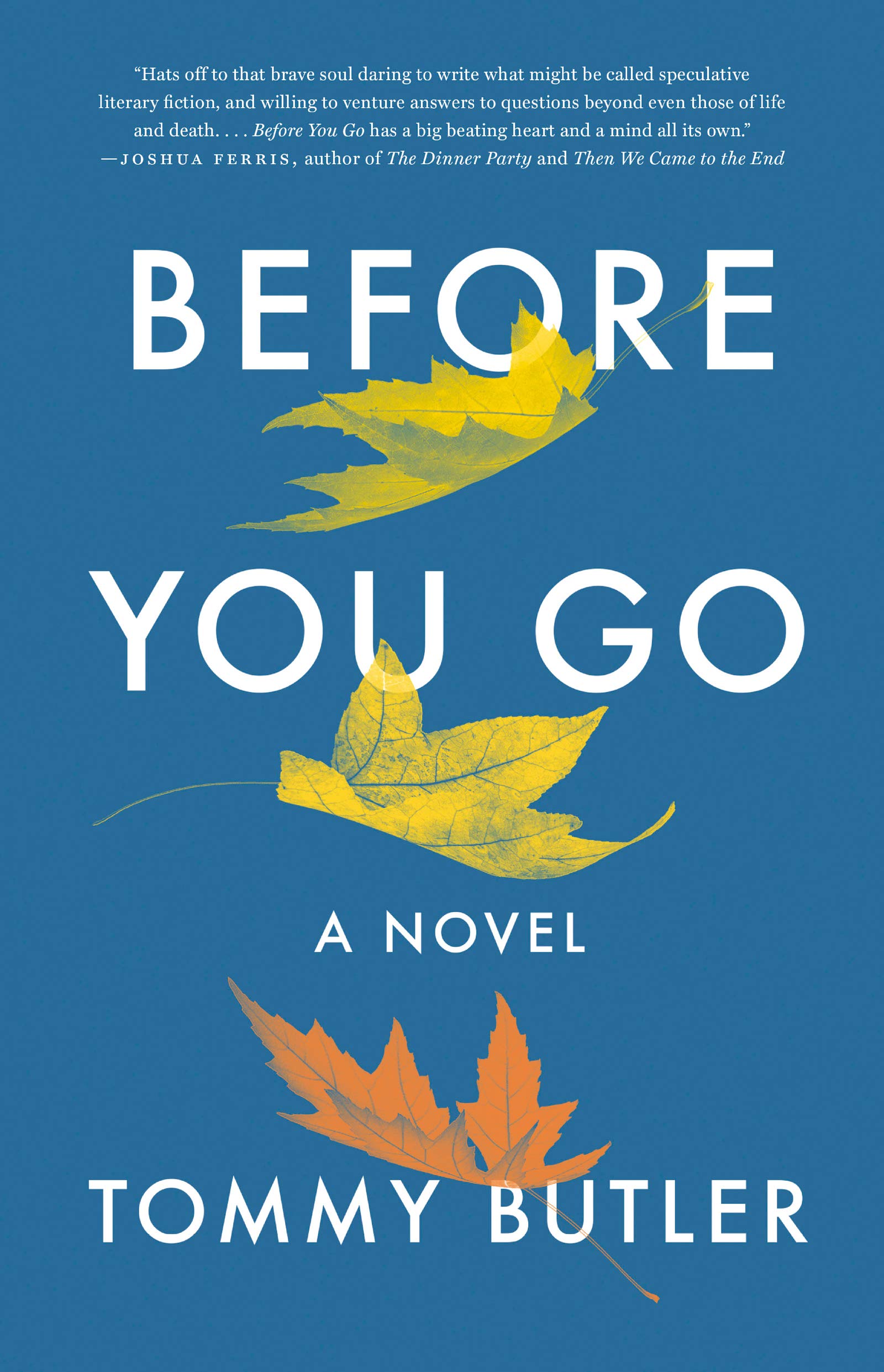 In the Before, humankind is created with a hole in its heart, the designers not realizing their mistake—if it was a mistake—until too late. Elliot Chance is just a boy, and knows nothing of this. All he knows is that he doesn’t feel at home in this world, and his desire for escape becomes more urgent as he grows into adulthood, where the turbulence of life seems to offer no cure for the emptiness. Desperate and lost, he stumbles upon a support group on the edge of Manhattan. There he meets two other drifting souls—Sasha, a young woman who leaves coded messages in the copy she writes for advertising campaigns, and Bannor, whose detailed depictions of the future make Elliot think he may have actually been there. With these two unlikely allies, Elliot launches into the business of life, determined to be happy in spite of himself. Yet the hole in the heart is not so easily filled. Profound yet playful, BEFORE YOU GO is a beautiful, imaginative journey into the ache and wonder of being human, and the quest for a meaningful life.
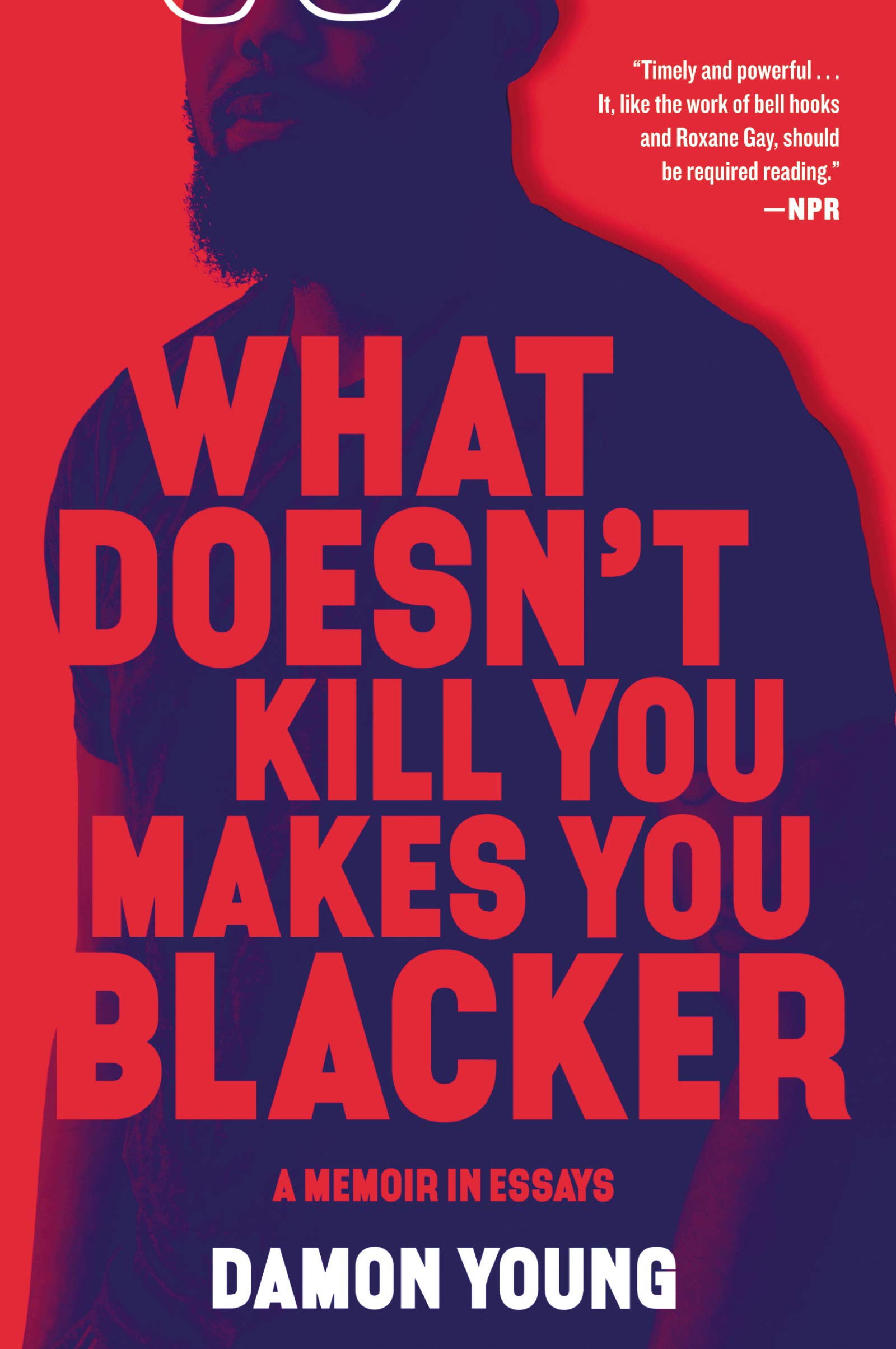 For Damon Young, existing while Black is an extreme sport. The act of possessing black skin while searching for space to breathe in America is enough to induce a ceaseless state of angst where questions such as “How should I react here, as a professional black person?” and “Will this white person’s potato salad kill me?” are forever relevant. WHAT DOESN’T KILL YOU MAKES YOU BLACKER chronicles Young’s efforts to survive while battling and making sense of the various neuroses his country has given him. It’s a condition that’s sometimes stretched to absurd limits, provoking the angst that made him question if he was any good at the “being straight” thing, as if his sexual orientation was something he could practice and get better at, like a crossover dribble move or knitting; creating the farce where, as a teen, he wished for a white person to call him a racial slur just so he could fight him and have a great story about it; and generating the surreality of watching gentrification transform his Pittsburgh neighborhood from predominantly Black to “Portlandia . . . but with Pierogies.” And, at its most devastating, it provides him reason to believe that his mother would be alive today if she were white. From one of our most respected cultural observers, WHAT DOESN’T KILL YOU MAKES YOU BLACKER is a hilarious and honest debut that is both a celebration of the idiosyncrasies and distinctions of Blackness and a critique of white supremacy and how we define masculinity.