
From National Jewish Book Award Finalist and author of The Yellow Bird Sings, comes a new novel based on the true stories of children stolen in the wake of World War II.
ONCE WE WERE HOME
by Jennifer Rosner
Flatiron/St. Martin’s Press, March 2023
 Ana will never forget her mother’s face when she sent her and her baby brother, Oskar, out of their Polish ghetto and into the arms of a Christian friend. For Oskar, though, their new family is the only one he remembers. When a woman from a Jewish resettlement organization seizes them, claiming to have their best interest at heart, Ana sees an opportunity to reconnect with her roots, while Oskar sees only the loss of the home he loves. Roger grows up in a monastery in France, inventing stories and trading riddles with his best friend in a life of quiet concealment. When a Jewish aunt seeks to reclaim him, the Church steals him across the Pyrenees before relinquishing him to family in Jerusalem. Renata, a graduate student in archaeology, has spent her life unearthing secrets from the past—except for her own. After her mother’s death, Renata’s grief is entwined with all the questions her mother left unanswered, including why they fled Germany so quickly when Renata was a little girl. Two decades after the war, these characters are each building lives for themselves in Israel, trying to move on from the trauma and loss that haunts them. But as their stories converge in unexpected ways, they must ask where they truly belong. Beautifully evocative and tender, filled with both luminosity and anguish, ONCE WE WERE HOME illuminates a little-known history. Based on the true stories of children stolen during wartime, this heart-wrenching novel raises questions of complicity and responsibility, good intentions and unforeseen consequences, as it confronts what it really means to find home.
Jennifer Rosner is the author of The Yellow Bird Sings, a finalist for the National Jewish Book Award; the memoir If A Tree Falls: A Family’s Quest to Hear and Be Heard, about raising her deaf daughters in a hearing, speaking world; and a children’s book, The Mitten String, which is a Sydney Taylor Book Award Notable. Jennifer’s writing has appeared in the New York Times, The Massachusetts Review, The Forward, Good Housekeeping, and elsewhere. She lives in western Massachusetts with her family.
 When confronted with pain and obstacles, we often shrink back out of fear and disappointment. But in REAL LIFE, Sharon Salzberg lets us know it doesn’t have to be that way. When we feel alone, cut off, or trapped, we can let those difficulties steer us onto a path toward an authentic, flourishing life—living in a way that allows us to find the wholeness that lies within. Even when we’re alone, a sense of community can accompany us through the stormy times. Our words, hearts, and actions can line up with a larger vision, rather than the smaller views our anxious, fearful thoughts arouse in us. To live in a less constricted way, Salzberg says, we need to get real about what’s most important, to ask ourselves, “What do I most deeply yearn for?” “What would I benefit from letting go of?” “What do I believe is possible for me?” By developing tools like mindful awareness, friendship and a greater sense of purpose, we can accomplish the journey to expansive freedom and live the life that speaks to our innermost longing to live free.
 “
“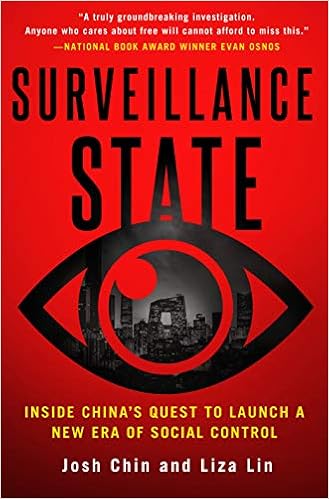 People living in democracies have for decades drawn comfort from the notion that their form of government, for all its flaws, is the best history has managed to produce. SURVEILLANCE STATE documents with startling detail how even as China’s Communist Party pays lip service to democracy as a core value of “socialism with Chinese characteristics,” it is striving for something new: a political model that shapes the will of the people not through the ballot box but through the sophisticated―and often brutal―harnessing of data.
 The Muungano empire strived and struggled to form a utopia when they split away from old earth. Freeing themselves from the endless wars and oppression of their home planet in order to shape their own futures and create a far-reaching coalition of city-states that stretched from Earth and Mars to Titan. With the wisdom of their ancestors, the leadership of their elders, the power and vision of their scientists and warriors they charted a course to a better future. But the old powers could not allow them to thrive and have now set in motion new plots to destroy all that they’ve built. In the fire to come they will face down their greatest struggle yet. Amachi Adisa and other young leaders will contend with each other for the power to galvanize their people and chart the next course for the empire. Fela Buhari and her elite unit will take the fight to regions not seen by human eyes, but no training will be enough to bring them all home. Stacia Chikeke, captain of the starship