
A literary novel on marriage, the male gaze, and the subversion of the symbiotic nanny/parent relationship, told in “hammering, scorching, direct, spare prose, where the depiction of an average life . . . is balanced by the peculiarity of all involved.“
LOOK AT US
by T.L. Toma
Bellevue Literary Press, October 2021
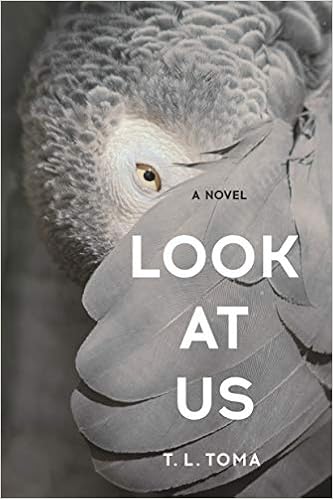 Martin, a market analyst, and Lily, a corporate attorney, have a life that many would envy―they share an expensive New York apartment with their twin toddlers, sample the delicacies of Manhattan’s finest restaurants, and take Caribbean vacations. But when the couple’s nanny announces her imminent departure, they panic: how will they ever find a replacement capable of managing their spirited boys? Enter Maeve, a young Irish émigré. Neither of them imagines how indispensable she will become, either to the household or to their marriage. As the family’s domestic bliss takes an unexpected turn, a different type of intimacy evolves, leading to an explosive finale.
With shades of Mary Gaitskill, Toma’s characters behave badly and are keenly observed. Like Bong Joon-ho’s Parasite, LOOK AT US explores the symbiotic relationship of the stranger in the home, and there are masterful, tonal shifts here that manifest as knots in your stomach and an internal conflict as to which horse – if any – you’re backing.
A captivating, trenchant portrait of class and sexual dynamics, LOOK AT US reveals just how fragile our social arrangements really are.
T.L. Toma is the author of Border Dance. He studied philosophy at Brown University and Northwestern University, where he received his PhD. He has taught in prisons, migrant labor camps, and adult literacy programs and currently teaches at Laredo College, Palo Alto College, and Texas A&M University-Corpus Christi.
Terry Toma talks about LOOK AT US: video
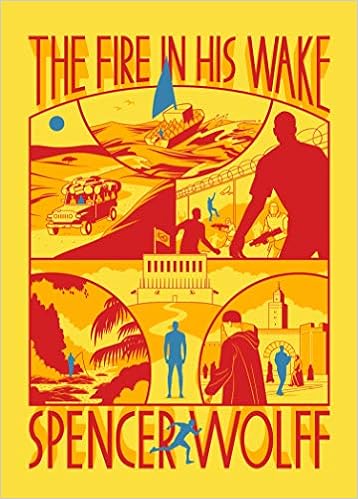 THE FIRE IN HIS WAKE recounts the journey of Arès Sbigzenou, a Congolese refugee left for dead in the wake of ethnic violence. Arès’ fate, like the fate of millions, sends him on a kinetic flight across northern Africa with Europe as his goal. He reaches Rabat, Morocco, where he binds himself to a desperate community of exiles, and meets Simon, a young UN worker, whose journey is altogether different but no less fraught. While Arès struggles to rebuild his life and come to terms with his past, Simon grapples with the moral compromises inherent in his profession and position. Part sweeping portrait of life in the Maghreb, part epic tale of hope and perseverance, THE FIRE IN HIS WAKE carries the reader from the administrative reckonings of the UN staff to the daily hazards faced by the refugees in the streets and on their risky crossings to Europe. When a storm gathers at the UNHCR, and the ghosts of the Congo’s violence unexpectedly surface in Rabat, the two men find themselves on a collision course, setting the stage for the novel’s unforgettable and genre-busting ending.
 The world is failing to remain a world. It is coming apart. The ice cubes are melting. Species are dying. People, too―of different things. But what if this world is just a first draft, made by some great artist in order to be destroyed? In this first draft of the world, a woman named Mira leaves home to study. There, she meets Annie, whose tremendous power opens Mira’s chest like a portal―to what, she doesn’t know. When Mira is older, her beloved father dies, and his spirit passes into her. Together, they become a leaf on a tree. But photosynthesis gets boring and being alive is a problem that cannot be solved, even by a leaf. Eventually, Mira must remember the human world she’s left behind, including Annie, and choose whether or not to return.
 Pulga has his dreams. Chico has his grief. Pequeña has her pride. And these three teens have one another. But none of them have illusions about the town they’ve grown up in and the dangers that surround them. Even with the love of family, threats lurk around every corner. And when those threats become all too real, the trio knows they have no choice but to run: from their country, from their families, from their beloved home. Crossing from Guatemala through Mexico, they follow the route of La Bestia, the perilous train system that might deliver them to a better life—if they are lucky enough to survive the journey. With nothing but the bags on their backs and desperation drumming through their hearts, Pulga, Chico, and Pequeña know there is no turning back, despite the unknown that awaits them. And the darkness that seems to follow wherever they go. In this striking portrait of lives torn apart, the plight of migrants at the U.S. southern border is brought to light through poignant, vivid storytelling. An epic journey of danger, resilience, heartache, and hope.
 Dans l’article «