
Science journalist Rebecca Boyle explores the cultural and scientific history of the Moon and discovers that far from being a lifeless ornament of the sky, the Moon holds the answers to some of our most fundamental questions—from the origins of the Earth and the genesis of life to the nature of time itself.
OUR MOON:
Uncovering the Secrets It Holds to Our Past and Our Future
by Rebecca Boyle
Random House, January 2024
(via DeFiore and Co.)
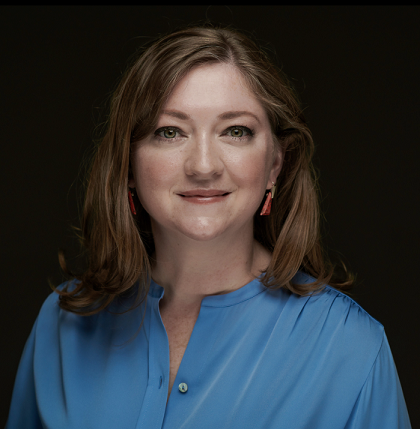 The Moon is our constant companion. It has been watching over us since before there was an “us.” From our earliest beginnings, we have worshipped the moon, used it to mark our days, depended on its predictability to grow our crops and follow migrating herds, and looked to it for artistic and spiritual inspiration. The Moon has played many roles in our lives, and now it is ready to tell us all it knows.
In OUR MOON, award-winning science journalist Rebecca Boyle traces our relationship with the Moon over the centuries and explores the latest scientific findings into what the Moon can now tell us about Earth’s origins and its future. As we prepare to return to the Moon, it is more important than ever to take a closer look at this still mysterious neighbor of ours.
No other book has delved into the cultural and scientific history of the Moon. A subject with truly global appeal, OUR MOON is for readers who enjoy single-subject works such as Yuval Noah Harari’s Sapiens and David George Haskell’s The Songs of Trees.
Rebecca Boyle is a contributing writer for The Atlantic, a frequent contributor at FiveThirtyEight, and a freelance journalist whose work has been published in the New York Times, Wired, Aeon, Quanta, Popular Science, The New Yorker, and Scientific American. Boyle was a 2011 Ocean Science Journalism fellow at the Woods Hole Oceanographic Institution in Woods Hole, Massachusetts, and a 2013 journalism fellow at the National Center for Atmospheric Research in Boulder, Colorado. This is her first book.
 Three vastly different women: Shizuka Satomi, an aging, Hell-damned violin prodigy and teacher; Katrina Nyugen, a young transgender runaway and aspiring violinist; and Lan Tran, a spaceship captain running from a faraway war. Each woman descends on California’s predominantly Asian and Hispanic San Gabriel Valley seeking to rewrite her doomed fate. Each secretly dreams, despite forces working against her and closing in, of belonging to someone, of becoming someone’s family. Yet each is resigned to a life of carrying her burden alone. The only chance for Shizuka, Katrina, and Lan to survive on Earth rests in their finally recognizing who they are to one another — before it’s too late. LIGHT FROM UNCOMMON STARS will pull you in with its sensory pleasures, transportive depiction of place, masterful storytelling, and the warmth with which Aoki welcomes you into a neighborhood, as if you are already family. Aoki uses genre tropes to push the boundaries of imagination on behalf of her protagonists — people who, at the novel’s start, barely thought they were permitted to dream at all. Aoki’s characters, like herself, are women, queer, people of color. They are violinists full of innocence and regret. They are mothers trying to preserve the family business. They are refugees fleeing a war from beyond the stars. And they have come to the San Gabriel Valley, just outside of Los Angeles, a place where many drive past without a second thought, yet where others find magic and previously unthinkable love.
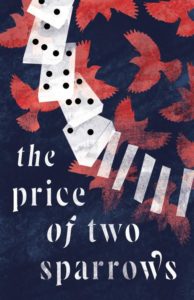 Heico is an ornithologist fighting a losing battle to protect the birds in his beachside suburb. When a journalist asks for comment on a planned development, Heico exaggerates his reports on how many migratory birds use the site. Soon it is revealed that the proposed building is a mosque, and he finds himself embroiled in community resistance to the project. Still, he refuses to back down. As the delayed mosque project becomes a focal point for growing Islamophobia, Heico must confront his own ghosts, and the prejudices he insists he doesn’t have. Nahla is Heico’s house cleaner. Having recently arrived in Australia she is trying to find her place in a new country and a new marriage. Isolated and lonely, she sees the mosque as a symbol of what she hopes to find in Australia: community, familiarity, acceptance. But as resistance to the project intensifies, she must summon the courage and the language to speak out and claim her space in this new life.
 Artificial intelligence is bringing a new digital order—it is changing war, surveillance, and disinformation, with profound effects on human freedom, global security, and power dynamics. THE BLACK BOX takes us inside the immensely competitive global struggle to lead in the four key elements of AI advantage: data, computing power, talent, and institutions. A world expert in AI-enabled weapons, Paul Scharre examines the strengths and weaknesses of today’s major superpowers, including China, the United States, Europe, and the Big Tech corporations that control the global supply of data and compute.
 YOU DON’T OWE ANYONE is for perfectionists, workaholics, people pleasers, and strivers who feel stuck in the try-hard cycle. Sharing her experiences as a life coach and recovering perfectionist, Caroline Garnet McGraw shows us how we can free ourselves from the weight of expectations and encourages us to move our lives forward without apology. Inspired by the author’s viral essay « You Don’t Owe Anyone an Interaction, » this book invites us to make surprising choices that can help us get unstuck. Rather than offering more ways to effect change through sheer effort, these personal stories serve as a compassionate witness, a reflection of our own perfectionistic tendencies. They also are a wakeup call jolting us out of our martyr mentality and inspiring us to move in new, positive directions. Through simple, accessible coaching practices, YOU DON’T OWE ANYONE shows us what it looks like to refuse to over-function in the old ways. It invites us to make the same surprising choices that have helped McGraw and her clients move past perfectionism, empowering us to quiet our fears and heal our hearts.