
Archives de catégorie : Anthropology/Sociology

ON LOVE AT FIRST SIGHT d’Emanuele Lugli

Despite its cultural ubiquity, there has never been a non-fiction book about love at first sight. Stanford professor and cultural historian Emanuele Lugli will change that, bringing a deeply-researched, gorgeously written, Big Idea approach to this most fascinating of subjects.

ON LOVE AT FIRST SIGHT
by Emanuele Lugli

Viking, 2028
(via The Gernert Company)
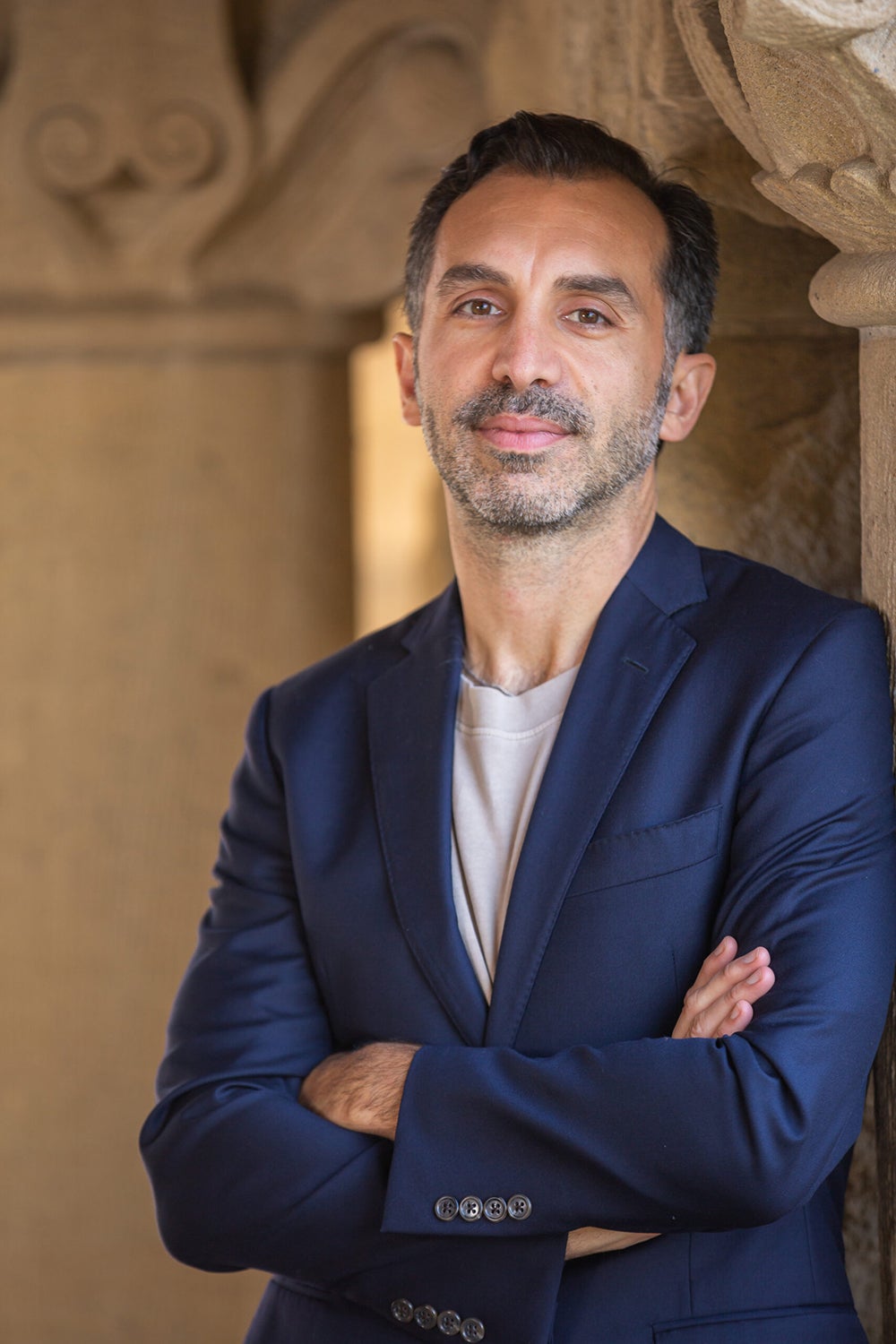
Credit: Harrison Truong

Lugli argues that love at first sight is perhaps the most transformative form of love and an idea worthy of serious study. Across eight chapters, he explores the phenomenon: first as a mysterious pull between strangers; then as a complex neurobiological process by which the eyes end up doing half a dozen jobs at once; and, finally, as an approach to seeing the world anew. He’ll spend time with scientists using AI to decode how macaque monkeys perceive faces, and in labs studying cells in the visual cortex that quicken the heartbeat before the brain even registers what it is happening. He discovers ancient Chinese tales of students struck dumb by the sight of a beauty and English royals smitten by miniature portraits.

On this narrative journey Lugli asks: Can love at first sight tell us something about attraction? Does it really need the adult supervision of reason? Is there a meaningful relationship between erotic urgency and the prospect of building a life with another person, one that goes beyond the reductive evolutionary story that we’re all just primitives programmed to reproduce?

Through revisiting science and culture, present and past, the book arrives at its life-affirming proposal that instantaneous love isn’t a delusion, but a way of living more receptively: an invitation to move through the world as if charged with wonder. It arrives at the sort of gentle, optimistic prescription readers need today: a way to understand not just why sudden attraction happens, but what to do with it, and perhaps even why you might seek out such a leap of faith. You choose first—then spend a lifetime figuring out who you have chosen. It’s not the instinctual lightning strike that makes love at first sight a form of freedom, it’s the openness inspired by recasting love as a perpetual attempt at knowing.

Emanuele Lugli is an Associate Professor of Art History and Director of Public Humanities at Stanford. He writes regularly for magazines and newspapers such as The Guardian, Slate, Il Sole 24 Ore, Domani, Vogue, and Vanity Fair.

FAMILY de Meredith F. Small

In the face of the current changes in the structure of the family in our culture, this book explains why family continues to be so central to our lives.

FAMILY: How the Human Need for Belonging Shapes Our Lives
by Meredith F. Small
Pegasus, Fall 2026
(via Harvey Klinger)

Family is the most ubiquitous and persistent human social group. Everyone across the world has a family, even if that family has been lost, broken, or transformed. And now, acclaimed anthropologist Meredith Small, author of Our Babies, Ourselves, examines the very roots of the family and why this particular type of connection is so fundamental to all cultures and all people.

Previous books about family are self-help books designed to start, build, or repair broken families. Family: How the Human Need for Connection Shapes Our Lives is something different. Small seeks to understand why this particular form of social organization is the bedrock of human interaction. Why do we form families? Why do people place such importance on their family relationships? And what is the reality of family life—does it live up to our expectations? What do families provide for each of us?

Small takes the reader on a journey from the evolutionary roots of family three million years ago to its present-day varied expression. We read that there is fossil evidence of human groups that could be called families, and extensive archaeological finds that when humans settled down and started to grow their own food and build villages and cities, they did so as families.

But within this common framework of a family, there are also complex iterations of the way families are formed and operate. Across the globe, various forms of marriage, parenting, and types of family differ from the Western template of a family of Mom+Dad+kids. People have developed families of all stripes, adapting the notion of family to their own worldview, religious beliefs, and economic necessities.

Meredith F. Small is a classically trained anthropologist, and Professor Emerita at Cornell University, where Small was an award-winning teacher for over thirty years. Small was hailed “the Margaret Mead of our generation” by the President of the American Anthropological Association, and has published numerous books for the popular audience, Inventing the World: Venice and the Transformation of Western Civilization, Here Begins the Dark Sea: How a 15th Century Venetian Monk Drew the Most Accurate Map of the World and Foresaw the Future, Our Babies, Ourselves, Kids: How Biology and Culture Shape the Way We Raise Our Children, and What’s Love Got to Do With It.

PEOPLE SKILLS de Lily Scherlis

A razor-sharp nonfiction book that dissects the failures of the bloated self-help industrial complex to improve our lives, while also unearthing what real change could look like.

PEOPLE SKILLS:
The Impossible Task of Personal Growth–and Why Change is the Answer
by Lily Scherlis
Liveright / Norton (US) / Hutchinson Heinemann (UK), publication date TBC
(via The Gernert Company)

Psychology is rife with metaphors, and today’s self-help movement is no different: you can “optimize” your routine, as if you are designing an app; you can set better boundaries, as if you are a lawn; you can say when you’re “at capacity,” as if you are a battery; or you can “invest” in self-care, as if you are a stockbroker on the trading floor of the soul. From a pragmatist’s perspective, borrowing the language of the times to instill psychological insights makes perfect sense, and when self-help advice sounds so intuitive, it’s easy to buy in. But problems arise when we mistake metaphors forged in the crucible of our hyper-individualized neoliberal culture for a true metaphysics of the mind. You may indeed have a 401k, but you are neither a lawn nor a battery. 

In PEOPLE SKILLS, Lily Scherlis places the concepts so many of us cling to for sanity as we navigate an increasingly uncertain world–think attachment styles, emotional intelligence, and even the idea of people skills itself–in sociopolitical context, from cold war ideological panic to anxieties unleashed by globalization. Many of these ideas have their origins in legitimate psychological insights and research, and some of them can be helpful, some of the time. But when they are warped, watered down, and overapplied, they give rise to a curious paradox: As inadequate institutions crumble and we are forced deeper into financial and emotional dependence upon one another, our primary yardstick for measuring our own well-being is the ability to perform independence. In a society that values economic growth at all costs, the only way to avoid being left behind is to keep growing yourself; in a world getting worse, the only solution is to be better. 

But this is an impossible task: In the never-ending quest for self-improvement, the goal is always just out of reach–which is exactly how the $1.5 billion self-help industry wants it. Lily gives us permission to step off the hamster wheel of personal growth and think about other ways of addressing our problems—and to question whether they’re really problems at all. We are intrinsically interdependent beings, she reminds us, whose obligations to ourselves are never really divorced from our obligations to one another, and when we retreat to our own private spheres in order to self-actualize, we merely atomize our troubles, disappoint ourselves, and reinforce the status quo. In encouraging us to flex new psychic muscles instead of reaching for the same canned jargon, PEOPLE SKILLS ends up being its own kind of self-help, ironically. For Lily, the goal is not growth but change–for ourselves, and for our world. Neither can happen without the other.

Lily Scherlis is a writer and artist, and a PhD candidate in English and Theater and Performance Studies at the University of Chicago. Her writing has appeared in n+1Harper’sThe GuardianParapraxisThe BafflerThe Drift, and Cabinet, among other venues. She lives in Brooklyn.

DIE MACHT DER MUSIK d’Ullrich Fichtner

Music makes us happier, healthier, smarter and nicer – and we need more of it in our lives.

DIE MACHT DER MUSIK
(The Power of Music)
by Ullrich Fichtner
DVA/PRH Germany, November 2025

Music has an extraordinary effect on us: it can give us goosebumps and butterflies, it can make our hearts beat faster, it can cheer us up and make us sad, can bring our stress levels down and ease pain. Not just that, but the latest findings from neuroscience and brain science show that it can have a positive impact on our health, psyche and social skills, and help develop and reinforce cognitive skills in both the young and the old.

In DIE MACHT DER MUSIK, the multi-award-winning Spiegel reporter and music aficionado demonstrates that music has huge tangible benefits. Using his wide-ranging experience with music and musicians in all genres around the world, as well as the latest scientific studies, he reveals how and why music is so important both for us individually and society at large, how it works, its enormous potential as a social tool, and how it can help us live a healthier, happier, more peaceful – in short: better – life.

Ullrich Fichtner was born in 1965 and is a Spiegel reporter based in Paris. With three Egon Erwin Kisch and three Henri Nannen prizes to his name, he is one of the most award-winning German journalists. His latest book, « Geboren für die großen Chancen » (‘A future of opportunities’) was shortlisted for the German Non-Fiction Prize.

FREE LOVE de Michelle Tea

A wildly entertaining, authentic, and profound guide to navigating freedom and commitment, in a society intent on pinning us down.

FREE LOVE: Adventures in Marriage and Polyamory
by Michelle Tea
HarperOne, Fall 2026
(via Frances Goldin Literary)

Polyamory is having a moment. Whether you love it or hate it, the explosion of non-monogamy into the mainstream suggests a widespread frustration and stuck-ness within traditional relationship structures, perhaps especially among women and femmes, whose sexual freedom has long been contained and policed. Why do we have to choose between adventure and security? Why can’t we try, at least, to have them both?

Long before its current it-girl moment, polyamory was foundational to many radical subcultures, who saw in it not only the chance for sexual freedom, but a path towards dismantling patriarchal oppression and the zero-sum game of capitalism – a path towards personal, spiritual, and collective growth, care, and empowerment. Polyamory was also foundational to the life of beloved writer and queer icon Michelle Tea, from the clandestine, ill-fated throuples of her late teens, to the punk lesbian underground of 90s San Francisco, through marriage and divorce, Tinder flings and enduring friendships, heartbreak and motherhood.

In FREE LOVE, she will share these juicy, hilarious, and moving stories with her characteristic wit and charm, while delving into the radical, forgotten history of openness, and interviewing and researching widely, to guide readers through the thorny choices we make in our own relationships – poly or no. A modern-day The Ethical Slut meets Dolly Alderton’s Everything I Know About Love, it marries the storytelling of Maggie Smith and Samantha Irby with the practical wisdom and heartwarming appeal of writers like Glennon Doyle, Emily Nagoski, and Vanessa Marin.

Michelle Tea is the author of over a dozen widely acclaimed books memoir, fiction, and cultural criticism, and the recipient of awards from PEN/America, the Guggenheim, Lambda Literary, and the Rona Jaffe Foundation. Her books have been translated into French, Japanese, Slovenian, German, Italian, and Swedish.