
A timely and important examination of one of the most essential factors in all successful relationships: trust, by a leading expert in the field of trust, betrayal and redemption, in a debut book that is the result of more than twenty years of research into the science of trust repair.
HOW TRUST WORKS (And The Science of How to Repair It)
by Dr. Peter H. Kim
Flatiron, Publication Date TBD
 In HOW TRUST WORKS, Dr. Kim will explain the two most powerful determinants of trust (perceived competence and perceived integrity) and why those determinants can be weighted so unevenly when we are deciding whether to trust or forgive someone—or not. We as humans are bad at determining the trustworthiness of other people, and we are even worse at defending our own trustworthiness when it comes under fire. Yet despite this shortcoming, and the fact that we are all keenly aware of how important trust is in all of our personal and professional relationships, surprisingly little substantive research had been done on the topic before Dr. Kim began his inquiries. In fact, the majority of our institutional knowledge at the time seemed to rely almost entirely on case studies and other anecdotes. Dr. Kim was forced to develop his own set of rigorous scientific tools that would help him analyze how people interact with one another in the face of conflict.
Dr. Kim will illustrate how the patterns he identified in the lab play out in the real world using both recent and infamously public examples of trust violations and attempts at repair. These examples range from why the public was willing to overlook Arnold Schwarzenegger’s sex scandal but never forgave Bill Clinton, to revisiting the 2017 Unite the Right Rally in Charlottesville and reactions to the police killing of George Floyd, including an examination of how different cultures can develop very different views about what constitutes an irredeemable transgression.
A Professor of Management and Organization at the University of Southern California Marshall School of Business, Dr. Peter H. Kim is a leading expert in the field of trust, betrayal and redemption. His work has been published in leading scientific journals, including the Journal of Experimental Psychology, as well as in popular news outlets such as The New York Times, TIME, The Washington Post, The Atlantic, NPR, and others. Dr. Kim was born in Korea, and his family came to the United States when he was a child. He has given talks in Australia, France, Germany, the Netherlands, Turkey, Hong Kong, Japan, South Korea and Canada, and he hopes to expand his international speaking circuit as soon as it is safe to do so.
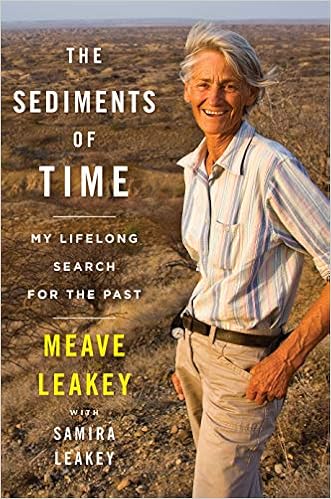 In THE SEDIMENTS OF TIME, preeminent paleoanthropologist Meave Leakey brings us along on her remarkable journey to reveal the diversity of our early pre-human ancestors and how past climate change drove their evolution. She offers a fresh account of our past, as recent breakthroughs have allowed new analysis of her team’s fossil findings and vastly expanded our understanding of our ancestors. Meave’s own personal story is replete with drama, from thrilling discoveries on the shores of Lake Turkana to run-ins with armed herders and every manner of wildlife, to raising her children and supporting her renowned paleoanthropologist husband Richard Leakey’s ambitions amidst social and political strife in Kenya. When Richard needs a kidney, Meave provides him with hers, and when he asks her to assume the reins of their field expeditions after he loses both legs in a plane crash, the result of likely sabotage, Meave steps in. THE SEDIMENTS OF TIME is the summation of a lifetime of Meave Leakey’s efforts; it is a compelling picture of our human origins and climate change, as well as a high-stakes story of ambition, struggle, and hope.
 We are lonelier than ever. The average American hasn’t made a new friend in the last five years. Research has shown that people with close friends are happier, healthier, and live longer than people who lack strong social bonds. But why— when we are seemingly more connected than ever before—can it feel so difficult to keep those bonds alive and well? Why do we spend only four percent of our time with friends? In this warm, inspiring guide, Adam « Smiley » Poswolsky proposes a new solution for the mounting pressures of modern life: focus on your friendships. Smiley offers practical habits and playful reminders on how to create meaningful connections, make new friends, and deepen relationships. He’ll help you develop a healthier relationship with technology, but he’ll also encourage you to prioritize real-world experiences, send snail mail, and engage in self-reflective exercises.
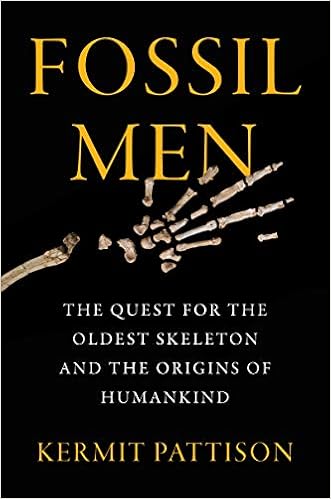 In 1994, a team led by fossil-hunting legend Tim White—”the Steve Jobs of paleoanthropology”—uncovered the bones of a human ancestor in Ethiopia’s Afar region. Radiometric dating of nearby rocks indicated the skeleton, classified as Ardipithecus ramidus, was 4.4 million years old, more than a million years older than “Lucy,” then the oldest known human ancestor. The findings challenged many assumptions about human evolution—how we started walking upright, how we evolved our nimble hands, and, most significantly, whether we were descended from an ancestor that resembled today’s chimpanzee—and repudiated a half-century of paleoanthropological orthodoxy. FOSSIL MEN is the first full-length exploration of Ardi, the fossil men who found her, and her impact on what we know about the origins of the human species. It is a scientific detective story played out in anatomy and the natural history of the human body. Kermit Pattison brings into focus a cast of eccentric, obsessive scientists, including one of the world’s greatest fossil hunters, Tim White—an exacting and unforgiving fossil hunter whose virtuoso skills in the field were matched only by his propensity for making enemies; Gen Suwa, a Japanese savant who sometimes didn’t bother going home at night to devote more hours to science