
In the bestselling tradition of Steven Pinker’s Enlightenment Now and Yuval Noah Harari’s Homo Deus, an engaging and interdisciplinary look at the history, philosophy, and psychology of optimism, and why being optimistic is a moral obligation—even in the face of seemingly insurmountable challenges.
THE BRIGHT SIDE:
Why Optimists Have the Power to Change the World
by Sumit Paul-Choudhury
Canongate, January 2025
(via Randle Editorial & Literary)
 Scrolling through our daily newsfeeds we see war, political unrest, the swift rise of artificial intelligence, and a looming climate crisis – just a few of the tragedies fostering pessimism. So, in the face of such glum events, how do we stay optimistic? And, more important, why should we?
In THE BRIGHT SIDE, Sumit Paul-Choudhury tackles these pressing questions, arguing that optimism is not only essential for overcoming the obstacles ahead but also fundamental to human resilience and progress. Drawing on a wide array of evidence across diverse fields, Paul-Choudhury delves into the underappreciated philosophical roots of optimism, examines its impact on mental health and professional success, and discusses how an optimistic outlook supports a scientific and rational world view.
Beyond theoretical discussions, THE BRIGHT SIDE shows how we can apply the principles of optimism to address complex challenges, particularly the environmental crisis. Through visits to innovative projects like the futuristic LINE city in Saudi Arabia, the Faslane Peace Camp in Scotland, initiatives related to the New Green Deal, and anecdotes covering everything from Ernest Shackleton to Bitcoin mania, the book illustrates optimism in action.
A salve for dark times, THE BRIGHT SIDE is a lens through which we can identify and solve the problems we face and create a better future for ourselves and generations to come.
“An expansive tour de force that … helps readers understand what drives us to imbue ourselves with optimism and how to use it to create a better future. Paul-Choudhury’s own voice shines through – he is witty, empathetic and a beautiful writer… We’re born optimists, Paul-Choudhury argues; if you’re no longer one, this title will give you a way back – and a lot more besides.” — The Observer
Sumit Paul-Choudhury writes, thinks, and dreams about science, technology, and the future. He is the former Editor-in-Chief of New Scientist, a trained astrophysicist, and a former business journalist covering financial engineering and technology. Currently, he devotes most of his time to his creative studio Alternity, developing speculative histories and social experiments. A Sloan Fellow at London Business School and a Fellow of the Royal Society of Arts, he lives, works, and problem solves in London with his wife and young twins.
 When Nancy Reddy had her first child, she found herself suddenly confronted with the ideal of a perfect mother—a woman who was constantly available, endlessly patient, and immediately invested in her child to the exclusion of all else. Nancy had been raised by a single working mother, considered herself a feminist, and was well on her way to a PhD. Why did doing motherhood “right” feel so wrong?
  A population calamity is unfolding before our eyes. It started in parts of the developed world and is spreading to the four corners of the globe. There are just too few babies being born for humanity to replace itself. Before the end of the current century at the latest, and probably much sooner, the world’s population will start to decline.
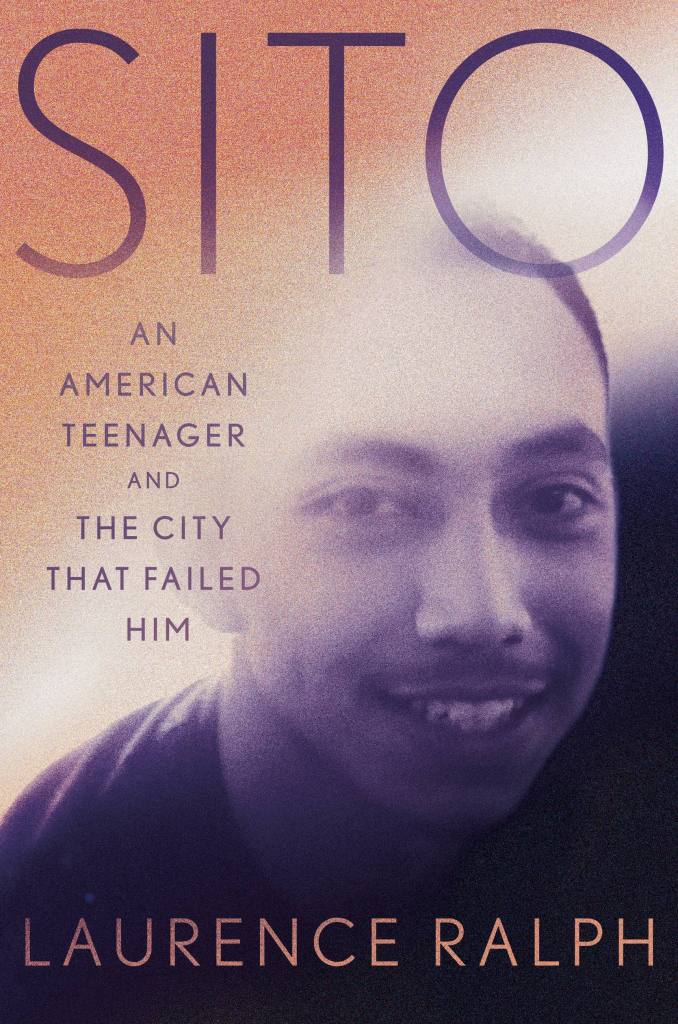 In September of 2019, Luis Alberto Quiñonez—known as Sito— was shot to death as he sat in his car in the Mission District of San Francisco. He was nineteen. His killer, Julius Williams, was seventeen. It was the second time the teens had encountered one another. The first, five years before, also ended in tragedy, when Julius watched as his brother was stabbed to death by an acquaintance of Sito’s. The two murders merited a few local news stories, and then the rest of the world moved on. But for the families of the slain teenagers, it was impossible to move on. And for Laurence Ralph, the stepfather of Sito’s half-brother who had dedicated much of his academic career to studying gang-affiliated youth, Sito’s murder forced him to revisit a subject of scholarly inquiry in a deeply personal way. Written from Ralph’s perspective as both a person enmeshed in Sito’s family and expert on the entanglement of class and violence, SITO is an intimate story with an message about the lived experience of urban danger, and about anger, fear, grief, vengeance, and ultimately grace.
 When Cody Delistraty lost his mother to cancer in his early 20s, he found himself unsure how to move forward. Planning for her recovery, he and his family had a purpose. But after she was gone, there seemed to exist only the empty advice on grief: move through the five stages, achieve closure, get back to work, go back to normal. So begins a journey into the new frontiers of grief, where Delistraty seeks out the researchers, technologists, therapists, marketers, and communities around the world looking to cure the pain of loss in novel ways. From the neuroscience of memory deletion to book prescriptions, laughter therapy, psilocybin, and Breakup Bootcamp, what ultimately emerges is not so much a cure as a fresh understanding of what living with grief truly means.