
The book that Scott’s fans have been waiting for—the distillation of thirty years of lessons learned about careers, investments, and the search for economic security.
THE ALGEBRA OF WEALTH
A Simple Formula for Financial Security
by Scott Galloway
Portfolio, April 2024
(via Levine Greenberg Rostan)
 The practical advice gleaned from thirty years of mentorship and mentoring, a lifetime of studying how people make money, how they lose it, and what it takes to come out ahead. THE ALGEBRA OF WEALTH will be quintessential Scott: provocative, insightful, rooted in data and science, but also profane and profound in equal measure.
THE ALGEBRA OF WEALTH will build on the fundamental principles of personal finance to account for the challenges facing today’s young (and not so young) readers. The world of work is changing around us, and young people face very different career challenges than those entering the workforce decades ago. There are new and seductive spending pitfalls, from the ever-expanding array of streaming services to Buy Now Pay Later options, all of which prey on the unsophisticated. The investment marketplace now tempts us 24/7 with crypto, zero commission stock trades, and virtual banks. Even the very notion of “retirement,” the final boss of every personal finance book, is undergoing a profound rethink, as our lifespans extend and our relationship with work evolves.
Scott Galloway is a professor of marketing at NYU Stern School of Business and a serial entrepreneur. In 2012, he was named one of the world’s best business school professors by Poets & Quants. He has founded nine companies, including Prophet Brand Strategy, RedEnvelope, L2, and Section4. He is the New York Times bestselling author of The Four, The Algebra of Happiness, and Post Corona. His fourth book, Adrift: America in 100 Charts, was published on September 20, 2022.
Scott has served on the boards of directors of The New York Times Company, Urban Outfitters, UC Berkeley’s Haas School of Business, Panera Bread, and Ledger. He commands six-figure speaking fees for fast-paced, data-rich presentations that he gives regularly at major conferences and to board and management teams at Global 500 companies. His Prof G and Pivot podcasts, No Mercy / No Malice blog, and The Prof G Show YouTube channel reach millions. He has won multiple Webby and Best Business Podcast awards.
 Political upheaval and social turmoil have peeled back the glitzy layers of capitalism to reveal an uncomfortable truth: historically, businesses have sourced materials from remote corners of the globe and moved millions of people and tons of cargo around the clock—all in the name of profit. Yet many of today’s startups are rewriting the rules of business: how it’s done, by whom, and, most importantly, for what purpose. Journalist Esha Chhabra draws on her decades of reporting to explore not only the “feel good, do good” factors of these restorative enterprises but also the nuanced realities and promise of regenerative business operations.
 As the speed of change in our increasingly complex world accelerates daily, leaders are tasked with performing outside of their familiar zones both in their personal and professional lives. This requires us to adapt. Yet, the same conditions that make adapting so important can also trigger fear, leading us to resist change and default to reactive behavior. The authors call this the “adaptability paradox”: when we most need to learn and change, we stick with what we know, often in ways that stifle learning and innovation. To avoid this trap, leaders must become proactive so they can lead ahead of the curve.
 According to the Pew Research Center, in the US alone, the share of Americans who say having conversations with those they disagree with politically is “stressful and frustrating” has increased dramatically in recent years. As individuals, we are finding it increasingly hard to engage in civil discourse to negotiate our struggles and conflicts. We are stuck in difficult, intractable challenges and conflicts – with the characteristic fear and anger, entrenched positions, and destructive fighting – in all aspects of our lives.
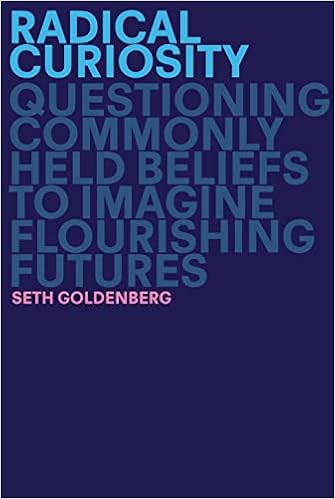 In a world with an endless hunger for innovation, why is it so hard to create audacious change? According to thought leader Seth Goldenberg, the answer to this question stems from how we, as a society, view questions themselves.