
Archives de catégorie : London 2026 Nonfiction

ON LOVE AT FIRST SIGHT d’Emanuele Lugli

Despite its cultural ubiquity, there has never been a non-fiction book about love at first sight. Stanford professor and cultural historian Emanuele Lugli will change that, bringing a deeply-researched, gorgeously written, Big Idea approach to this most fascinating of subjects.

ON LOVE AT FIRST SIGHT
by Emanuele Lugli

Viking, 2028
(via The Gernert Company)
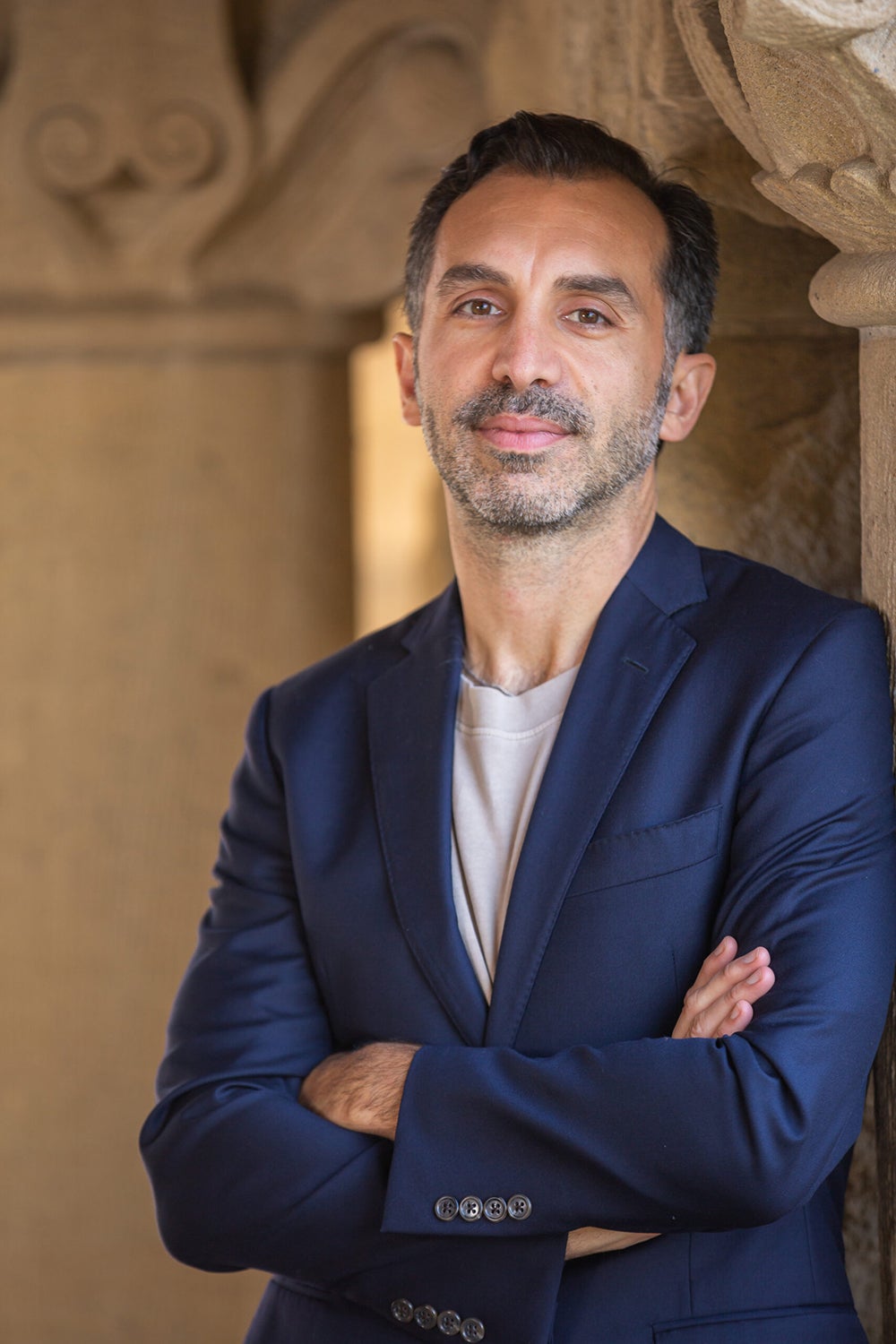
Credit: Harrison Truong

Lugli argues that love at first sight is perhaps the most transformative form of love and an idea worthy of serious study. Across eight chapters, he explores the phenomenon: first as a mysterious pull between strangers; then as a complex neurobiological process by which the eyes end up doing half a dozen jobs at once; and, finally, as an approach to seeing the world anew. He’ll spend time with scientists using AI to decode how macaque monkeys perceive faces, and in labs studying cells in the visual cortex that quicken the heartbeat before the brain even registers what it is happening. He discovers ancient Chinese tales of students struck dumb by the sight of a beauty and English royals smitten by miniature portraits.

On this narrative journey Lugli asks: Can love at first sight tell us something about attraction? Does it really need the adult supervision of reason? Is there a meaningful relationship between erotic urgency and the prospect of building a life with another person, one that goes beyond the reductive evolutionary story that we’re all just primitives programmed to reproduce?

Through revisiting science and culture, present and past, the book arrives at its life-affirming proposal that instantaneous love isn’t a delusion, but a way of living more receptively: an invitation to move through the world as if charged with wonder. It arrives at the sort of gentle, optimistic prescription readers need today: a way to understand not just why sudden attraction happens, but what to do with it, and perhaps even why you might seek out such a leap of faith. You choose first—then spend a lifetime figuring out who you have chosen. It’s not the instinctual lightning strike that makes love at first sight a form of freedom, it’s the openness inspired by recasting love as a perpetual attempt at knowing.

Emanuele Lugli is an Associate Professor of Art History and Director of Public Humanities at Stanford. He writes regularly for magazines and newspapers such as The Guardian, Slate, Il Sole 24 Ore, Domani, Vogue, and Vanity Fair.

REG DICH AB! de Manfred Schedlowski & Gaby Miketta


I could explode! Why we no longer need to be at the mercy of our anger – 10 steps for leaving our continual turmoil behind.

REG DICH AB!
(Calm Down!)
by Manfred Schedlowski & Gaby Miketta

Penguin Verlag/PRH Germany, June 2026

Do you feel at times overwhelmed by annoyance, frustration, or anger? Do you get repeatedly upset – about politics, the children, the morning commute and traffic jams? Getting upset might provide short-term relief, but in the long run this stress will wreck you physically and mentally. The good news is that you can learn to control such emotions.

With their tried and tested anti-agitation training program, Manfred Schedlowski, a professor of medical psychology and behavioural immunobiology, and the science journalist Gaby Miketta show how this can be done. In 10 simple steps (1 hour per week for each step), this program helps you recognise and minimise your personal triggers and leave unnecessary feelings of anger and irritation behind you. Practical exercises, illustrative case studies, and effective strategies for inner peace will support you on your path to calmness.

Clear explanations and strategies easy to implement in both professional and private life – training in impulse control in anger situations
An array of specific exercises and strategies

Manfred Schedlowski has been a professor of medical psychology and behavioural immunobiology at Essen University Hospital since 1997. His research focuses primarily on the interactions between mental and physical processes and how the reciprocal effects between body and mind can be made use of therapeutically to promote mental and physical health. As a psychological psychotherapist, he has spent many years supporting people with stress-related mental and physical illnesses. He is also a sought-after speaker at national and international conferences.

Gaby Miketta studied communication science and biology in Munich and Münster. She then worked for the science departments of various radio stations, produced TV reports for Sat 1, and in 1992 joined the Focus founding team under Helmut Markwort in the news magazine’s research and technology department. From 2004 to 2009, she was the developer and editor-in-chief of the education magazine Focus-Schule. In October 2009, she took over as editor-in-chief of Das Haus, Europe’s largest construction and housing magazine. In addition, she gives seminars on creativity at the Burda School of Journalism. In 2023, she founded her bureau for science communication. She has written several books with Martin Korte.

FAMILY de Meredith F. Small

In the face of the current changes in the structure of the family in our culture, this book explains why family continues to be so central to our lives.

FAMILY: How the Human Need for Belonging Shapes Our Lives
by Meredith F. Small
Pegasus, Fall 2026
(via Harvey Klinger)

Family is the most ubiquitous and persistent human social group. Everyone across the world has a family, even if that family has been lost, broken, or transformed. And now, acclaimed anthropologist Meredith Small, author of Our Babies, Ourselves, examines the very roots of the family and why this particular type of connection is so fundamental to all cultures and all people.

Previous books about family are self-help books designed to start, build, or repair broken families. Family: How the Human Need for Connection Shapes Our Lives is something different. Small seeks to understand why this particular form of social organization is the bedrock of human interaction. Why do we form families? Why do people place such importance on their family relationships? And what is the reality of family life—does it live up to our expectations? What do families provide for each of us?

Small takes the reader on a journey from the evolutionary roots of family three million years ago to its present-day varied expression. We read that there is fossil evidence of human groups that could be called families, and extensive archaeological finds that when humans settled down and started to grow their own food and build villages and cities, they did so as families.

But within this common framework of a family, there are also complex iterations of the way families are formed and operate. Across the globe, various forms of marriage, parenting, and types of family differ from the Western template of a family of Mom+Dad+kids. People have developed families of all stripes, adapting the notion of family to their own worldview, religious beliefs, and economic necessities.

Meredith F. Small is a classically trained anthropologist, and Professor Emerita at Cornell University, where Small was an award-winning teacher for over thirty years. Small was hailed “the Margaret Mead of our generation” by the President of the American Anthropological Association, and has published numerous books for the popular audience, Inventing the World: Venice and the Transformation of Western Civilization, Here Begins the Dark Sea: How a 15th Century Venetian Monk Drew the Most Accurate Map of the World and Foresaw the Future, Our Babies, Ourselves, Kids: How Biology and Culture Shape the Way We Raise Our Children, and What’s Love Got to Do With It.

PEOPLE SKILLS de Lily Scherlis

A razor-sharp nonfiction book that dissects the failures of the bloated self-help industrial complex to improve our lives, while also unearthing what real change could look like.

PEOPLE SKILLS:
The Impossible Task of Personal Growth–and Why Change is the Answer
by Lily Scherlis
Liveright / Norton (US) / Hutchinson Heinemann (UK), publication date TBC
(via The Gernert Company)

Psychology is rife with metaphors, and today’s self-help movement is no different: you can “optimize” your routine, as if you are designing an app; you can set better boundaries, as if you are a lawn; you can say when you’re “at capacity,” as if you are a battery; or you can “invest” in self-care, as if you are a stockbroker on the trading floor of the soul. From a pragmatist’s perspective, borrowing the language of the times to instill psychological insights makes perfect sense, and when self-help advice sounds so intuitive, it’s easy to buy in. But problems arise when we mistake metaphors forged in the crucible of our hyper-individualized neoliberal culture for a true metaphysics of the mind. You may indeed have a 401k, but you are neither a lawn nor a battery. 

In PEOPLE SKILLS, Lily Scherlis places the concepts so many of us cling to for sanity as we navigate an increasingly uncertain world–think attachment styles, emotional intelligence, and even the idea of people skills itself–in sociopolitical context, from cold war ideological panic to anxieties unleashed by globalization. Many of these ideas have their origins in legitimate psychological insights and research, and some of them can be helpful, some of the time. But when they are warped, watered down, and overapplied, they give rise to a curious paradox: As inadequate institutions crumble and we are forced deeper into financial and emotional dependence upon one another, our primary yardstick for measuring our own well-being is the ability to perform independence. In a society that values economic growth at all costs, the only way to avoid being left behind is to keep growing yourself; in a world getting worse, the only solution is to be better. 

But this is an impossible task: In the never-ending quest for self-improvement, the goal is always just out of reach–which is exactly how the $1.5 billion self-help industry wants it. Lily gives us permission to step off the hamster wheel of personal growth and think about other ways of addressing our problems—and to question whether they’re really problems at all. We are intrinsically interdependent beings, she reminds us, whose obligations to ourselves are never really divorced from our obligations to one another, and when we retreat to our own private spheres in order to self-actualize, we merely atomize our troubles, disappoint ourselves, and reinforce the status quo. In encouraging us to flex new psychic muscles instead of reaching for the same canned jargon, PEOPLE SKILLS ends up being its own kind of self-help, ironically. For Lily, the goal is not growth but change–for ourselves, and for our world. Neither can happen without the other.

Lily Scherlis is a writer and artist, and a PhD candidate in English and Theater and Performance Studies at the University of Chicago. Her writing has appeared in n+1Harper’sThe GuardianParapraxisThe BafflerThe Drift, and Cabinet, among other venues. She lives in Brooklyn.

LIFE IN PERSPECTIVE de Tiago Forte

A proven, powerful practice for reclaiming perspective on your life, your values, and your future—from the Wall Street Journal bestselling author of Building a Second Brain and The PARA Method.

LIFE IN PERSPECTIVE:
The Art and Power of the Annual Review
by Tiago Forte
Simon & Schuster, November 2026
(via Writers House)

In our age of hyperconnectivity and information overload, something has become scarce: the ability to make sense of it all—to step back far enough to see the shape of your own life. You can feel it in ways large and small: achieving a goal but not being able to pause long enough to appreciate it. Watching the weeks and months pass in a blur without a sense of the bigger “why.” Making decisions that look right on paper but somehow feel wrong at a deeper level. How do we regain our sense of perspective on what matters?

In LIFE IN PERSPECTIVE, Wall Street Journal bestselling author Tiago Forte distills the ancient practice of the annual life review into a modern, step-by-step method—drawing on nearly twenty years of personal practice and the experience of teaching it to thousands of people worldwide. At its heart is the ARC Method, a three-stage process for Appreciating the Past, Reflecting on the Present, and Creating the Future. Through guided journaling, gratitude practices, visualization exercises, and other science-backed techniques—along with practical guidance on using technology as a tool for self-reflection—the book shows you how to transform what feels like a random string of experiences into a coherent story of growth, gain clarity on what you truly want rather than what you think you should want, and translate what you discover into concrete projects and plans for the year ahead. The past and present, Forte argues, are full of information—but they don’t communicate through analysis alone. They speak through what captures your attention, what moves you, what your body knows before your mind catches up.

Whether you turn to it as a yearly ritual or a trusted guide during pivotal moments, LIFE IN PERSPECTIVE is not a book about doing more. It is a book about seeing more clearly—and discovering that the biggest changes in life often begin not with a new plan, but with a new point of view.

Tiago Forte is the Wall Street Journal bestselling author of Building a Second Brain, The PARA Method, and Life in Perspective. His books have sold more than 500,000 copies worldwide and been published in more than twenty-five languages. He is the creator of the Building a Second Brain methodology, which has been adopted by readers around the world and inside organizations including Genentech, Toyota Motor Corporation, and the Inter-American Development Bank. His work has been featured in The New York Times, Harvard Business Review, Fast Company, and Time, among others. He lives in Valle de Bravo, Mexico, with his wife and children. Find out more at ForteLabs.com.