
In this arresting memoir, Shannon Burns recalls a childhood bouncing between dysfunctional homes in outer-suburban Adelaide, between impoverished family members unwilling or unable to care for him.
CHILDHOOD
by Shannon Burns
Text Publishing Australia, September 2022
 This is what I think I know: my father met my mother while he was dating her sister. Their love was figured on betrayal, both hostile and libidinous. She was in her late teens. He was twenty and travelled everywhere barefoot. Neither had finished high school and both were decorated with amateur tattoos. Things may have been good for a while, but it didn’t last: they argued fiercely and he left. Weeks later, she tracked him down and said she was pregnant. So he moved back in, and they prepared themselves for parenthood.
Eleven months later I was born. By the time my father discovered the deception, it was too late.
There is something chastening about this mode of conception, about knowing that, by most ordinary standards, your beginning was aberrant.
Aged nine, Shannon Burns beats his head against the floor to get himself to sleep. Aged ten, he knows his mother will never be able to care for him: he is alone, and can trust no-one.
Five years later, he is working in a recycling centre—hard labour, poorly paid—yet reading offers hope. He begins reciting lines from Dante, Keats, Whitman, speeches by Martin Luther King, while sifting through the filthy cans and bottles. An affair with the mother of a schoolfriend offers a way out, a path to eventual independence and a life utterly unlike the one he was born into.
‘I want to imagine the past,’ Burns says, ‘in order to discard it more fully. I want to ensure that its power over me is diluted even further, to forestall the possibility of a more damaging reckoning.’ He writes concisely, sketching crisp scenes that often terrify in their brutality. Possessing a clarity of purpose and vividness of expression that bring to mind Raimond Gaita’s Romulus, My Father, this book is destined to be a classic.
Shannon Burns is a writer and critic from Adelaide. His work has appeared in the Monthly, Meanjin and Australian Book Review.
 When teenager Kimberly Denise Jones—better known as Lil’ Kim—burst on the hip-hop scene in the mid-nineties, no one was prepared for how she would shake-up the entire music industry. As the sole female member of the Notorious B.I.G.’s rap collective, Junior M.A.F.I.A., and an affiliate of Puff Daddy and the Bad Boy family, Lil’ Kim always stood out from the pack. But she was determined to make an even greater name for herself and emerged as a solo superstar. In 1996, she dropped her solo debut album, Hard Core, which topped the Billboard charts, went double-platinum, and is now widely considered to be one of the most influential rap albums of all-time. With her dynamic lyricism, her unflappable no-nonsense attitude, her iconic looks both on and off the red carpet, and her unapologetic sexuality, Lil’ Kim quickly established herself as a force to be reckoned with—and was crowned the Original Queen Bee.
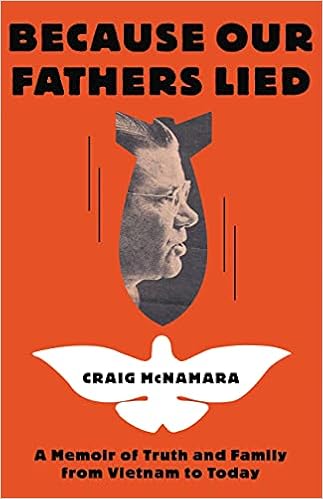 Craig McNamara is “the son of the war’s architect,” Robert McNamara, who served as John F. Kennedy’s Secretary of Defense and was responsible for the continuation of the Vietnam War. This memoir reflects on Craig’s adolescent struggles to discern right from wrong amidst a flurry of political escalation from his own father and anti-war sentiments from his peers, and eventually, what led him to embark on a lifelong journey of anti-war protest.
 Can she get to her son James’s soccer game on Thursday? Nope. Mary Louise Kelly, co-host of NPR’s
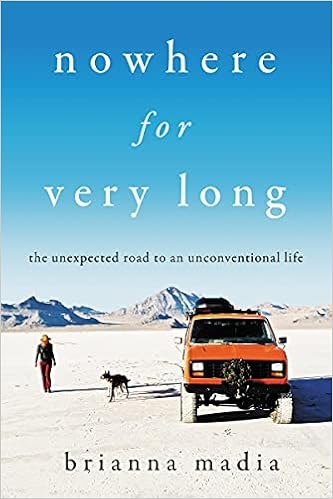 A woman defined by motion, Brianna Madia bought a beat-up bright orange van, filled it with her two dogs Bucket and Dagwood, and headed into the canyons of Utah with her husband. Nowhere for Very Long is her story of exploration—of the world outside and the spirit within.