If bias is something learned, not a trait we’re born with, then how do we unlearn it?
BREAKING BIAS
Where Stereotypes & Prejudices Come From—and the Science-Backed Method to Unravel Them
by Anu Gupta
Hay House, September 2024
(via Park & Fine Literary and Media)
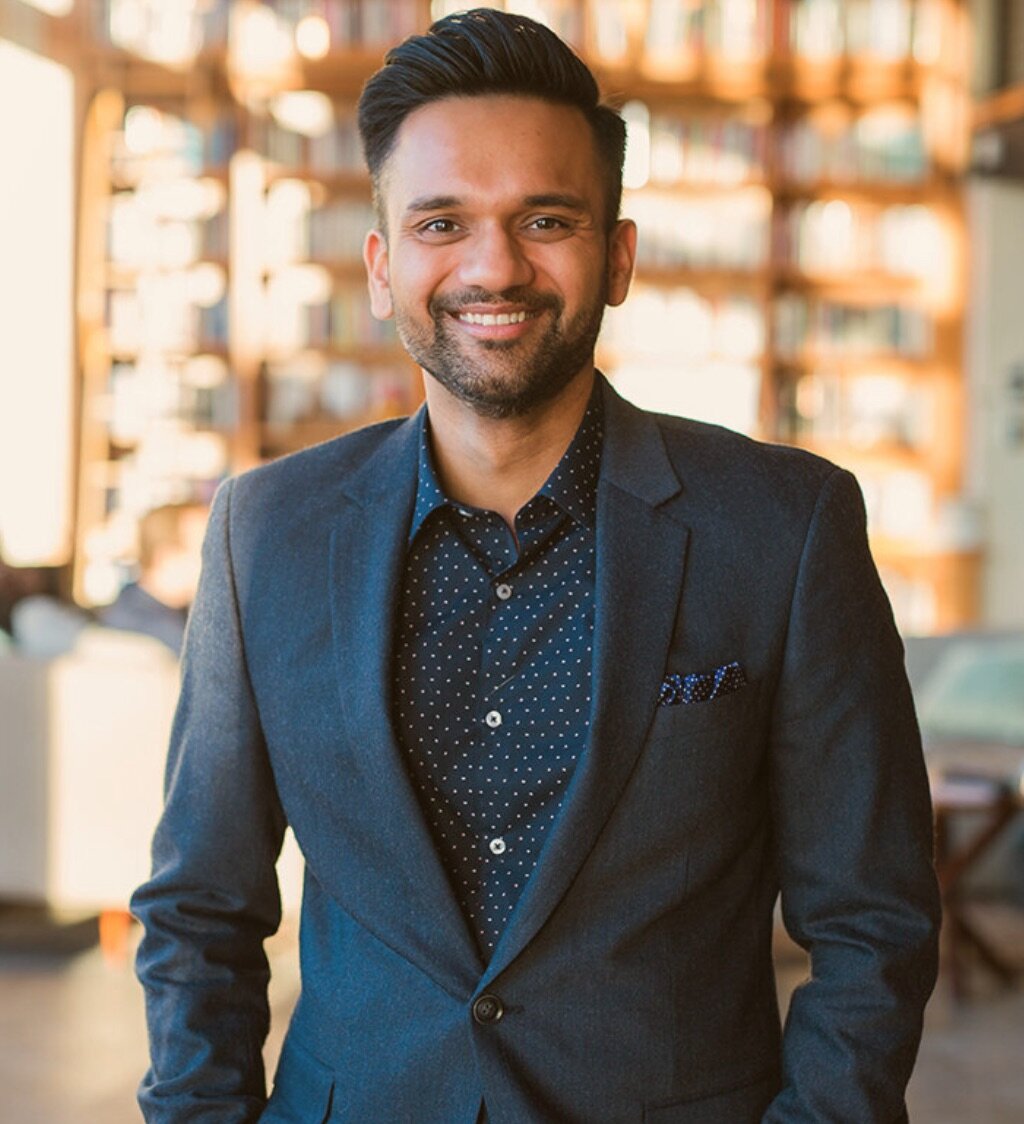 Growing up in India and the United States, and being a brown-skinned, cis-gendered, gay man with an Indian name, Anu has experienced different levels of bias, privilege, and prejudice in his life—ranging from the subtly stinging to the all-out violent—and he knows intimately the importance of breaking not only interpersonal bias, but our own internalized biases. Today, he is the founder of BE MORE with Anu, an organization that funds independent research on breaking bias and has provided anti-bias trainings to hundreds of companies around the world.
In his first book, Anu will provide readers with a solid foundation in understanding the different types of bias (internalized, interpersonal, and institutional) and their root causes: social contact, education, media, cultural stories, and institutional policies. Then, he’ll teach them how to break it.
At the heart of Anu’s work is the PRISM Toolkit, a mindfulness-based training program that Anu developed in partnership with a cross-disciplinary board of scientists at BE MORE. PRISM stands for Perspective-Taking, pRosocial Behavior, Individuation, Stereotype Replacement, and Mindfulness. These tools have been shown to measurably break bias through regular practice—with the added benefits of strengthening relationships, increasing resilience, reducing stress and anxiety, and even enhancing memory and cognition.
At a time when so many people are desperate for real solutions to structural inequality BREAKING BIAS will expand the important conversation and provide readers with the specific tools needed to address bias in all its forms—racism, sexism, classism, and more.
Anu Gupta is a scientist, educator, lawyer, and the founder & CEO of BE MORE with Anu, an e-learning company that trains organizations in breaking bias. He has spent five years developing and testing a unique science-backed, data-driven methodology that trains people in measurably breaking bias, with funding from National Science Foundation, New York State Health Foundation, American Heart Association, and On Being, among others. He has led hundreds of DEI programs that train professionals in this methodology. Anu has appeared on The Oprah Conversation with Oprah Winfrey, and his writing has been featured in Newsweek, Fast Company, Harvard Business Review and more.

 Abigail blends reporting, research, and history to create an international portrait of new motherhood and the policies that scaffold this transitional phase of life. As debates surrounding paid leave, universal daycare, and national healthcare rage on across different corners of the globe, FOUR MOTHERS is an intimate narrative of what those policies mean in the everyday lives of four women—and a compelling argument for the necessity and urgency of supporting parents.
 It is the early 1980s and for twenty years Father Joe Kreitzer has been dutifully serving the Lakota community on the Windy Creek Reservation in South Dakota. And in all this time he has carried memories of Veronica; their parting propelled him into the church. Now she has reached out, wanting to rekindle what they had turned their back on so many years ago. While grappling with this resurgence from his past, Joe’s dear friend Alice Nighthawk comes to him with news of her son Little Bear’s arrest for attempted murder. In his efforts to help exonerate Bear, Joe uncovers long buried evidence of a church cover up of abuse at a Catholic school on the reservation, forcing him to confront the choices he’s made and the secrets he keeps. What unfolds is an intimately layered story of love, and a search for answers.
 Rhetoric once sat at the center of elite education. Alexander the Great, Shakespeare, and Martin Luther King, Jr., used it to build empires, write deathless literature, and inspire democracies. Now it will help you to take leadership over yourself; not through pop psychology or empty inspiration, but with persuasive tools that have been tested for more than three thousand years. In
  When Courtney Gustafson moved into a new rental in the Poets Square neighborhood in Tuscon, Arizona, she would never have guessed that a colony of feral cats living in her driveway would change her life forever. Settling into a secure romantic relationship while it felt like the world around her was burning down, she couldn’t know how reluctantly, then profoundly, she would come to care about the health and safety of those thirty-some-odd neglected cats: Beebs, Lola, Sadboy, Goldie, Dr. Big Butt, Reverse Monkey, Rihanna, and so many more.