
Archives de catégorie : Nonfiction

THE PERSONALITY EDIT de Shannon Sauer-Zavala

A revolutionary science-based guide to shifting your personality traits to create the life you want.

THE PERSONALITY EDIT
by Shannon Sauer-Zavala

New Harbinger, December 2027
(via Liza Dawson Associates)

Most of us view our personalities as unchanging, but in reality, our personality traits are not etched in stone. Our personalities shift as we age and we don’t have to be passive passengers along for the ride—in fact, you can change your traits, imagine the life you want, and purposefully develop the characteristics you need to be successful.

In THE PERSONALITY EDIT, Dr. Shannon Sauer-Zavala shares science-based strategies that have been proven in clinical settings throughout the world to enhance or evolve the traits that can better serve you. This book is for you if:

• You’ve wished you could form more and deeper friendships but believed you’re not a warm enough person.
• You’ve told yourself that you couldn’t possibly organize your home and your finances because you don’t have the discipline to do it.
• You’ve ever thought you’d never move into a leadership position because you’re not outgoing enough.

Dr. Shannon Sauer-Zavala, Ph.D., is a Licensed Clinical Psychologist with over 20 years of experience working with people struggling with anxiety, depression, and personality disorders. She is an Associate Professor of Psychology at the University of Kentucky, where she develops new treatments for stubborn mental health conditions and tests them in rigorous clinical trials. Her treatment program, Compass, has been clinically shown to stimulate 20 years’ worth of personality change in less than 20 weeks. Her research has been supported by the National Institute of Mental Health (NIMH), the Canadian Institute of Health Research, and the Templeton Foundation. Over the past ten years, she has received tens of millions of dollars in grant funding to support her mental health treatment research. Dr. Sauer-Zavala has translated her provocative work on intentional personality change to popular audiences through a TEDx talk in 2024 and an interview segment on CBS Sunday Morning in 2025. The tools included in THE PERSONALITY EDIT have been featured in global media, the Washington Post, Medium, Psychology Today, VeryWell Mind, WebMD, National Public Radio, and many more media outlets.
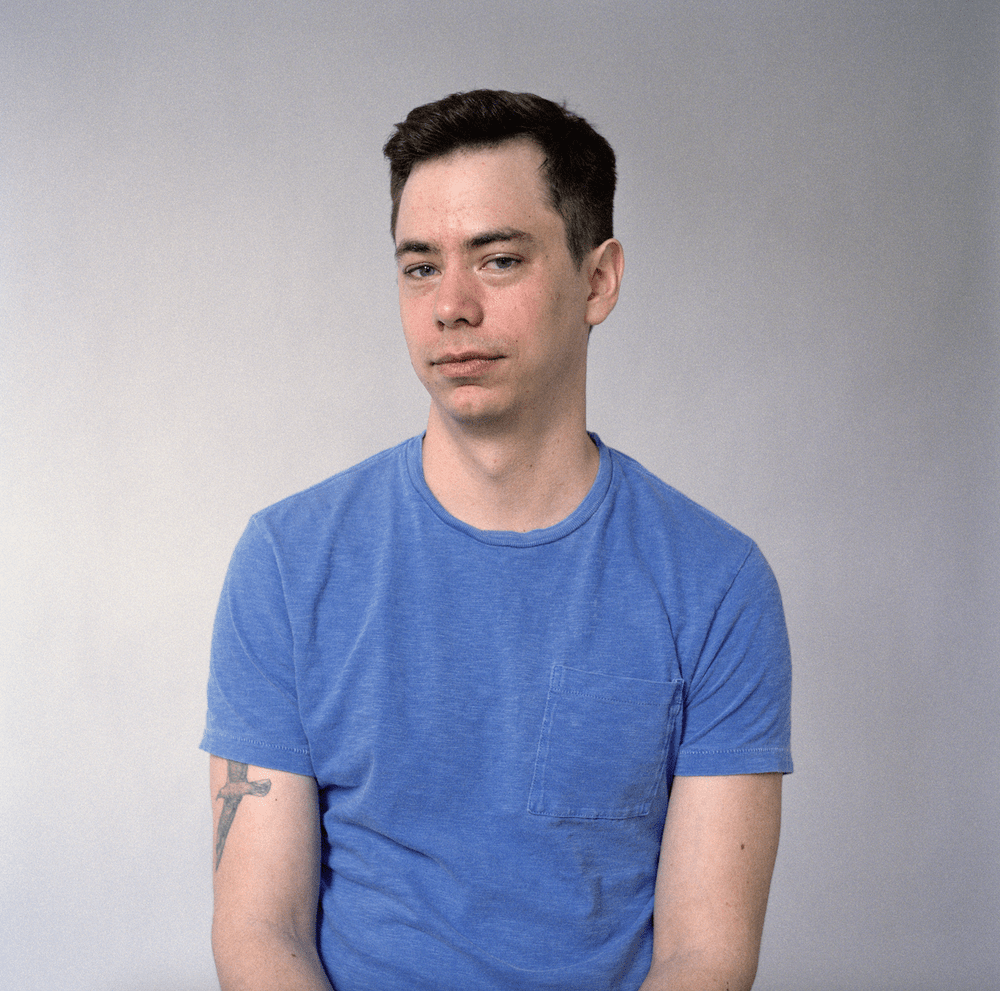
HOW TO BE MOVED de Kyle Chayka

New Yorker staff writer Kyle Chayka belnds memoir, criticism, science, and history to build a theory of our most sublime personal encounters with culture and beauty, drawing examples from 11th-century diaries of women in the Japanese royal court to mountain treks, psychedelic therapies, and art-induced epiphanies, in order to discover how we can achieve more moments of revelatory wonder that restore our capacity for meaning, connection, and attention in a world made dull by digital automation and artificial intelligence.

HOW TO BE MOVED
by Kyle Chayka

Doubleday, March 2029
(via Frances Goldin Literary)

Photo credit: Gregory Gentert

Most of us have a precious, private catalogue of things that have moved us. It might be art, music, a meal, a landscape: we tend to remember exactly where and who we were when we encountered these singular things, and can often still feel echoes of that palpable sense of awe, of transformation, of transportation out of the normal terrain of our lives. To be moved is to have an encounter with culture or beauty that opens a new space in ourselves, revealing interior territory that we hadn’t understood previously; these experiences leave a marked before and after in the line of our lives.

As powerful as these encounters are, most of us would also probably say that they feel increasingly scarce in today’s cultural environment, where deadening entertainment is plentiful and challenge is minimized by design. In HOW TO BE MOVED, Chayka will expansively turn to what Filterworld might have left a reader wondering: in our algorithmically decimated landscape, with our own taste feeling more deformed and remote to ourselves, how do we go about actively looking for what will move us?

The book will explore being moved in two parts. The first looks at the external qualities of things that move us, such as scale, difficulty, and alterations in our brain chemistry. The second part will lay out tactics for cultivating an increased internal openness to being moved, with practices like amateurism, patience, and using the things that move us as passageways both to ourselves and the people around us. A warm, wry blend of personal, critical, and historical writing, the book will aim to sit on a shelf with books like Four Thousand Weeks, Your Brain on Art, and (on the memoir end) All the Beauty in the World. This might also appeal to a reader who resonates with the brainy but practical philosophy of writers like Jenny Odell or Katherine May.

Kyle Chayka is a staff writer at The New Yorker, where he writes a column on digital technology and the impact of the Internet and social media on culture. His debut nonfiction book, The Longing For Less was published in 2020 and his second book Filterworld was published in 2024. As a journalist and critic he has contributed to publications including The New York Times Magazine, Harper’s, The New Republic, and Vox. Kyle is also the co-founder of Study Hall, an online community for journalists, and Dirt, a newsletter about digital culture.

ANTI-PALESTINIANISM d’Ussama & Saree Makdisi

A revelatory short history of the specific bias exercised against Palestinians in the West, a form of racism that is as politically potent as it is profoundly poisonous to the wider culture; written by two leading scholars of Palestine – one an endowed chair of history at UC Berkeley, the other a professor of literature and post-colonial studies at UCLA.

ANTI-PALESTINIANISM
by Ussama & Saree Makdisi

W.W. Norton, February 2027
(via Frances Goldin Literary)

For decades, the voices of Palestinians and those who advocate for Palestinian rights have been stifled—if not outright silenced—in the United States, according to scholars Ussama Makdisi and Saree Makdisi. More recently, activists have been arrested by federal agents merely for writing op-eds, while pro-Palestinian speech in universities as well as media and civic institutions has faced an unprecedented crackdown. How are we to understand this intolerance in the supposed land of the free?

In ANTI-PALESTINIANISM, the Makdisis, two of the most prominent Palestinian American scholars in the United States, argue that the phenomenon is not reducible to Islamophobia or to general anti-Arab animus. Rather, they show that anti-Palestinianism constitutes a distinct form of bias rooted in the specific historical and political circumstances of Palestine and Israel – it is an attempt to deny the Palestinian story altogether through an unprecedented system of assumptions, norms, rules, and even laws. Drawing on a vast array of historical examples, the Makdisis have produced an essential work that gives language and clarity to the limits of American inclusion.

“If Americans are like fish, anti-Palestinianism is like water—so ubiquitous it remains largely invisible. Naming it, so we recognize how often our public debates assume that Palestinian lives matter less than Jewish ones, is crucial work. This is a genuinely important book.” – Peter Beinart, author of Being Jewish After the Destruction of Gaza

“How is it possible for the Palestinians to be openly dispossessed, subjugated, starved and massacred while the world’s liberal democracies watch on and do almost nothing to save them? Saree and Ussama Makdisi provide a well-argued and brilliantly nuanced answer to that question in this brave, timely and hugely important book. Anti-Palestinianism is essential reading to understand the biggest moral issue of our time.” – William Dalrymple, author of The Golden Road

“Anti-Palestinianism will shock and inspire you. It is a foundational work, and should be read in every house, taught in every classroom.” – Fady Joudah, author of Exhibit G

Ussama Makdisi is the inaugural May Ziadeh Chair in Palestinian and Arab Studies, Professor of History, and Chancellor’s Professor at the University of California Berkeley. His latest book, Age of Coexistence (University of California Press, 2019), was praised by Peter Beinart and Rashid Khalidi, among others. His writing has appeared in The New York Times, The Christian Science Monitor,  The Houston Chronicle, The Yale Review, Jewish Currents, and Aeon, as well as on various Arabic media, and he has appeared on numerous television and radio shows including Al Jazeera, TRT International, and NPR’s Morning Edition.

Saree Makdisi is the Chair of the English Department at UCLA and a scholar of Palestine, colonial history, and its afterlives. He is the author of Palestine Inside Out (Norton, 2008), which counted Alice Walker, Desmond Tutu, and Howard Zinn among its many supporters, and Tolerance is a Wasteland (UCP, 2022), which Judith Butler called “a beacon of light.” He wrote the introduction for the recent reissue of Edward Said’s The Question of Palestine, which he presented at Southbank Center in a much-watched speech last fall. He writes frequently for the Los Angeles Times, the Washington Post,  The Guardian, n+1, and the London Review of Books. His essay “No Human Being Can Exist” was n+1’s most-read piece of 2023. 

With their brother Karim Makdisi, Saree and Ussama are also hosts of the popular podcast Makdisi Street.

THE LOVE OF BEAVERS de Matthew Perry

The author’s extensive, long-term tracking of wild beaver colonies documents intimate family relationships and complex colony hierarchies highlighting how beavers serve as primary forces against drought and climate shifting by engineering vital, biodiverse wetlands.

THE LOVE OF BEAVERS
by Matthew Perry

Atria Books, March 2028
(via Writers House)

When conservationist and naturalist Matthew Perry arrived at Spring Farm CARES Nature Sanctuary in central New York, he believed he had been hired to restore a damaged landscape by hand—replanting forests, repairing streams, rebuilding bird habitat after two centuries of agricultural depletion. Instead, on his very first day, he met the true agents of restoration: a young pair of beavers newly released onto the land. Within months, they accomplished what no human-designed plan could, transforming a narrow farm stream into a living wetland system.

What began as a practical collaboration became a twenty-six-year relationship spanning three generations of beavers—and a profound shift in how to understand wildlife, restoration, and intelligence beyond the human realm. THE LOVE OF BEAVERS chronicles the lives of a single, multi-generational beaver colony with rare intimacy, following individuals, family lines, and learned traditions across decades of floods, droughts, loss, recovery, and renewal.

The world is just becoming hip to the importance and appeal of beavers. Perry’s posts of ongoing field observations, images, and short-form narrative videos regularly draw hundreds of thousands to millions of views, including a single beaver-fo­cused post that has reached more than 10 million viewers.

As the beavers go about their lives, the land responds. The book documents this transformation from the inside, revealing rewilding not as a technical intervention but as a relationship—one rooted in patience, trust, and shared time.

Matthew Perry has served for over twenty-five years as Conservation Director and Resident Naturalist at Spring Farm CARES Nature Sanctuary, overseeing a 260-acre rewilding project shaped largely by beaver-engineered wetlands. He is President of Beavers: Wetlands & Wildlife, a national nonprofit dedicated to coexistence-based conservation, and President of the Utica Peregrine Falcon Project. The Spring Farm beavers will be featured in an upcoming PBS documentary, and the BBC has ex­pressed interest in filming the colony in 2026.

BLOCKERS de Michael Lewis

An inside look at the early days of Trump’s Department of Government Efficiency, as told by the public servants it targeted and one of America’s best storytellers.

BLOCKERS
by Michael Lewis

W.W. Norton, October 2026
(via Writers House)

Blockers. It wasn’t a compliment. In the new Washington, it was the worst thing you could be―especially if you worked in the federal government and wanted to keep your job. A Blocker was a holdover, an impediment, someone who didn’t get the message―and, most of all, someone who didn’t belong.

Michael Lewis found six of them.

BLOCKERS is the story of people who believed they had a calling, who were convinced they were doing something the country couldn’t do without, and then discovered they were no longer wanted. One kept Americans’ most sensitive tax data out of the wrong hands and another made sure that politicians and civil servants played by the rules. One figured out how to stop wildfires from destroying suburban neighborhoods, another helped uncover the mysteries of cystic fibrosis.

There was also a security guard.

It should come as no surprise that the writer who made subprime mortgages gripping (The Big Short) and who turned baseball statistics into poetry (Moneyball) could transform the first two years of the second Trump administration into a thriller about federal employees. But he does.

And he does something else. He puts before us a clear question: If these public servants can’t survive in government today, then what does that say about us?

Michael Lewis is the best-selling author of Liar’s Poker, Moneyball, The Big Short, The Undoing Project, and The Fifth Risk. He lives in Berkeley, California, with his family.