
How to adapt and thrive in the workplace in an uncertain future filled with change and automation? TOMORROWMIND offers readers—workers, managers, and executives alike—explicit, evidence-based guidance on positive psychology practices to offer a hopeful road map of how to tackle these challenges head on.
TOMORROWMIND:
Flourishing in the Future of Work
by Gabriella Rosen Kellerman & Martin Seligman
Atria, Fall 2022/Spring 2023
In recent years a vast literature, from reports from all the major global political and economic bodies to popular books like Martin Ford’s The Rise of the Robots and Erik Brynjolfsson and Andrew McAfee’s The Second Machine Age, has emerged to document and foretell the unprecedented scale of change facing the global workforce as the Age of Automation dawns. The evidence is overwhelming—and, at first glance, frightening. Forty-two percent of the job skills we use today will be obsolete by 2022. Eighty percent of US workers will have their jobs replaced, or their wages reduced, by automation in the new decade. We can expect, within the next ten years, that we won’t be choosing our careers once in a lifetime, but continually, across a wide range of industries. Our average job tenure will be under two years. Our job skills will expire every 18 months. More and more of our work will be done remotely, alone, or with rotating teams. The scale of the shift dwarfs that of all other eras, including the Industrial Revolution, and it poses a unique set of challenges to human wellbeing. In TOMORROWMIND, Gabriella Kellerman and Martin Seligman ask the question other thinkers on the subject have so far avoided: if, today, we sit on the cusp of the most turbulent changes to work society has ever faced, how will that change us? How will we survive? And more importantly, how can most of us thrive?
Surviving in this new world of work means, first, understanding these challenges, and second, intentionally developing skills to overcome them. TOMORROWMIND will offer readers—workers, managers, and executives alike—explicit, evidence-based guidance on navigating through the worst of what the future holds. Calling on the tenets of positive psychology and prospective psychology, disciplines pioneered by Seligman, and supported by the vast data emerging from BetterUp Labs—the basic science arm of the global virtual coaching company BetterUp, where their collaborators include Adam Grant, Roy Baumeister, Sonja Lyubomirsky, and Rebecca Goldstein—they argue that automation and constant change don’t have to be cause for alarm or despair. On the contrary: the coming disruption presents remarkable opportunities for each of us to push the boundaries of our cognitive and emotional skills. TOMORROWMIND will paint a picture of human thriving, not despite these challenges, but because of them.
Prince Harry has agreed to be the « Chief Impact Officer » for BetterUp, which is intricately connected to TOMORROWMIND. It’s too early to say whether/how Prince Harry will be involved in the promotion but the news of his hiring has greatly increased the profile of BetterUp. Read more about this here.
 Gabriella Rosen Kellerman, MD is the Chief Innovation Officer for the $700M behavior change company BetterUp, and the head of BetterUp Labs, where she leads strategic efforts to develop the next generation of offerings in behavior change technology.
 Martin Seligman, PhD is the Zellerbach Family Professor of Psychology at the University of Pennsylvania, director of the Positive Psychology Center, former president of the American Psychological Association, and a scientific advisory board member of BetterUp Labs. Called the “founder of Positive Psychology,” he is the author of over 30 books for both scholarly and trade audiences, including FLOURISH, AUTHENTIC HAPPINESS, and LEARNED OPTIMISM. His books have been translated into fifty languages and have sold millions of copies worldwide.
 THE MUTUAL FRIEND is an observational romantic comedy in the vein of Jane Austen, about how technology has changed the way we relate to the world and each other, and how we relate to that technology. It takes place over the summer of 2015, in the Morningside Heights neighborhood of Manhattan. Our hero, Alice Quick, is a 26-year-old former classical pianist child prodigy, now floating through life as a nanny. Alice has a dream: She wants to be a doctor. Once upon a time, in an impassioned Facebook post, Alice announced to all her friends that she’s finally gonna get her act together, take the MCAT, apply to medical school, and make something of her life. That post got hundreds of likes. But now it’s been three years and she still hasn’t done any of it. This summer, that’s all going to change. One day in June, when Alice moves in with her wild new roommate Roxy, and then goes on an unplanned blind date with a somewhat-mysterious 40-year-old bachelor named Bob, the wheels are set in motion for Alice to sign up for the MCAT, and spend the next 81 days studying like crazy, so she can pass the test and finally get into Medical School. But it’s not going to be easy. To complete her journey, Alice must do battle with a dragon, and the name of this dragon is distraction…
 The Girls Who Stepped Out of Line are the heroes of the Greatest Generation that you hardly ever hear about. These women who did extraordinary things didn’t expect thanks and shied away from medals and recognition. Despite their amazing accomplishments, they’ve gone mostly unheralded and unrewarded. No longer. These are the women of World War II who served, fought, struggled, and made things happen―in and out of uniform. Liane B. Russell fled Austria with nothing and later became a renowned U.S. scientist whose research on the effects of radiation on embryos made a difference to thousands of lives. Gena Turgel was a prisoner who worked in the hospital at Bergen-Belsen and cared for the young Anne Frank, who was dying of typhus. Gena survived and went on to write a memoir and spent her life educating children about the Holocaust. Ida and Louise Cook were British sisters who repeatedly smuggled out jewelry and furs and served as sponsors for refugees, and they also established temporary housing for immigrant families in London. Retired U.S. Army Major General Mari K. Eder wrote this book because she knew their stories needed to be told―and the sooner the better. For theirs is a legacy destined to embolden generations of women to come.
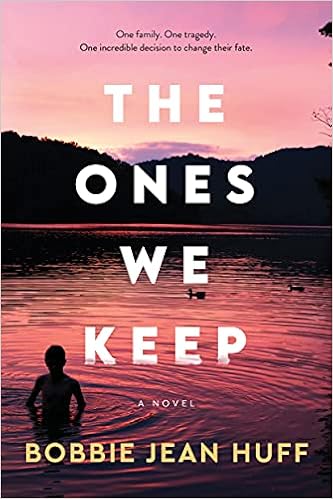 One family. One tragedy. One incredible decision to change their fate. A quiet lakeside resort in Vermont seems like the perfect summer getaway for Olivia and Harry Somerville and their three young boys. But in a single moment, their idyllic family retreat becomes a mother’s worst nightmare. Returning from a solo hike one afternoon, Olivia learns from a passing stranger that one of her sons has drowned—but not which one. In that moment, Olivia makes a panicked decision that will change her family forever. If she never knows which son has drowned, can Olivia convince herself that none of them have? By shielding herself from reality, can she continue to live in a world where all three boys are still alive? An emotional and heartfelt meditation on the nature of loss, the gift of recovery, and the bonds of love, THE ONES WE KEEP tells the story of one family as they learn to face their grief and fight for hope. Your next gripping book club read exploring the depths of a mother’s love, the endurance of family, and the mind-bending paths we take to shield ourselves from heartache.