
For fans of I’ll Be Gone in the Dark, Catherine Fogarty investigates a decades-old cold case and uncovers the true story of a teen murdered in Los Angeles in 1969.
THE GIRL WITH NO NAME:
The Story of Jane Doe #59 and My Relentless Search for Her Killer
by Catherine Fogarty
HarperCollins Canada, September 2026
 In 1969, the body of a young female murder victim was found discarded, down a rocky outcropping off Mulholland Drive in Los Angeles. Now, fifty-seven years later, true crime writer Catherine Fogarty is determined to tell her story, drawing much-needed attention to her long-forgotten case – and potentially unmasking her killer. Set against the backdrop of a tumultuous decade, and one of the most infamous crime sprees in American history, Fogarty’s investigation re-examines the brutal death and questions the heartbreaking reality of why she remained unidentified for almost half a century.
Inspired by the passion and commitment of other true crime writers and motivated by her own fractured past, Fogarty refuses to let Reet Jurvetson be forgotten. Collaborating with cold case investigators in Los Angeles and Montreal, new clues and potential suspects emerge in the case. Despite fading memories, closed doors, dead ends, and the police’s blue wall of silence, Fogarty’s amateur sleuthing begins to uncover answers to the decades-old murder. As the investigation unfolds, startling revelations come to light from the most unlikely of sources, unravelling long-buried lies and exposing secrets (and truths) that were expected to stay buried forever.
Catherine Fogarty is the founder and president of Big Coat Media, an award-winning company that has produced series for both Canadian and American networks, including the HGTV series “Love It or List It.” She is also the writer, producer and voice of the narrative true-crime podcast Story Hunter. In 2021, Fogarty published her first non-fiction book, Murder on the Inside: The True Story of the Deadly Riot at Kingston Penitentiary, which won the Marina Nemat Award for Creative Writing from the University of Toronto and was shortlisted for the Speaker’s Book Award and the Brass Knuckles Award for Best Nonfiction Crime Book. Indigo called it one of the best history books of the year and Publishers Weekly said it was a must-read. Originally trained as a social worker, Fogarty holds a BA in sociology/anthropology, an MA in social work, an MBA in human resource management and an MFA in creative non-fiction writing. Catherine Fogarty divides her time between Toronto and Los Angeles.
 We. Do. Not. Care.
 One of the most acclaimed writers working today, Walter Mosley spins magic once again in this beautiful novel that explores the lives of Black characters and one remarkable family through a lens both universal and unique. It touches on the lives of those whose deepest thoughts and motivations are seldom explored—including the neurodivergent, the incarcerated, and the immigrant tortured by their past—characters who will stay with you and change how you see the world.
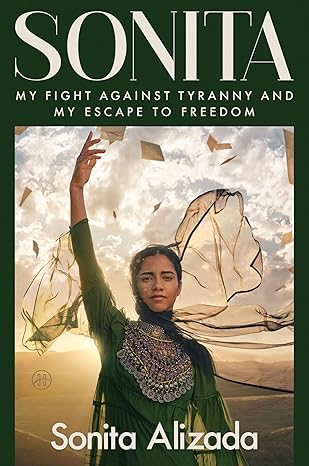 The first time Sonita was put up for sale, she was 10 years old and she thought that she was participating in a dress-up game. She quickly realized that, in her culture, a wedding is a kind of funeral for the bride. Sonita says, “It represents the loss of a future. The loss of a voice.” After the marriage fell through, she was placed on sale again. She was expected to form a family, sleep with a man she never met, and then repeat the terrible cycle with her own children. But Sonita wanted more.
 The transition from childhood to adulthood is a natural, evolution-honed cycle that now faces radical change and challenge. The adolescent brain, sculpted for this transition over eons of evolution, confronts a modern world that creates so much social pressure as to regularly exceed the capacities of the evolving mind. The problem comes as a bombardment of screen-based information pelts the brain just as adolescence is undergoing a second key change: puberty is hitting earlier. The result is a neurological mismatch between an ultra-potent environment and a still-maturing brain that can lead to anxiety, depression, and other mental health challenges. It is a crisis that is part of modern life but can only be truly grasped through a broad, grounded lens of the biology of adolescence itself. Through this lens, Richtel shows us how adolescents can understand themselves, and parents and educators can better help.