
A remarkable work of first-person history: the diary of a teenage girl living in Gaza. Begun at the start of the war, Jana continued to document her experiences as her family was forced to leave their home, using writing as a form of self-expression and resistance, and as a way of sustaining precious hope in the worst of times.
MY NAME IS JANA. I AM FIFTEEN. I LIVE IN GAZA.
by Jana
William Morrow, November 2026
As bombs screamed overhead, a young Palestinian teenager grabbed her notebook and wrote, “If I survive today, I will write everything.” Jana was thirteen at the time; studious, precocious, and dreaming of one day becoming a doctor. Through hunger, cold and continuous resettlement; under the constant threat of death, Jana has kept her promise to write it all down, be it on cardboard; on wet paper; on empty bags of flour. She promises herself that, when she has walls again, she will write on those too. My Name is Jana is an incredible testament to one teenage girl’s will to live, and her determination to make her voice heard. It bears witness to all Jana has seen: a little girl asking if her toy is still alive under the rubble; the death of neighbor after neighbor in the tent city in which she now lives; her siblings’ hunger and her mother’s quiet tears. Amidst the unspeakable horrors of a war that has claimed the lives of over twenty thousand children, Jana writes about the same two dreams again and again: her desire to become a doctor, and for the world to recognise her beautiful, individual existence: « I am still Jana, and I am still here. » This is her story.
Jana and her family now live in a refugee tent camp in Khan Younnis almost 50 miles from the neighborhood where she grew up, which was destroyed by bombs. She is one of five children.
Layla Faraj has translated many works of Palestinian writing, including other Gazan diaries, and here is what she has to say about Jana’s: “Writing as an act of hope, and as proof of existence, permeates many Palestinian literary works written in and after 1948, including recently published Gazan writers such as Nadine Murtaja and Nima Hasan. Jana’s diary continues this legacy with conviction. Her work is not only a testament to writing’s power in documenting violence, but it also proves just how indispensable writing is in affirming one’s existence amidst the destruction of a nation, city, home, family, and body: “I am Jana. I am Gaza’s daughter.’”
 In 1969, the body of a young female murder victim was found discarded, down a rocky outcropping off Mulholland Drive in Los Angeles. Now, fifty-seven years later, true crime writer Catherine Fogarty is determined to tell her story, drawing much-needed attention to her long-forgotten case – and potentially unmasking her killer. Set against the backdrop of a tumultuous decade, and one of the most infamous crime sprees in American history, Fogarty’s investigation re-examines the brutal death and questions the heartbreaking reality of why she remained unidentified for almost half a century.
  We. Do. Not. Care.
 One of the most acclaimed writers working today, Walter Mosley spins magic once again in this beautiful novel that explores the lives of Black characters and one remarkable family through a lens both universal and unique. It touches on the lives of those whose deepest thoughts and motivations are seldom explored—including the neurodivergent, the incarcerated, and the immigrant tortured by their past—characters who will stay with you and change how you see the world.
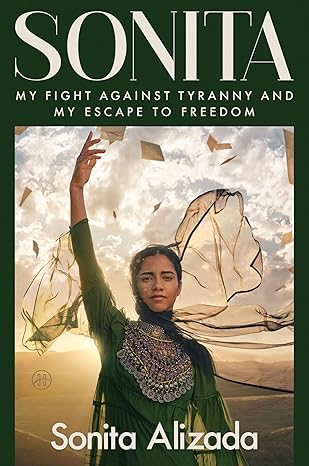 The first time Sonita was put up for sale, she was 10 years old and she thought that she was participating in a dress-up game. She quickly realized that, in her culture, a wedding is a kind of funeral for the bride. Sonita says, “It represents the loss of a future. The loss of a voice.” After the marriage fell through, she was placed on sale again. She was expected to form a family, sleep with a man she never met, and then repeat the terrible cycle with her own children. But Sonita wanted more.