
From Carola Lovering, the author of Tell Me Lies, comes this emotionally nuanced psychological suspense, and an obsessive, addictive love story, for fans of Lisa Jewell and The Wife Between Us.
TOO GOOD TO BE TRUE
by Carola Lovering
St. Martin’s Press, March 2021 (voir catalogue)
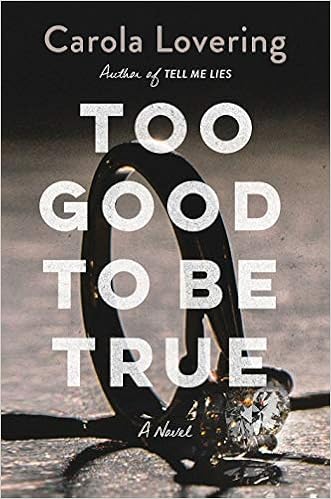 Skye Starling is overjoyed when her boyfriend, Burke Michaels, proposes after a whirlwind courtship. Though Skye seems to have the world at her fingertips—she’s smart, beautiful, and from a well-off family—she has also battled crippling OCD since her mother’s death when she was eleven, and her romantic relationships have suffered as a result. But now Burke—handsome, older, and more emotionally mature than any other man she’s met before—says he wants to take care of her. Forever. Except, Burke isn’t who he says he is. And interspersed letters to his therapist reveal that he is happily married and using Skye for his own, deceptive ends. In a third perspective, set thirty years earlier, a scrappy seventeen-year-old named Heather is determined to end things with Burke, a local bad boy. But can her adolescent love stay firmly in her past—or will he find his way into her future? On a collision course she doesn’t see coming, Skye throws herself into wedding planning, as Burke’s scheme grows ever more twisted. Meanwhile, three decades in the past, Heather’s longed-for transformation finally seems within reach…yet even the best laid plans can go astray. And just when you think you know where this story is going, you’ll discover that there’s more than one way to spin the truth.
Carola Lovering is the author of Tell Me Lies (published by Atria), which was named a Best Book of Summer 2018 by Town & Country, Parade, Refinery 29, and more. She attended Colorado College, and her work has appeared in W Magazine, National Geographic, Outside, and Yoga Journal, among other publications. In addition to writing, Carola teaches yoga. She currently lives in Connecticut.
 Friday, January 6, 2017: On that day, as always, John Brennan’s alarm clock was set to go off at 4:15 a.m. But nothing else about that day would be routine. That day marked his first and only security briefing with President-elect Donald Trump. And it was also the day John Brennan said his final farewell to Owen Brennan, his father, the man who had taught him the lessons of goodness, integrity, and honor that had shaped the course of an unparalleled career serving his country from within the intelligence community.
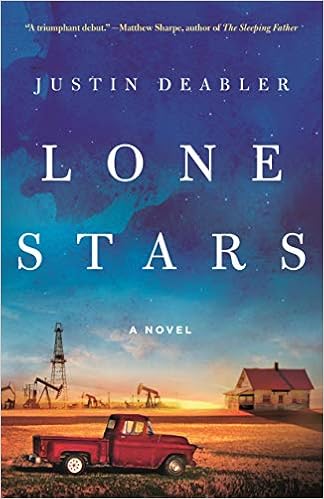 Julian Warner, a father at last, wrestles with a question his husband posed: what will you tell our son about the people you came from, now that they’re gone? Finding the answers takes Julian back in time to Eisenhower’s immigration border raids, to an epistolary love affair during the Vietnam War, crumbling marriages, queer migrations to Cambridge and New York, up to the disorienting polarization of Obama’s second term. And in these answers lies a hope: that by uncloseting ourselves—as immigrants, smart women, gay people—we find power in empathy. This is a novel that tackles timely issues like immigration and gay adoption. The story moves from a 1950s cattle ranch up to present day Houston and portrays not only a family, but a state, and a country.
 MARGREETE’S HARBOR begins with a fire: a fiercely-independent, thrice-widowed woman living on her own in a rambling house near the Maine coast forgets a hot pan on the stovetop, and nearly burns her place down. When Margreete Bright calls her daughter Liddie to confess, Liddie realizes that her mother can no longer live alone. She, her husband Harry, and their children Eva and Bernie move from a settled life in Michigan across the country to Margreete’s isolated home, and begin a new life. MARGREETE’S HARBOR tells the story of ten years in the history of a family: a novel of small moments, intimate betrayals, arrivals and disappearances. Liddie, a professional cellist, struggles to find space for her music in a marriage that increasingly confines her; Harry’s critical approach to the growing war in Vietnam endangers his new position as a high school history teacher; Bernie and Eva begin to find their own identities as young adults; and Margreete slowly descends into a private world of memories, even as she comes to find a larger purpose in them. This beautiful novel—attuned to the seasons of nature, the internal dynamics of a family, and a nation torn by its contradicting ideals—reveals the largest meanings in the smallest and most secret moments of life.