
The first book worldwide by a survivor of the Chinese concentration camps.
ORT OHNE WIEDERKEHR
(A Place of No Return)
by Mihrigul Tursun & Andrea Claudia Hoffmann
Heyne/ Penguin Random House Verlagsgruppe, February 2022
 Human rights organisations and governments speak of a crime against humanity, a « cultural genocide ». Mihrigul Tursun has repeatedly been a victim of Chinese efforts to totally assimilate the Uyghur minority. She experienced the so-called « re-education camps » in their indescribable cruelty, the physical and psychological violence, first hand. In a way that remains unexplained to this day, her young son died while she was imprisoned. Today, despite the threat that has not disappeared even in exile, she has the courage to speak openly about what she experienced and to describe from her own experience what the Uyghur minority in China has to endure. A significant eyewitness account that brings the reader closer to the people behind the news from China.
Uyghur Mihrigul Tursun, born in 1989, was imprisoned several times in the Chinese « re-education camps » of Xinjiang. During her detention, one of her sons died in Chinese custody under unexplained circumstances. On 28 November 2018, Mihrigul Tursun gave her harrowing testimony before the US Congress (Congressional-Executive Commission on China). She described the inhumane conditions and torture methods in the camps. In December 2018, Tursun was awarded the Citizen Power Award.
Andrea C. Hoffmann works in the political editorial department of the news magazine Focus and teaches at various German universities. Her books have been translated into 17 languages worldwide.
https://upload.wikimedia.org/wikipedia/commons/a/a4/Mihrigul_Tursun.jpg
 No one is as at home among wild woodland animals as Wolfgang Schreil: he gets up close and personal with red deer and lynxes, photographs a hunting stoat at ten paces, gets within touching distance of poisonous snakes, and stands among roe deer grazing peacefully by his side. How does he manage to get so unbelievably close to them, to share moments of connectedness that count among the happiest times of his life? For Wolfgang ‘Woid Woife’ Schreil, the woods represent a safe haven and place where we can be truly free. His gripping stories, his priceless knowledge of the animal world and his close-up animal photographs have made him a very special woodland ambassador. His immense passion for life and animals, his faith in the power of love, and his belief that nature’s greatest gifts are revealed to us if we are only patient, are an inspiration for each and every one of us who yearn to be mindful of what really matters.
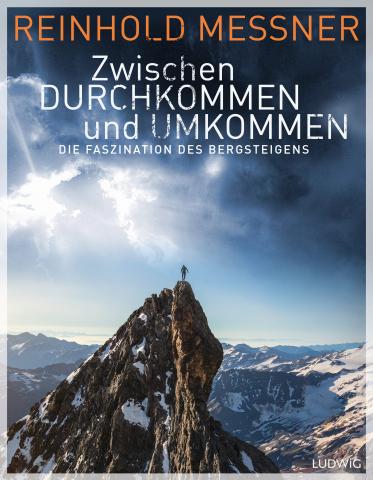 Old-school mountaineers confront the unknown with courage and self-sufficiency. They go where no one else dares to go, and take unbelievable risks. Ever since man first stood on top of Mont Blanc in 1786, they have continuously pushed the boundaries of the supposedly impossible. Reinhold Messner’s new book is a memorial to those pioneers, a history of traditional mountaineering told through the stories of its most celebrated heroes, often in their own words. Messner’s incisive essays reveal the mental and physical qualities needed to achieve what they did: qualities such as courage and passion, self-reliance in the face of danger, and the ability to focus on important things – and the refusal to use technically sophisticated gear.
  Bookworm Annie’s world has always been shaped by words. But her dream of writing a novel is long forgotten, and the man with whom she was supposed to spend the rest of her life has said ‘I do’ to someone else. She is devastated, and her friend persuades her to spend a few days in a hotel on Dartmoor to forget those painful events. One day, Annie stumbles across something very special: a notebook hidden in a red letterbox. Annie is deeply touched by what she reads in it, and when two pages that have been stuck together reveal the author’s address, she decides to track him down. Little does she suspect that her search will lead her to taciturn Jack, who is nothing like what she’d imagined the notebook’s author to be – but who nevertheless gets under her skin …
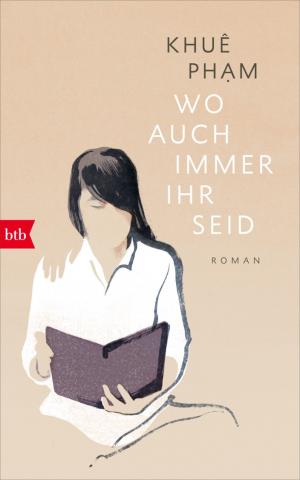 She is 30 years old and her name is Kieu, like the girl in the most famous work of Vietnamese literature. But she prefers to go by « Kim » because it’s easier in Berlin. In 1968, her parents had come to Germany from Saigon. She often wished for a family that didn’t have to become German first, but simply was. The loss of her Vietnamese roots has never bothered her. On the contrary. Until she receives a message. On Facebook. From her uncle. Who has been living in California since he fled.