
He only appears where people die. He’s closer to death than to anything or anyone else.
DUNKELKAMMER
(Dark Room)
by Bernhard Aichner
btb/PRH Germany, March 2021
 Winter in Innsbruck. A homeless man seeks refuge in a long abandoned house in the woods. In the bedroom, he finds a dead body. It has been lying there for twenty years. It’s just what the press photographer David Bronski has been waiting for. He and his colleague, the journalist Svenja Spielmann, are tasked with reporting from the scene – but what he won’t tell anyone is what connects him to this spectacular case.
Ever since he can remember, Bronski has taken photographs of misfortune. His eye is trained on the darkness in our world. He goes where people die. He immortalises everything that’s bad, and is fascinated by the silence of death. It’s like an addiction. Bronski is closer to death than to anything or anyone else, and lives only for his secret passion: analogue photography. The dark room is his safe haven – here, he creates his works of art, portraits of dead people. Scarred by a terrible event in his past, this is his attempt to rediscover meaning in life.
Bernhard Aichner, born in 1972, works as an author and photographer and writes novels, audio plays and stage plays. He trained as a journalist at the second largest Austrian daily newspaper, where he grew particularly fascinated by police photographs of accidents, murders and natural disasters. Aichner has been awarded several literary prizes and scholarships for his work, including among others the 2015 Crime Cologne Award and the 2017 Friedrich Glauser Prize. His books are bestsellers and translated into numerous languages.
 Ellen has always felt like a visitor in her own life. Except once, when she was young and briefly lived on the Halligen islands with her mother. She never wanted to leave, but had no say in the matter. Now she returns to these oddly familiar marshes – and to Liske, who once was like a sister to her. As they grow closer, old conflicts are stirred up again; but Ellen refuses to give up. Because she knows that this is her true home. For readers of Delia Owens’
 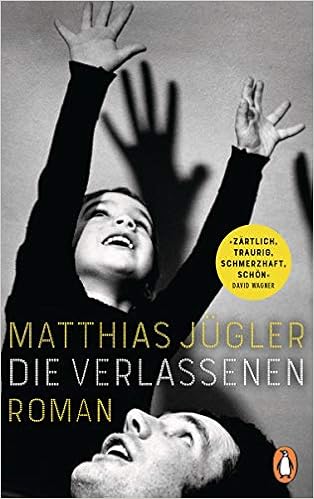 Johannes looks back on his childhood in East Germany, and the cracks that ran through it: his mother’s early death, his father’s mysterious disappearance. All his questions remained unanswered, and he now treads carefully on his path through life. When Johannes finds a letter in an old chest – addressed to his father and sent only a few days before he left his son without a word – the discovery transforms not only his future, but also his past as a child in the GDR before the Wall came down. With penetrating vigour and forceful clarity, Matthias Jügler tells a story of loss and betrayal, of the value of memory and the urgent questions that are troubling a whole generation. A warm-hearted, radiant novel written with extraordinary linguistic intensity.
 Hamburg, 1887. The young flower girl Tine Tiedkens is destitute. To escape her misery, she decides to try her luck on the island of Heligoland. But the crossing to the fashionable island turns into a nightmare, and when she arrives everything seems set against her. But then she unexpectedly runs into the young hotelier Henry Heesters, who once bought flowers from her in Hamburg, and lands a position in his elegant hotel. With diligence and enthusiasm, Tine works her way up from waitress to housekeeper – and falls in love with Henry. He, too, loves her – but just as happiness seems to be within reach, fate intervenes once again…
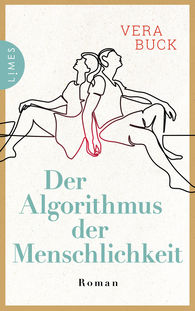 If you meet Mari, you will notice that she is beautiful and almost hauntingly perfect. But also that she fails to get jokes and vies everything rationally. And if you get to know her better, you will notice that Mari needs neither sleep nor food. Because Mari is only almost human. Her artificial intelligence is constantly learning to do one job: to make people happy. When Mari ends up in a Berlin apartment after an unfortunate chain of circumstances with a motley crew of people, including the rebellious blogger Frieda and the lonely student Linus, she realizes that her mission is all but easy. The world follows its own logic, people’s desires are irrational and Mari has to understand that there exists a world beyond provable facts. How is she supposed to make beings happy that have no clue what they want? She comes up with a solution no human would have ever expected… DER ALGORITHMUS DER MENSCHLICHKEIT deals with questions that are becoming incredibly important in the current developments in the technology sector: What makes us human? Why do we need each other? And why do we actually need more of each other, and less of the new technologies that are constantly being developed?