
Nature as climate refugee – The largest global migration of species since the ice age.
DIE NATUR AUF DER FLUCHT
(Nature on the Run)
by Benjamin von Brackel
Heyne/PRH Germany, April 2021
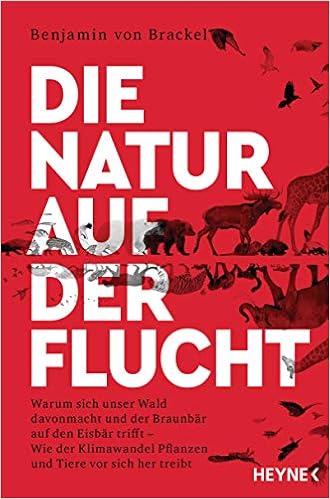 There is something afoot in the world of animals and plants, something which has so far caught too little attention. Wherever they can, animals and plants are moving towards the earth’s poles to flee from rising temperatures and drought in their natural habitats. Tropical zones lose their inhabitants, beavers are settling in Alaska, gigantic shoals of fish disappear just to reappear in front of foreign coastlines. Sea creatures move an average of 72 kilometres a year, land creatures an average of 17 kilometres. In this exciting and vivid book, Benjamin von Brackel describes a phenomenon which demonstrates nature’s impressive adaptability as well as the dramatic consequences of climate change – not the least for humankind, for the migration of species won’t leave us unaffected.
Benjamin von Brackel, born in 1982, graduated from the German School for Journalism in Munich and studied politics in Erlangen and Berlin. Today, he is one of the most renowned environmental journalists in Germany. He works as freelance journalist for the Süddeutsche Zeitung, Die Zeit and Natur focussing on climate change. He co-founded the online magazine klimareporter° and was awarded the German Environmental Media Prize in 2016.
 Winter in Innsbruck. A homeless man seeks refuge in a long abandoned house in the woods. In the bedroom, he finds a dead body. It has been lying there for twenty years. It’s just what the press photographer David Bronski has been waiting for. He and his colleague, the journalist Svenja Spielmann, are tasked with reporting from the scene – but what he won’t tell anyone is what connects him to this spectacular case.
 Ellen has always felt like a visitor in her own life. Except once, when she was young and briefly lived on the Halligen islands with her mother. She never wanted to leave, but had no say in the matter. Now she returns to these oddly familiar marshes – and to Liske, who once was like a sister to her. As they grow closer, old conflicts are stirred up again; but Ellen refuses to give up. Because she knows that this is her true home. For readers of Delia Owens’
 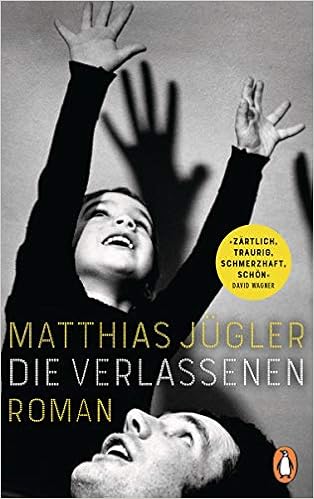 Johannes looks back on his childhood in East Germany, and the cracks that ran through it: his mother’s early death, his father’s mysterious disappearance. All his questions remained unanswered, and he now treads carefully on his path through life. When Johannes finds a letter in an old chest – addressed to his father and sent only a few days before he left his son without a word – the discovery transforms not only his future, but also his past as a child in the GDR before the Wall came down. With penetrating vigour and forceful clarity, Matthias Jügler tells a story of loss and betrayal, of the value of memory and the urgent questions that are troubling a whole generation. A warm-hearted, radiant novel written with extraordinary linguistic intensity.
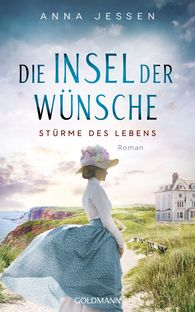 Hamburg, 1887. The young flower girl Tine Tiedkens is destitute. To escape her misery, she decides to try her luck on the island of Heligoland. But the crossing to the fashionable island turns into a nightmare, and when she arrives everything seems set against her. But then she unexpectedly runs into the young hotelier Henry Heesters, who once bought flowers from her in Hamburg, and lands a position in his elegant hotel. With diligence and enthusiasm, Tine works her way up from waitress to housekeeper – and falls in love with Henry. He, too, loves her – but just as happiness seems to be within reach, fate intervenes once again…