
Freezing, uncomfortable, stunningly beautiful: a year in the coldest place on the planet.
SÜDLICH VOM ENDE DER WELT
(South of the End of the World)
by Carmen Possnig
Ludwig/PRH Germany, August 2020 (voir catalogue)
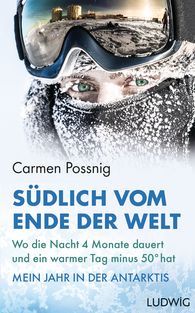 A return trip to the South Pole is an impossible dream for many of us – but the medic Carmen Possnig did just that. On behalf of the European Space Agency, she spent a year in the heart of the Antarctica to find out what it’s like to live in extreme weather conditions, with a distinct lower level of oxygen and in complete isolation from the rest of the world. With twelve other scientists, she spent the winter at the Concordia research station in the eternal ice. There, she not only encountered the breathtaking beauty of the most extreme continent on Earth, but also her own limits: Sharing a tight space with other people for twelve months, in a world that remains dark for months on end and where the temperature drops to -80°C, requires a huge physical and mental effort. Carmen Possnig’s personal and witty travel report, and its wealth of photographs, opens up a window onto an alien world – making us marvel at our planet’s diversity, and at how adaptable human nature can be.
Carmen Possnig was born in 1988 and is a doctor. In 2018, she spent a year in the Antarctica as part of a research expedition organised by the European Space Agency. In the Mars-like conditions of the Concordia research station, she studied her crew to discover how humans adapt both physically and psychologically to extreme conditions. Since her return she has embarked on a PhD in space medicine at the University of Innsbruck.
 During the final months of the Weimar Republic, a highly regarded doctor disappears. His sports car is found abandoned on the shores of a lake near Berlin. The homicide division investigates and discovers that the respectable medic’s carefully cultivated façade has been hiding a shady double life, whose trail leads from Berlin all the way to Barcelona. Oliver Hilmes has reconstructed this sensational and puzzling case from files discovered in Berlin’s regional archive. Enriched with fictional touches, Dr Mühe’s Disappearance is the gripping and ingenious story of the search for truth, and of the dark side of middle-class life on the eve of dictatorship.
 When someone asks Mavie about her cool glow-in-the-dark tattoo at a party, she thinks they’re joking. But then she sees it herself, in the light on the dancefloor – and panics. How did the scorpion get on her skin? Mavie has no idea that the sign makes her the target of a sinister game. Meanwhile, detectives Inga Björk and Christian Brand are investigating the case of a jogger found brutally murdered in a forest. They don’t know that this is just the beginning of a sadistic series of murders – and that the only way they can stop it is by changing sides and joining in the deadly game …
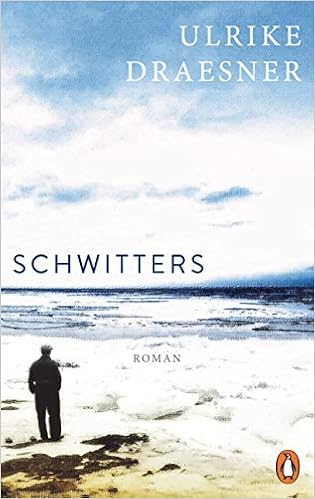 How do you begin a future that has essentially already ended, separated from your home, your language and yourself by a stretch of water? Kurt Schwitters is forty-nine years old when the Nazis force him to flee Germany. His success, work, possessions, parents, and wife Helma stay behind – and art gives way to the art of survival. Schwitters’s second life in a foreign language begins in Norway, then takes him to London and finally to the Lake District. Wantee, the new woman at his side, keeps him on course and his head above water, even when the word artist falls silent. With his Merzbau installation, Schwitters has discovered a new way to capture sky and serenity, shimmering meadows and transparent air. He is ludicrously disciplined, to the point of exhaustion. As we watch him at work, we learn that art doesn’t interpret the world: It translates it into forms that move us. In SCHWITTERS, Ulrike Draesner follows the writer and artist Kurt Schwitters into exile, giving voice to Kurt, his wife, his son and his lover. Through a virtuoso blend of fact and fiction, she has created a panorama of a time when the struggle for freedom and art was renewed in the face of a world on fire.
 How we present ourselves and how we are perceived by others are in effect part of our personality. The image we project and the roles we play are crucial to our success in both professional and private contexts. Tijen Onaran, a renowned speaker and networker, masterfully explains how to create a personal brand, find our own agenda, and shape how we are perceived online in social media and offline as well. In doing so, she recounts her own experiences in politics and the digital world, including her setbacks, learning effects, and her own personal branding.