
Tola Rotimi Abraham’s heartbreaking and incendiary debut BLACK SUNDAY follows the subsequent splintering apart of an entire family over the course of twenty years in Nigeria, narrating separately — subtly against the backdrop of the recent history of the city itself — each sibling’s fraught search for agency, love, and meaning in a place rife with hypocrisy but also endless life
BLACK SUNDAY
by Tola Rotimi Abraham
Catapult, 2020
Twin sisters and eldest siblings Bibike and Ariyike, along with their two younger brothers, are enjoying a comfortable, relatively privileged life in 1996 Lagos. Until their mother loses her job thanks to political strife and their family, in its desperation, gets swept up into the New Church —a Pentecostal church focused on money, blind faith, and winning. When their family’s patriarch wages their house on a ‘sure bet’ that evaporates like smoke, the twins’ mother abandons them and their brothers, and then their father follows suit. Bibike, Ariyike, Andrew and Peter are suddenly thrust into poverty as they’re reluctantly raised by their traditional Yoruban grandmother.
At the core of BLACK SUNDAY is really the story of the twins desperately trying to uncover the shape of truth in world hellbent on lies. Inseparable while they still have their parents and creature comforts, the twins’ paths diverge once their nuclear family shatters and each girl is left to locate, guard, and hone her own fragile source of power. As Abraham brings Lagos to life, in a voice rife with wry, timeless poeticism, BLACK SUNDAY reveals a tale of grace and connection amidst daily oppression, of two young women slowly finding their own distinct methods of resistance, paths to independence, and brands of faith in the face of a constant battering —sexual, spiritual, and otherwise— from an entrenched and unremitting patriarchy. A society which compromises just as it fetes its men, too, as seen from their brothers’ eventually waning perspectives. But more than survival in the face of adversity or faith in the face of injustice, more even than the pull to remain in a country unforgivingly and yet irrefutably home, BLACK SUNDAY is a book concerned with examining, as you’ll see, the very nature of storytelling itself.
Tola Rotimi Abraham is a fiction and nonfiction writer from Lagos, Nigeria. A graduate of the Iowa Writers Workshop, she has taught writing at the University of Iowa and the International Writing Program. Her fiction and non-fiction have appeared in Catapult, The Des Moines Register, The Nigerian Literary Magazine and other places. She is 33 years old and a Nigerian citizen in the US on a student visa.
 Fiona and Liv are seniors at Buchanan College, a small liberal arts school in rural Pennsylvania. Fiona, who is still struggling emotionally after the death of her younger sister, is spending her final college year sleeping with abrasive men she meets in bars. Liv is happily coupled and on the fast track to marriage with an all-American frat boy. Both of their journeys, and their friendship, will be derailed by the relationships they develop with Oliver Ash, a ruggedly good-looking visiting literature professor whose first novel was published to great success when he was twenty-six.
  Set in a fractured United States, in the southwestern country now known as Texoma. A world where magic is acknowledged but mistrusted, especially by a young gunslinger named Lizbeth Rose. Battered by a run across the border to Mexico Lizbeth Rose takes a job offer from a pair of Russian wizards to be their local guide and gunnie. For the wizards, Gunnie Rose has already acquired a fearsome reputation and they’re at a desperate crossroad, even if they won’t admit it. They’re searching through the small border towns near Mexico, trying to locate a low-level magic practitioner, Oleg Karkarov. The wizards believe Oleg is a direct descendant of Grigori Rasputin, and that Oleg’s blood can save the young tsar’s life. As the trio journey through an altered America, shattered into several countries by the assassination of Franklin Roosevelt and the Great Depression, they’re set on by enemies. It’s clear that a powerful force does not want them to succeed in their mission. Lizbeth Rose is a gunnie who has never failed a client, but her oath will test all of her skills and resolve to get them all out alive.
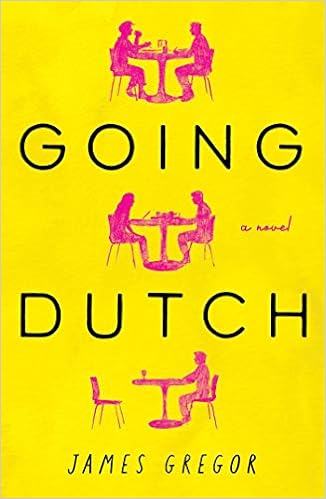 Exhausted by dead-end forays in the gay dating scene, surrounded constantly by friends but deeply lonely in New York City, and drifting into academic abyss, twenty-something graduate student Richard has plenty of sources of anxiety. But at the forefront is his crippling writer’s block, which threatens daily to derail his graduate funding and leave Richard poor, directionless, and desperately single.
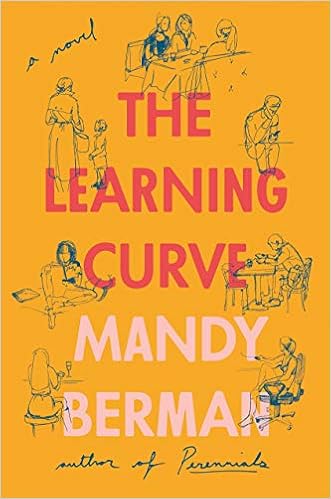
 A young woman is struggling to make ends meet in New York City, so she takes a chance and lies her way into what she thinks will be an easy way to make a quick $500. It’s a psychology study on morality and ethics, and all it takes is two hours of her time and a willingness to answer questions honestly…and anonymously. Though he professor is fascinating, the questions seem odd, and oddly intimate. She leaves with the money in her pocket and a minor obsession with the study and the professor. But as she inserts herself deeper into the professor’s murky world, the requests for her participation become more and more personal, and the stakes grow higher. What started as a white lie now becomes a fun-house o