
Set in Nazi Berlin, THE TORQUED MAN focuses on a German spy handler tortured by pangs of conscience and by his own sexuality, and on the charismatic IRA fighter he springs from prison in Franco’s Spain to enlist as an anti-British saboteur.
THE TORQUED MAN
by Peter Mann
HarperCollins, Winter 2022
(chez Writers House – voir catalogue)
 Berlin—September, 1945. Two manuscripts are found in the rubble, each one narrating conflicting versions of the life of an Irish spy during the war in this slow-burn historical thriller with a dark comic edge with echoes of Thomas Mann and Flann O’Brien. One manuscript is the journal of German spy handler Adrian de Groot, written from a cellar during the Berlin air raids of 1943, following the death of his agent, friend, and former lover Frank Pike. In de Groot’s narrative, Pike is a charismatic Irish socialist and IRA fighter recruited by German intelligence to assist with the planned Irish-German invasion of Britain, but who never gets the chance to consummate his deal with the devil and spends his final years languishing in Berlin. While the journal chronicles de Groot’s complicated relationship with Pike and his attempts to keep him in his thrall, it also reveals de Groot’s own psychological struggle—as a bookish homosexual, erstwhile literary translator, and anti-Nazi conservative— to accommodate himself to the murderous regime he works for.
Meanwhile, the other MS—Finn McCool in the Bowels of Teutonia: Concerning his Murderous Exploits in Berlin—gives a very different account of the Irishman’s doings in the Reich. Assuming the alter ego of the Celtic hero Finn McCool, Pike appears here as a double agent gone rogue. His mission: an assassination campaign of highranking Nazi doctors, culminating in the killing of Dr. Theodor Morell, the personal physician of Adolf Hitler. The two manuscripts spiral around each other, leaving only the reader to know the full truth of Pike and de Groot’s relationship, their ultimate loyalties, and their efforts to resist the fascist reality in which they are caught.
THE TORQUED MAN is inspired by the historical figure Frank Ryan, a left-wing Irish Republican who was recruited in 1940 by German foreign intelligence, sprung from prison in Spain, and who spent the remainder of the war stewing in Berlin until his death in 1944. The book draws on British intelligence files from the UK’s National Archives, based on the interrogation of Frank Ryan’s German handler, as well as biographies of Ryan published in Ireland. It also pulls from World War II-era diaries, Celtic myth and epic, recent scholarship on Nazi doctors, drugs, espionage, anti-Nazi resistance, everyday life in the Third Reich, the T4 Euthanasia program, Francoist Spain, and the wartime politics of Ireland in order to give readers a unique window onto the Second World War— all in a story that reads like Thomas Mann’s Doctor Faustus swallowed Flann O’Brien’s At Swim-Two-Birds and George McDonald Fraser’s The Flashman series and washed it down with a spy novel.
Peter Mann has a PhD in Modern European history and is a past recipient of the Whiting Fellowship. He teaches history and literature at Stanford and the University of San Francisco. He is also a graphic artist and since 2014 has published a weekly online syndicated comic strip with Andrews McMeel Universal called The Quixote Syndrome.
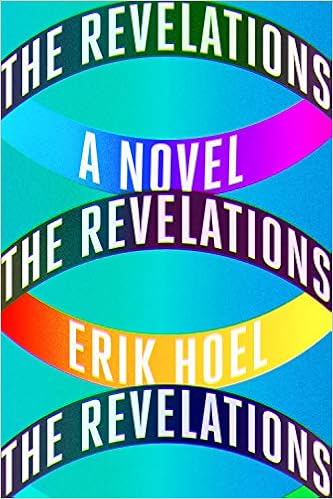 Monday, Kierk wakes up. Once a rising star in neuroscience, Kierk Suren is now homeless, broken by his all-consuming quest to find a scientific theory of consciousness. But when he’s offered a spot in a prestigious postdoctoral program, he decides to rejoin society and vows not to self-destruct again. Instead of focusing on his work, however, Kierk becomes obsessed with another project—investigating the sudden and suspicious death of a colleague. As his search for truth brings him closer to Carmen Green, another postdoc, their list of suspects grows, along with the sense that something sinister may be happening all around them. THE REVELATIONS, not unlike its main character, is ambitious and abrasive, challenging and disarming. Bursting with ideas, ranging from Greek mythology to the dark realities of animal testing, to some of the biggest unanswered questions facing scientists today, THE REVELATIONS is written in muscular, hypnotic prose, and its cyclically dreamlike structure pushes the boundaries of literary fiction. Erik Hoel has crafted a stunning debut of rare power—an intense look at cutting-edge science, consciousness, and human connection.
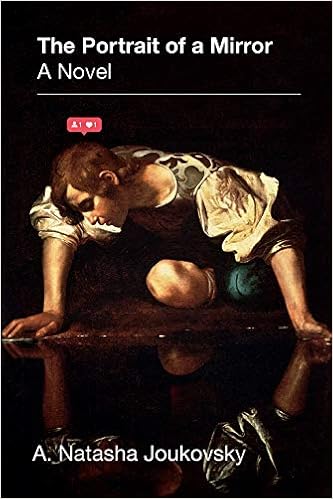 Wes and Diana are the kind of privileged, well-educated, self-involved New Yorkers you may not want to like but can’t help wanting to like you. With his boyish good looks, blue-blood pedigree, and the recent tidy valuation of his tech startup, Wes would have made any woman weak in the knees—any woman, that is, except perhaps his wife. Brilliant to the point of cunning, Diana possesses her own arsenal of charms, handily deployed against Wes in their constant wars of will and rhetorical sparring.
 1986: The teenage daughter of a wealthy Vietnamese family gets lost in an abandoned rubber plantation while fleeing her angry father and is forever changed by the experience.
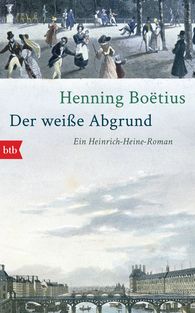 Paris, ca. 1850. Bed-ridden and terminally ill, Heinrich Heine wants to prise one final work from the jaws of death: His memoirs are to be his magnum opus. It’s been a long time since he last attended an illustrious bohemian dinner – instead, he receives occasional visits from German exiles and French artist friends. One day, Elise Krinitz seeks him out. The young woman admires Heine, and hopes to find in him a mentor for her own literary ambitions. He tenderly and ironically calls her ‘Mouche’, and they soon embark on a platonic, but nonetheless passionate affair. Yet when Heine dies on the 17th February 1856, his memoirs are lost forever. Steeped in the fascinating panorama of 1850s Paris, Boëtius’s novel is a unique portrait of the final years of the great German poet Heinrich Heine.