
A meditation and artful exploration into the shape-shifting voice of Fernando Pessoa, who was one of the most significant literary voices of the 20th century and one of the greatest poets in the Portuguese language.
PILOT IMPOSTER
by James Hannaham
Soft Skull, Fall 2021
(chez Sterling Lord Literistic)

Photo : © D.R.
PILOT IMPOSTER is wholly extracted from an anthology of poems by the beloved Portuguese poet Fernando Pessoa (1888–1935). During a plane trip from Cape Verde to Lisbon, PEN/Faulkner award-winner James Hannaham started reading Pessoa & Co., Richard Zenith’s definitive English translations of Pessoa’s selected works. Hannaham’s trip took place two months after the 2016 election of Donald Trump, so like many people, ideas about unfitness for service, incompetence, and failures of leadership were much on his mind. Once in Lisbon, Hannaham started a regular practice of reading from Zenith’s anthology, meditating on a response, and writing pieces that span across a range of narrative forms. So began his exploration of Portugal’s role in colonialism, the global slave trade, and racialized false beliefs about people of African descent. The final design of PILOT IMPOSTOR will include snapshots of Lisbon, archival photos, and other pictures, in an effort to comprise a work that, like Lisbon and Pessoa, reveals the instability of its identity—and all identities—by exposing its multiple incarnations.
James Hannaham is the author of the novel Delicious Foods for which he received a PEN/Faulkner award and God Says No, which was honored by the American Library Association. He holds an MFA from the Michener Center at the University of Texas at Austin, and lives in Brooklyn, where he teaches creative writing at the Pratt Institute. Delicious Foods was recently longlisted for the Grand Prix de Littérature Américaine Award.
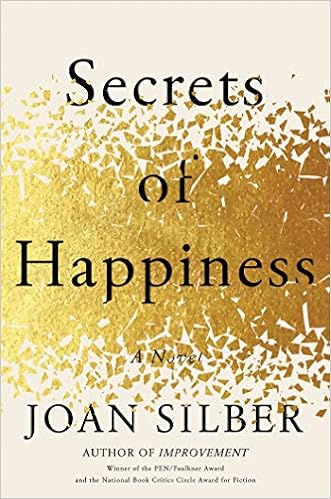 Ethan, a young lawyer in New York, learns that his father has long kept a second family—a Thai wife and two kids living in Queens. In the aftermath of this revelation, Ethan’s mother spends a year working abroad, returning much changed, and events introduce her to the other wife. Across town, Ethan’s half brothers are caught in their own complicated journeys: one brother’s penchant for minor delinquency has escalated, and the other must travel to Bangkok to bail him out, while the bargains their mother has struck about love and money continue to shape their lives. As Ethan finds himself caught in a love triangle of his own, the interwoven fates of these two households elegantly unfurl to encompass a woman rallying to help an ill brother with an unreliable lover and a filmmaker with a girlhood spent in Nepal. Evoking a generous and humane spirit, and a story that ranges over three continents, SECRETS OF HAPPINESS elucidates the ways people marshal the resources at hand to forge their own forms of joy.
 THE RED ARROW follows an unnamed narrator, a failed novelist deeply in debt to his publisher, on a high-speed train from Rome to Modena, where he is desperate to find the famous Italian physicist whose memoir he’s been ghostwriting, and an whose disappearance in the middle of the project has threatened the narrator and his newly formed family with financial ruin. Moving swiftly and seamlessly through his past—including a chemical spill in West Virginia, a failed New York art career, psychedelic therapy in California, and a luxury beach resort in Sicily—THE RED ARROW contains multitudes: it is at once one of the most authentic descriptions of the experience of depression I’ve ever read, and a joyously earnest celebration of freedom from the toxic power of the ego; a spiraling meditation on time, memory, and the nature of the self; and a novel with the ineffable mystery of a poem, one whose originality lies in admitting that it’s not original at all. For we are each just a cloud of quotations with no fixed center—or, as the Physicist might put it, we are nothing more than interactions, like subatomic particles—and when we’re finally able to let go of the fiction of our discrete selves, all that is left is love.
 Anna Obata is a biracial teenager living in economically depressed Southern Japan just before the millennium. Left to fend for herself (and to look after her increasingly senile Grandfather) Anna copes with her devastating loneliness by calling upon her strongest inner resource: imagination. This is the story of girl who falls in love with a satellite, yes—but it is also the story of how the human mind attempts to repair itself, no matter the cost, no matter the odds. Told in alternating perspectives by Anna, the satellite, and several others, SATELLITE LOVE is exquisitely strange and refreshingly unconventional.
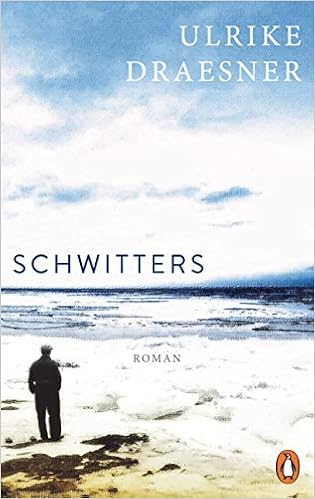 How do you begin a future that has essentially already ended, separated from your home, your language and yourself by a stretch of water? Kurt Schwitters is forty-nine years old when the Nazis force him to flee Germany. His success, work, possessions, parents, and wife Helma stay behind – and art gives way to the art of survival. Schwitters’s second life in a foreign language begins in Norway, then takes him to London and finally to the Lake District. Wantee, the new woman at his side, keeps him on course and his head above water, even when the word artist falls silent. With his Merzbau installation, Schwitters has discovered a new way to capture sky and serenity, shimmering meadows and transparent air. He is ludicrously disciplined, to the point of exhaustion. As we watch him at work, we learn that art doesn’t interpret the world: It translates it into forms that move us. In SCHWITTERS, Ulrike Draesner follows the writer and artist Kurt Schwitters into exile, giving voice to Kurt, his wife, his son and his lover. Through a virtuoso blend of fact and fiction, she has created a panorama of a time when the struggle for freedom and art was renewed in the face of a world on fire.